 Helldivers 2
Helldivers 2 Facility Operator Beginner Guide
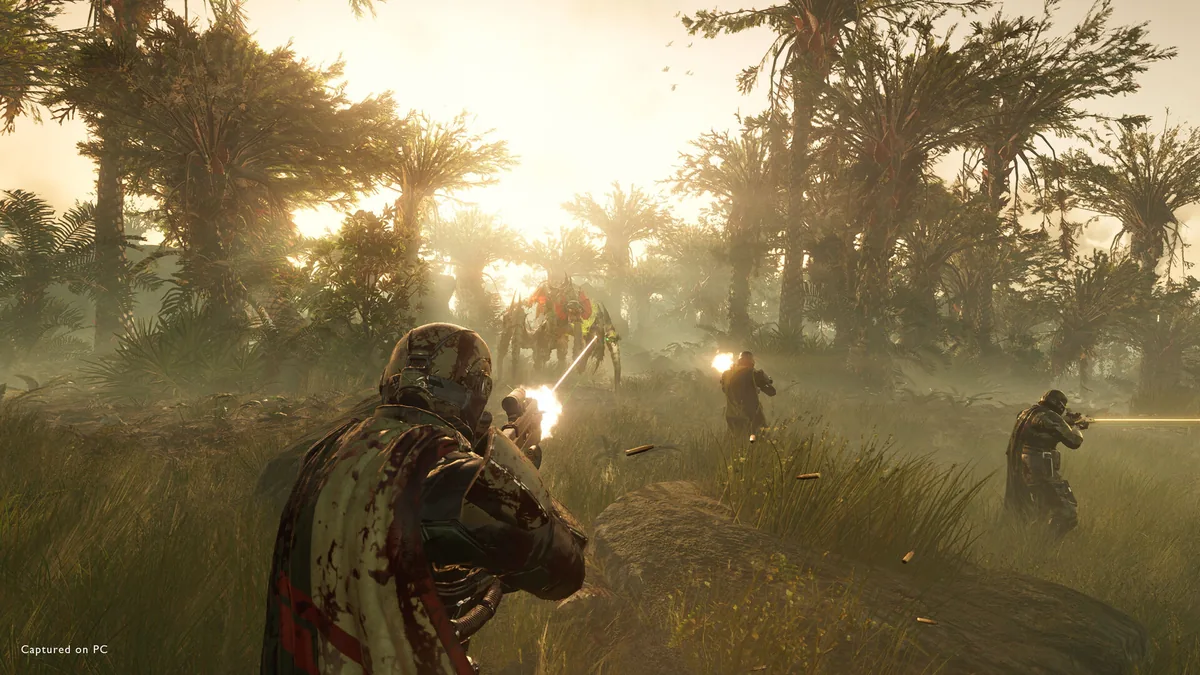
Quick Answer: A strong Helldivers 2 Facility Operator start means learning terminals, objective flow, stratagem discipline, and safe team movement first, then spending early resources on versatile unlocks and ship upgrades that improve mission consistency.
Helldivers 2 is built around chaotic co-op combat, but the part that catches many new players off guard is objective management. If you want to play as a reliable Helldivers 2 Facility Operator, you are really learning how to keep missions moving: call the right tools, read the battlefield, finish terminal-based objectives quickly, and avoid wasting the squad's lives on unnecessary fights. That role matters in every operation, whether you are activating uplinks, launching missiles, raising flags, or defending extraction.
The game has broad reach for a co-op shooter. Steam's official page describes it as a "fast, frantic, and ferocious third-person shooter," and its current review summary is "Mostly Positive" with 75.1% positive across 1151055 reviews Source. For newcomers, that matters because it signals an active, long-lived player base and a lot of community knowledge to learn from. If you are wondering how much runway the game has, HowLongToBeat reports 32.43 hours for the main story, 65.01 hours with extras, and 89.29 hours for completion Source. In practice, that means your first few hours are not about mastering everything. They are about building habits.
What the Facility Operator Role Means for Beginners
The Helldivers 2 Facility Operator role is the player who keeps objectives functioning under pressure. That does not mean a formal class exists, but it is a useful beginner identity because it teaches the right priorities early. In actual missions, the best new players are rarely the ones chasing the highest kill count. They are the ones who understand when to sprint to a radar station, when to input a terminal sequence, when to wait for a stratagem cooldown, and when to disengage before a small skirmish becomes an endless reinforcement spiral.
A beginner-friendly way to think about this role is to break it into three jobs:
- Objective interaction: handling terminals, buttons, carry items, and mission prompts.
- Area control: clearing enough enemies to create a safe window for interaction.
- Squad rhythm: staying close enough to reinforce, resupply, and extract together.
You will see this pattern on common mission types. On an upload or terminal task, one player interacts while others cover likely approach lanes. On launch or activation objectives, the operator watches the prompt, not just the crosshair, because many failures happen when the squad wins the firefight but forgets the sequence. During extraction, the same instincts apply: secure the landing zone, watch stratagem throws, and preserve reinforcements instead of taking flashy risks.
For a new operator, three examples matter more than abstract theory:
- Terminal-based objectives reward calm positioning. If a console is exposed, do not stand on it too early. Clear the nearest patrol path first, then interact.
- Defensive holdouts punish impatience. A sentry dropped into a bad angle can shred allies or draw pressure to the wrong side.
- Extraction fights reward restraint. Calling heavy explosives too close to the beacon often creates more friendly casualties than enemy losses.
This mindset also helps in public matchmaking. Random squads often succeed when at least one player quietly handles mission logic. You do not need voice chat for that. Ping the objective, move first, reinforce quickly, and bring dependable stratagems. As a result, the "facility operator" playstyle becomes one of the best on-ramps for beginners because it builds awareness, not just aim.
First-Hour Checklist
Your first hour should focus on learning mission flow, safe loadout habits, and basic objective discipline rather than rushing difficulty. A good Helldivers 2 Facility Operator opening hour is less about farming and more about building muscle memory that will still matter dozens of hours later.
Use this checklist as a practical first-session route:
- Finish the tutorial and pay attention to stratagem input timing. The tutorial is not just onboarding fluff; it teaches the rhythm of calling supplies, support weapons, and reinforcement under stress.
- Run early missions on a comfortable difficulty. Stay low enough that you can read objectives and enemy behavior. For most new players, the mistake is climbing too fast before they can survive terminal interactions.
- Practice at least three mission interactions. Examples include entering terminal sequences, activating consoles, and calling extraction. Do not let teammates do every interaction for you.
- Experiment with one anti-infantry tool and one anti-armor option. Even if your starting choices are limited, begin learning the difference now. You need one answer for swarms and one for durable targets.
- Call resupply proactively. Do not wait until everyone is dry. Learn where pods land, how to place them safely, and how to avoid blocking movement with them.
- Reinforce immediately when safe. A downed teammate is not just a missing gun; it is lost tempo on the objective.
- Visit the ship management screens between missions. Familiarize yourself with stratagem unlock categories, Warbond progression, and ship module menus so later decisions make sense.
- Play at least one mission against different enemy pressure patterns if available. Even early on, pay attention to how open terrain, tight compounds, and patrol density change your decisions.
- Extract successfully instead of fighting to the buzzer. New players often treat extraction as a final arena. Treat it as the mission's last objective.
During that first hour, your real goal is to understand the loop: drop in, orient yourself, finish primary objectives, avoid unnecessary aggro, then leave. Everything else sits on top of that. When players struggle early, it is often because they assume Helldivers 2 is mainly about winning firefights. It is not. It is about finishing operations while staying functional under pressure.
If you want a concrete benchmark, you should leave your first hour able to do four things without hesitation: read the map, call reinforcement, use a resupply safely, and complete a basic interactable objective while enemies are nearby. Once those are stable, the rest of the game opens up much faster.
You might also like
- Helldivers 2 fourth faction alternative multiple enemies planet why Beginner Guide
- Helldivers 2 Which enemy faction do you enjoy fighting in: Beginner Guide
- Helldivers 2 Super Destroyer Screen Display Interactive Update: Beginner Guide
- Helldivers 2 Ground All Terrain Extraction Rig GATER Beginner Guide
- Helldivers 2 Reviewed by Game878Helldivers 2Read Full Review Story5Gameplay9Visuals9Audio8Value forMoney8 Beginner Guide
Resource Priority Order
Your early resource priority should favor flexible combat options and broad ship efficiency over niche unlocks. For a beginner Helldivers 2 Facility Operator, the best spending pattern is the one that makes ordinary missions smoother, not the one that chases a flashy specialist setup too soon.
Because Helldivers 2 has several progression layers, the easiest way to stay disciplined is to think in priority bands rather than exact shopping lists.
| Resource or progression lane | Early priority | Why it matters for beginners |
|---|---|---|
| Core stratagem unlocks | Highest | Expands your answers to armor, crowds, and support needs |
| Medals / Warbond progression | High | Unlocks practical weapons, armor, boosters, and utility tools |
| Ship modules | High after core tools | Improves consistency across all missions rather than one loadout |
| Super Credits | Hoard carefully | Best saved for meaningful Warbond progress instead of impulse spending |
| Niche or high-risk stratagems | Medium to low | Strong later, but often unforgiving for beginners |
| Cosmetic unlocks | Lowest | No mission impact during the learning phase |
A beginner-friendly order looks like this:
- Spend first on dependable stratagem coverage. You want answers for three situations: crowd clear, anti-armor, and sustain. Examples of useful categories include machine-gun style support, eagle strike-style area damage, and resupply or defensive support.
- Prioritize Warbond unlocks that improve basic reliability. Weapons with clear handling, armor perks you understand, and boosters with visible team value are better than novelty picks.
- Invest in ship modules once your baseline loadout feels coherent. Modules improve the tools you already use. That means they become more valuable after you know which stratagem families fit your playstyle.
- Treat Super Credits conservatively. Community discussion and recent anti-cheat context have kept attention on Super Credit acquisition and spending, especially as Warbond access is tied to them. The key beginner principle is simple: do not burn premium currency on impulse choices if you are still learning what kinds of equipment you actually like.
- Delay specialist toys until your fundamentals are stable. Mortar-type support, precision tools with strict placement, and risky explosives can be excellent, but only after you stop killing your own squad with them.
Here is the practical question behind every early purchase: will this help me complete more missions cleanly? A new operator gets more value from a reliable anti-armor call-in, a straightforward rifle, or a ship upgrade that improves repeated usage than from a gimmick that only shines in a narrow scenario.
Two examples show the difference. First, a general-purpose eagle strike can solve clustered infantry, bug breaches, or defensive pressure around an objective. Second, a support weapon that handles medium threats can carry public matches where teammates bring overly specialized kits. By contrast, a complicated setup built around perfect positioning may underperform until you know spawn flow and spacing much better.
Keep in mind that the game's progression is substantial rather than tiny. HowLongToBeat's 65.01 hours with extras and 89.29 hours for completion Source are useful perspective here: you are not supposed to unlock everything immediately. Spend like a player building a toolkit, not like someone shopping for one perfect final build.
How to Play Objectives Cleanly and Stay Alive
The best way to play objectives cleanly is to create a short safe window, interact fast, and leave before the fight expands. That sounds simple, but it is the difference between a smooth operator run and a mission that collapses into repeated reinforcements.
Beginners usually fail objectives in one of four ways: they start interacting too early, fight too long in one place, split too far from the team, or use loud stratagems in cramped spaces. A reliable operator avoids all four.
Start with objective approach discipline:
- Scout before touching the point. Look for patrols, static defenders, terrain chokepoints, and possible retreat paths.
- Clear the nearest pressure first. You do not need a full wipe; you need enough breathing room to finish the interaction.
- Assign yourself a physical lane. Even without voice chat, choose whether you are interacting, covering left, covering right, or watching the rear.
- Know when to abandon the interaction. If a Charger-equivalent heavy, Hulk-type threat, or mass breach arrives mid-input, survival comes first.
Then apply the right micro-habits during the action:
- Go prone or use cover when inputting if sightlines are open.
- Reload before the objective, not during it.
- Drop resupply slightly behind the hold position so teammates can reach it without bunching on the exact objective.
- Throw sentries where they watch an approach lane, not the whole team.
- Save your heaviest explosives for pressure spikes, not single small targets.
Three common mission scenarios show how this works:
- Console or upload objective: clear close enemies, place one defensive tool on the likely approach, interact, then rotate away once complete instead of looting the area too long.
- Launch or multi-step sequence: expect downtime between interactions. Use that lull to reload, regroup, and reposition rather than wandering after distant enemies.
- Extraction beacon defense: set your team in an arc, keep sightlines open, and avoid stacking all stratagems in the center where they can chain into friendly deaths.
Positioning matters more than raw accuracy in Helldivers 2. A beginner who understands spacing will outperform a better shooter who stands in the wrong place. This is especially true for the Facility Operator role because you often stand nearest to mission-critical objects. You do not need to top frag. You need to stay alive long enough to finish the sequence and call the next move.
Another useful reality check: Helldivers 2 remains heavily played, with a Steambase snapshot showing 22591 current players and an all-time peak of 458046 Source. In an active game like this, most veteran players do not expect beginners to have perfect mechanics. They do expect them to understand the mission. If you can handle objectives calmly, you will already be more valuable than many low-level randoms.
Common Mistakes
The most common beginner mistakes in Helldivers 2 come from treating every fight as mandatory and every unlock as equally useful. If you want to grow into a dependable Helldivers 2 Facility Operator, fix these habits early.
Mistake 1. Fighting every patrol
What happens: New players shoot every enemy they see, even when the squad is traveling between objectives.
Why players fall into it: The game is a shooter, so it feels natural to clear the map.
Fix: Skip avoidable patrols unless they threaten the route or objective. Sprint, crouch through safe gaps, and keep the team moving toward primary goals.
Mistake 2. Starting terminal interactions in a hot zone
What happens: A player runs onto a console immediately, gets interrupted, and turns a manageable defense into chaos.
Why players fall into it: Objective prompts feel urgent, and beginners want to be helpful fast.
Fix: Clear the closest threats first, reload, then interact. If the console is fully exposed, have another player watch the longest sightline before you begin.
Mistake 3. Bringing only anti-infantry tools
What happens: The squad can handle swarms but stalls when armor or elite enemies appear.
Why players fall into it: Early missions make crowd clear feel universally strong.
Fix: Make sure your kit includes at least one practical answer to tougher targets. Pair a general-purpose weapon with a stratagem or support option meant for armored pressure.
Mistake 4. Wasting reinforcement timing
What happens: Downed teammates stay dead too long, or reinforcements are thrown into bad positions.
Why players fall into it: Beginners tunnel on staying alive themselves and forget the squad tempo.
Fix: Reinforce as soon as the area is survivable, and throw the beacon where the returning player can recover gear without landing inside enemy control.
Mistake 5. Standing on top of stratagem markers
What happens: Friendly fire or poor pod placement downs the team.
Why players fall into it: Players panic-call support at their own feet.
Fix: Develop a default throw habit: place offensive calls ahead of enemy movement, and place support calls just behind team cover or retreat lines.
Mistake 6. Overvaluing kills over mission progress
What happens: The squad burns lives and time in optional fights, then struggles to extract.
Why players fall into it: Scoreboard instincts from other shooters carry over.
Fix: Judge each engagement by one question: does this help us finish the objective? If not, disengage.
Mistake 7. Unlocking flashy tools before stable ones
What happens: Early currency goes into niche equipment that is hard to use consistently.
Why players fall into it: Cool-looking stratagems seem like upgrades by default.
Fix: Buy broad, forgiving tools first. Save specialist picks for after you can already complete missions cleanly.
These mistakes are common because Helldivers 2 rewards restraint in ways many action games do not. A player who shoots less, moves smarter, and times interactions better often contributes more than the most aggressive person in the lobby.
Pro Tips
The best beginner-to-intermediate gains come from small tactical habits that reduce chaos before it starts. These tips go beyond the obvious "stick with your team" advice and help a new Facility Operator act with more control.
Tip 1. Pre-aim your stratagem code window
Open and input stratagems during short lulls instead of waiting for full panic. If you know a defense phase is about to begin, be mentally ready with reinforcement, resupply, or your preferred area-clear tool before the first wave reaches you.
Tip 2. Use objectives as terrain anchors
When defending a console, launch pad, or extraction zone, position relative to the object rather than wandering after kills. The object tells you where enemies will pressure and where teammates need support.
Tip 3. Throw support behind, offense ahead
This single rule solves many teamkill problems. Resupply, support weapons, and defensive items should usually land behind your firing line; bombs, barrages, and eagle strikes should usually land in front of the enemy advance.
Tip 4. Reload while rotating, not while holding
Any time the squad shifts from one objective to another, use that movement to reload and reset. Beginners often arrive at the next fight half empty because they only think about ammo once enemies are already on top of them.
Tip 5. Learn one fallback route per objective
Before activating a noisy multi-step mission point, glance at the terrain and pick a retreat lane. Good operators know where they will run if a heavy push breaks the first hold position.
Tip 6. Keep one simple "public match" loadout
Random squads are unpredictable. Maintain a dependable all-round loadout for matchmaking, built around survivability and broad utility rather than hyper-specialized combos.
Tip 7. Use pings to replace unnecessary typing
A fast ping on the objective, a patrol, or an extraction route communicates enough in many lobbies. This keeps you engaged in the mission instead of standing still in a menu or chat box.
Tip 8. Watch where pods and sentries shape movement
A resupply pod can block a path; a sentry can force allies to avoid a lane. Think about how your tools alter the map, especially in compounds or narrow extraction areas.
These habits are what move a player from merely surviving to actively stabilizing runs. They are subtle, but they are also the kind of difference teammates notice immediately.
When You Are No Longer a Beginner
You are out of the beginner phase when you can complete missions reliably while understanding why your decisions worked. In Helldivers 2, that threshold is not a single level number or a fixed hour count. It is a practical shift from reacting to chaos toward controlling it.
A player has usually graduated from the beginner phase when most of the following are true:
- You can read mission priorities quickly and head toward the right objective without waiting for others.
- You bring balanced loadouts on purpose, not by accident.
- You know when to fight and when to disengage.
- You can handle terminal or activation objectives under pressure without freezing or abandoning the sequence too early.
- You reinforce intelligently, placing teammates where they can recover and contribute.
- You rarely die to your own stratagem misuse.
- You can adapt to public squads, filling gaps when teammates over-specialize or play too aggressively.
Think of graduation as consistency across different mission moods. For example, can you still do your job when the map is open and patrols are visible from far away? Can you still do it in a cramped compound where sentry placement is awkward? Can you still keep calm when extraction goes sideways and the squad has already burned several reinforcements? If the answer is usually yes, you have moved beyond the beginner stage.
There are also softer signs. You stop obsessing over individual unlocks and start thinking in mission packages. You recognize when a radar station is worth a detour and when it is not. You understand that a clean mission with modest kills is often better than a spectacular firefight with a failed extract. And in public play, you naturally become the person who stabilizes runs: pinging the next target, throwing the reinforcement correctly, and getting the terminal done while others are still shooting.
Even achievement and progression data hint at how much room the game gives for mastery. SteamHunters tracks 38 achievements and 0 currently unobtainable achievements Source, while Valve's global stats show the rarest tracked achievement is unlocked by only 10.7% of players Source. You do not need rare achievement-level play to leave the beginner bracket, but that spread shows how broad the skill ceiling is. Graduation is not the end of learning. It is the point where your fundamentals stop collapsing under pressure.
FAQ
Is Facility Operator an official class in Helldivers 2?
No. Helldivers 2 does not use rigid classes in the usual sense. "Facility Operator" is a practical role label for the player who handles objectives, terminals, support timing, and squad tempo reliably.
What loadout should a beginner Facility Operator bring?
Bring a balanced kit with one answer for groups, one answer for tougher targets, and one sustain or utility tool. In practice, that means avoiding overly niche setups until you are comfortable with mission flow.
Should I focus on kills or objectives first?
Objectives first. Kills matter only when they create space to complete the mission, survive a defense phase, or extract safely. Many failed beginner runs come from winning fights that did not need to happen.
When should I raise the difficulty?
Raise it when you can complete current missions consistently without frequent accidental deaths, missed reinforcements, or panic during objectives. If terminal interactions still feel messy, stay put a bit longer.
Are Super Credits worth saving early?
Usually yes. Early on, you do not yet know which Warbond path or gear family suits you best, so careful saving is safer than impulse spending.
Can I learn the operator role in public matchmaking?
Yes. In fact, public squads are one of the best places to learn it because you will see both good and bad objective habits quickly. The main challenge is staying disciplined when others overfight.
Related Guides
- helldivers 2 available platforms - Best early stratagem unlocks for Helldivers 2
- related guide - Helldivers 2 beginner loadouts for public matchmaking
- a new enemy faction - Best Warbond picks for early progression
- related guide - Helldivers 2 extraction tactics and survival guide
- legendary warbond release date - How to handle armored enemies in Helldivers 2
- related guide - Best solo and duo mission strategies
- related guide - Helldivers 2 ship module upgrade priority
- helldivers 2 similar tips - Mission walkthrough guide for terminal and launch objectives
Sources
- https://store.steampowered.com/app/553850/
- https://howlongtobeat.com/?q=helldivers2
- https://api.steambase.io/games/553850
- https://steamhunters.com/apps/553850
- https://steamcommunity.com/stats/553850/achievements
See also
- Helldivers 2 fan creates indoor dungeon mission concept: Beginner Guide
- Helldivers 2 How to Destroy Fuel Silos and Stockpiled Ammunition
- Helldivers 2 How to Check Galactic War Progress: Beginner Guide
- Helldivers 2 How to Get the EX-03 Prototype 3 Armor Set
- Helldivers 2 How to Fix Stuck in Drop Pod Bug
- Helldivers 2 Pages using DynamicPageList3 parser function: Beginner Guide
- Helldivers 2 Unnamed Super Earth Fighter Craft Beginner Guide
- Helldivers 2 Helldivers 1:Chief Communications Officer Beginner Guide
- Helldivers 2 Pages using Tabber parser tag Beginner Guide
- Helldivers 2 Failed to Establish Network Connection Error Beginner Guide
Screenshots


Reviewed by
HD2 Guides Editorial
Expertise: Editorial team behind HD2 Guides. Content is compiled from official patch notes, community wikis, and playthrough notes, then reviewed and updated on schedule.
Sources
Helldivers 2 Missions Guides →
Browse the complete missions collection and its focused guides.
Related Guides
🔥 Popular Guides
Helldivers 2 Tier List — Weapons, Warbonds, Armor & Stratagems
Master Helldivers 2 tier list hub: warbond rankings, armor passives, weapons, and stratagems. Jump to the warbond or armor list for your build.
Helldivers 2 Armor Tier List — Best Passives Ranked
Helldivers 2 armor tier list ranked by passive value: scout, medium, heavy, and specialist sets. Best passives for solo, co-op, and high difficulties.
Helldivers 2 Warbond Tier List — Best Warbonds to Buy First
Ranked Helldivers 2 warbond tier list: which warbonds to buy first, best value for medals, and what to skip. Updated for current meta.

Helldivers 2 Weapon Tier List: Best Weapons for Every Loadout
Compare the best Helldivers 2 weapons, budget substitutes, late-bloomers, reroll advice, and endgame loadout investments.
📋 Patch Notes & Updates
🛠️ Popular Tools
Frequently Asked Questions
Quick answers from the guide · click a question to expand.
Is Facility Operator an official class in Helldivers 2?
No. Helldivers 2 does not use rigid classes in the usual sense. "Facility Operator" is a practical role label for the player who handles objectives, terminals, support timing, and squad tempo reliably.
What loadout should a beginner Facility Operator bring?
Bring a balanced kit with one answer for groups, one answer for tougher targets, and one sustain or utility tool. In practice, that means avoiding overly niche setups until you are comfortable with mission flow.
Should I focus on kills or objectives first?
Objectives first. Kills matter only when they create space to complete the mission, survive a defense phase, or extract safely. Many failed beginner runs come from winning fights that did not need to happen.
When should I raise the difficulty?
Raise it when you can complete current missions consistently without frequent accidental deaths, missed reinforcements, or panic during objectives. If terminal interactions still feel messy, stay put a bit longer.
Are Super Credits worth saving early?
Usually yes. Early on, you do not yet know which Warbond path or gear family suits you best, so careful saving is safer than impulse spending.
Can I learn the operator role in public matchmaking?
Yes. In fact, public squads are one of the best places to learn it because you will see both good and bad objective habits quickly. The main challenge is staying disciplined when others overfight.
Was this guide helpful?
Rate this guide so we can improve it.
Share your own tip
Found something not in the guide? Submit it below — our editors review every tip before publishing. No account required.