 Helldivers 2
Helldivers 2 Training Manual Tips: Beginner Guide
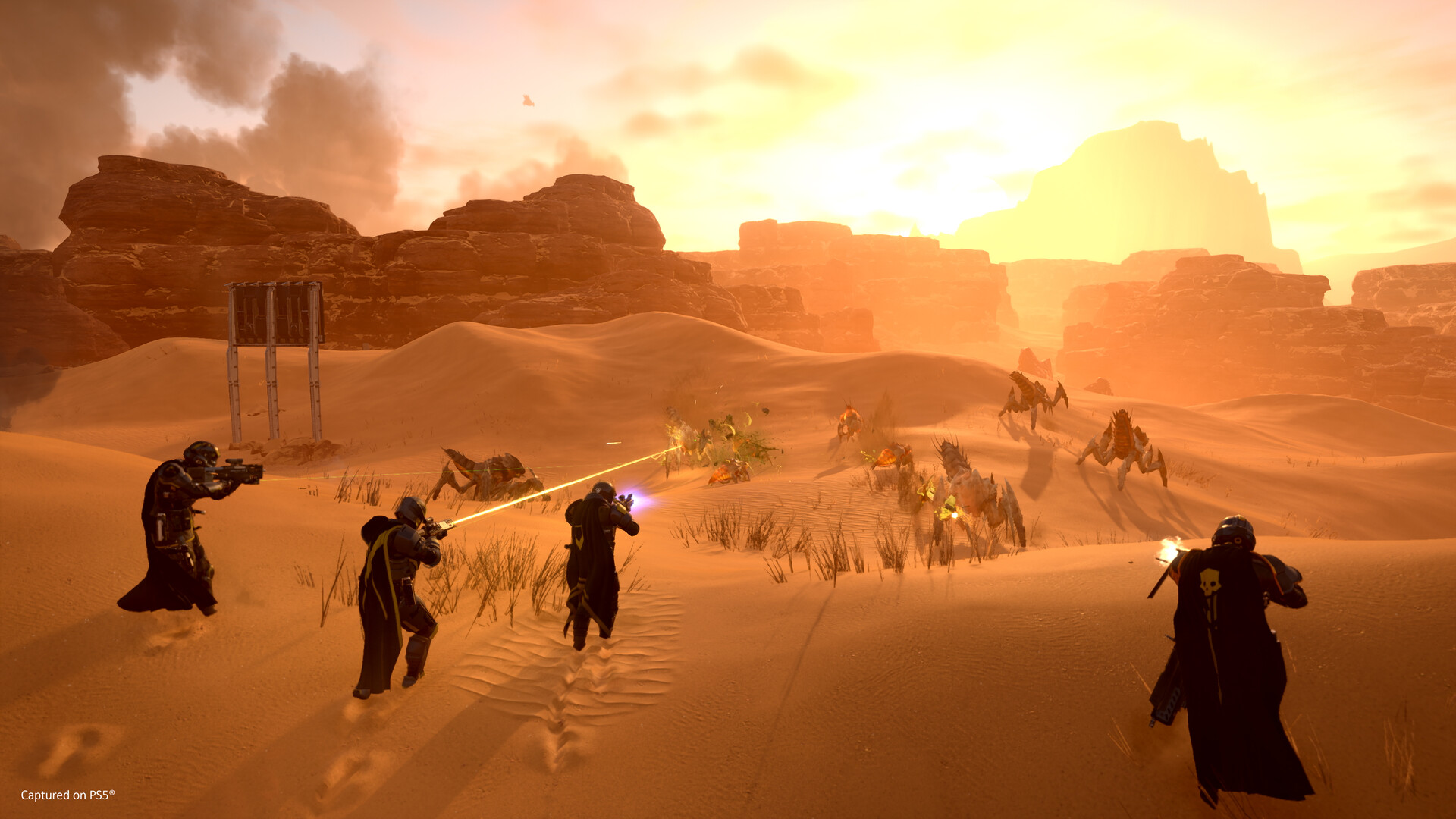
Quick Answer: Helldivers 2 Training Manual Tips help new players survive the first hours by learning mission flow, spending Requisition and samples wisely, and avoiding friendly-fire mistakes while unlocking stronger stratagems and ship upgrades.
First-Hour Checklist
Your first hour in Helldivers 2 should be spent learning movement, mission pacing, and the core loop, not chasing difficult objectives. The game is a cooperative third-person shooter built around short missions, stratagem calls, and a lot of friendly fire, so the fastest way to improve is to get comfortable with the basics in live missions. The practical goal is simple: leave the tutorial area, complete a few low-risk missions, and return to the ship with a better feel for weapons, stratagems, and extraction timing.
Do these first
- Finish the intro training and pay attention to how stratagem codes are entered.
- Run early missions on the lowest difficulty that feels comfortable.
- Pick one primary weapon you can control reliably and stick with it for a few missions.
- Call in your support weapon early so you learn how it changes your loadout.
- Practice extraction even on missions that feel messy, because leaving alive matters more than perfection.
What to learn from each mission
Use your first few deployments to answer a few basic questions. Which enemies force you to reposition? Which weapons are good at clearing groups, and which ones punish sloppy aiming? How often are you accidentally hurting teammates with grenades, orbital strikes, or sloppy shotgun fire? The point is not to build a final loadout yet. It is to understand how Helldivers 2 expects you to think under pressure.
For example, a mission against Terminid swarms teaches spacing and crowd control, while a mission against Automatons teaches cover use and target priority. A patrol that turns into a full alarm is a useful failure if it teaches you to back off and reset instead of standing in the open. A clean extraction after a mediocre mission is often a better lesson than a failed attempt at a perfect clear.
Early habits that pay off immediately
- Reload before you are empty if the fight has paused.
- Throw stratagems from a safe angle, not from the middle of the team.
- Ping enemy heavies and objectives so everyone focuses the same target.
- Move after firing explosive weapons so you do not eat your own splash damage.
- Keep an eye on your reinforcement count and avoid wasting lives on a lost objective.
The first hour is also where you learn the rhythm of the game. Helldivers 2 is not about slowly clearing every room. It is about moving, striking hard, and getting out. Once that clicks, the rest of the beginner curve becomes much easier.
Resource Priority Order
Your resource priority should favor permanent account power first, then flexible battlefield tools, then cosmetics and convenience. Helldivers 2 uses several overlapping currencies and upgrade tracks, and beginners often spread them too thin. That slows down progression because the game rewards broad competence only after you have a stable core kit.
Spend in this order
| Priority | Resource or system | Why it comes first | Good beginner use |
|---|---|---|---|
| 1 | Requisition Slips | Unlocks stratagems that expand your tactical options | Buy reliable support and defense stratagems |
| 2 | Samples | Drives ship module upgrades that improve your whole loadout | Upgrade the ship for stronger passives |
| 3 | Warbond medals | Unlocks armor, weapons, and utility from the warbond track | Pick practical gear before cosmetic extras |
| 4 | Super Credits | Useful for premium warbonds and store items | Hoard until you know what you actually want |
| 5 | Medals beyond immediate needs | Supports later unlock paths | Save for future warbond progress |
Requisition Slips are your most important early spend because they unlock the stratagems that make missions easier right away. Good beginner purchases are things that solve broad problems: a dependable anti-armor option, a safe turret, or a supply tool that keeps the squad going. If you are choosing between a flashy but situational unlock and a boring tool that works in many missions, take the boring tool first.
Samples deserve respect because ship modules are permanent power. A single module upgrade can make your whole squad feel stronger, and that matters more than a cosmetic unlock. In practice, this means you should extract with samples whenever it is realistic, but not throw a mission just to grab a few more in a dangerous area. A lost mission with samples in your pocket is still better than a dead squad chasing one extra pickup.
Warbond medals are best spent on gear that expands your options, not on filling every line in a page immediately. A beginner usually benefits more from one reliable armor set, one good utility item, and a weapon that fits their aim than from spreading medals across several pages for the sake of progress bars. Helldivers 2 Training Manual Tips usually boil down to this: unlock the tools that let you survive more situations, then chase specialization later.
Super Credits are the easiest currency to hoard badly. If you are new, do not spend them just because something is available. Premium warbonds and store items are worth considering once you know what role you like to play, but early on your best gains usually come from the base progression tracks and ship upgrades.
A simple beginner rule is to spend on permanent combat power first, then on flexibility, and only then on style. That keeps your account growing in a way you can actually feel mission to mission.
You might also like
- Helldivers 2 Available Platforms Updated 3/7/2024 See all the available platforms and consoles for Beginner Guide
- Helldivers 2 Why Now May Be the Perfect Time for a New Enemy Faction
- Helldivers 2 fan creates indoor dungeon mission concept: Beginner Guide
- Helldivers 2 Reviewed by Game878Helldivers 2Read Full Review Story5Gameplay9Visuals9Audio8Value forMoney8 Beginner Guide
- Helldivers 2 How to Destroy Fuel Silos and Stockpiled Ammunition
Common Mistakes
New players usually fail in Helldivers 2 for predictable reasons, and each mistake has a practical fix. The game is generous if you learn quickly, but it punishes habits that work in slower shooters.
1. Standing still during fights
Players freeze because they want to aim carefully or watch a stratagem land, but standing still makes you an easy target for swarms, rockets, and area damage. The fix is to treat almost every fight as a short repositioning problem: shoot, move, reload while moving, then shoot again.
2. Throwing stratagems without checking teammates
Beginners often call in orbital strikes or Eagle runs while allies are still pushing the same lane. That usually comes from excitement, not bad intent. The fix is to create a quick habit: glance at the minimap and the squad’s direction before you throw anything explosive.
3. Spending samples or medals too early on niche picks
New players like novelty, so they often buy whatever looks strongest in a vacuum. That leads to awkward loadouts that do not help in most missions. The fix is to prioritize flexible tools first, such as dependable support weapons, universal utility, and ship module upgrades that benefit every mission.
4. Ignoring objective timing
Some beginners keep farming enemies after the main objective is done, then fail extraction because the squad has burned reinforcement budget or run out of position. The fix is to treat the objective as the anchor and ask whether extra fighting is actually improving the run.
5. Fighting every patrol
A lot of losses start because a team decides every patrol must be deleted. In Helldivers 2, that often creates more enemies than the original patrol ever had. The fix is to learn when to break contact, circle around, or use stealthy movement to avoid unnecessary alerts.
6. Carrying weapons that punish the team
Explosive launchers, high-spread shotguns, and heavy stratagems all have a place, but beginners often use them as if there is no risk zone around allies. The fix is to learn your weapon’s danger radius and fire only when your team has space or when the target is isolated.
The main pattern here is simple: most beginner errors come from overcommitting. Helldivers 2 rewards control, awareness, and restraint far more than it rewards panic damage.
Pro Tips
Advanced play starts when you stop thinking only about your own damage and start thinking about squad tempo, reinforcement economy, and enemy control. These tips are the next layer beyond the obvious beginner advice.
Tip 1. Use stratagems to reset bad fights
When a mission goes loud, do not try to win every enemy spawn with primary fire. Drop a support tool, an area denial stratagem, or a defensive turret to buy breathing room, then reposition. A well-timed Eagle strike or orbital blast can turn a doomed corner into a reset point.
Tip 2. Learn which enemies deserve immediate focus
In Automaton missions, rocket threats and heavy armor can break a squad faster than basic troopers. In Terminid missions, fast melee swarms and chargers can collapse spacing. Focus the enemies that change the fight state, not just the ones closest to you.
Tip 3. Keep one player on objective work while others screen
In coordinated squads, one person can interact with terminals, upload data, or manage mission tasks while others hold the perimeter. This is much more stable than having everyone pile onto the same button or console and then getting wiped by a flank.
Tip 4. Use terrain as a weapon
Chokepoints, rocks, elevation changes, and narrow approaches are stronger than they look. Pull enemies through tight spaces and let splash damage, mines, or turret fire do the work. Open ground is often where beginner teams lose control.
Tip 5. Treat reinforcements as a squad resource
If one player keeps dying repeatedly, the whole squad pays for it. The best fix is not blame. It is often a loadout adjustment, a safer role assignment, or a temporary retreat to lower pressure. Saving the team’s lives is usually better than forcing a flashy stand.
Tip 6. Build around one job at a time
A beginner loadout works better when it has a clear purpose. For example, you can be the anti-armor player, the crowd-control player, or the objective runner. Trying to cover every role at once usually leaves you mediocre at all of them.
These are the habits that start to separate comfortable players from the ones who always feel overwhelmed. Helldivers 2 gets much easier once you understand that control beats chaos.
Graduation Threshold
You are out of the beginner phase when you can survive mission pressure without relying on luck or on the most basic support crutches. That does not mean you are a perfect player. It means you can make stable decisions under pressure, contribute to the squad, and recover when a mission turns messy.
Signs you have graduated
- You can call stratagems quickly without checking the code every time.
- You know when to fight and when to move.
- You have at least one reliable answer to armored enemies.
- You understand how to protect teammates from your own explosive tools.
- You finish missions with samples, objectives, and extraction in a controlled way more often than not.
Another strong sign is consistency across enemy types. If you can handle a Terminid mission and then switch to Automatons without feeling completely lost, you are past the first learning wall. The same is true if you can join random squads and still contribute useful damage, objective work, or support without needing constant correction.
A useful practical threshold is this: if your loadout choices are based on mission needs instead of “what looks cool,” you are moving out of beginner territory. That shift matters because it means you understand the game’s systems rather than just reacting to them. A player who knows why they brought a resupply stratagem, a shield, or an anti-armor option is much closer to the midgame than someone still experimenting blindly.
You should also expect your goals to change. Early on, the goal is survival and basic competence. After graduation, the goal becomes efficiency, build specialization, and mission optimization. At that stage, Helldivers 2 Training Manual Tips turn into broader squad strategy, higher difficulty planning, and build tuning rather than simple survival advice.
Related Guides
These next-step guides fit naturally after a beginner guide and cover the systems most players want to improve next.
- Helldivers 2 Best Starter Loadouts
- Helldivers 2 Stratagem Tier List
- Helldivers 2 Sample Farming Guide
- Helldivers 2 Warbond Progression Guide
- Helldivers 2 Difficulty Walkthrough
Common Mistakes
A separate mistake list is useful here because many beginner problems repeat across missions and enemy types. The same bad habit can ruin a Terminid swarm mission, an Automaton objective run, or an extraction under pressure.
- Using orbital and Eagle strikes too close to teammates: New players often panic and throw explosive stratagems at the first threat they see. The fix is to wait for team spacing and aim for lanes, chokepoints, or isolated targets instead of clustered allies.
- Ignoring the map and mission path: Players frequently wander after loot or stray fights and lose tempo. The fix is to keep the team oriented around the main objective and only detour when the sample or objective value is clearly worth the risk.
- Bringing too much overlap in squad loadouts: Four players all bringing the same crowd-clear tools can leave the squad weak against armor. The fix is to diversify roles so at least one person can answer heavy targets, one can control swarms, and one can support objectives.
- Panicking during resupply and reinforcement calls: New players call these in at bad moments because they wait until the last possible second. The fix is to use these tools proactively, especially before a difficult push or after a messy fight.
- Treating extraction like a victory lap: Beginners often relax too early and get wiped at the end. The fix is to treat extraction as a defensive phase, hold position, and save ammunition and stratagems for the final defense.
FAQ
What should I unlock first in Helldivers 2?
Unlock practical stratagems and early ship upgrades first, because they improve almost every mission you run. A dependable support weapon, a supply tool, or a defensive option usually helps more than a niche unlock.
Is solo play viable for beginners?
Solo play is possible, but the game is clearly built around squad coordination. Beginners usually learn faster with teammates because they can see how other players handle objectives, enemy pressure, and stratagem timing.
Which enemies should beginners fear most?
The answer depends on the faction, but armored enemies and fast pressure units cause the most trouble early on. In practice, anything that forces you to stop moving or exposes you to splash damage is worth learning to respect quickly.
Should I spend Super Credits early?
Usually no. Super Credits are better treated as a long-term resource until you know which warbond or store item you actually want. Early progression is usually stronger when you focus on the base unlock tracks.
When should I increase difficulty?
Raise difficulty only when you can finish missions consistently, not when one lucky run goes well. If you can survive, complete objectives, and extract without burning the squad down, that is the right time to step up.
Do I need perfect aim to enjoy the game?
No. Good positioning, timing, and squad awareness matter more than pure aim in Helldivers 2. Many missions are won because the team moved well, called stratagems cleanly, and avoided avoidable deaths.
Sources
- https://store.steampowered.com/app/553850/
- https://howlongtobeat.com/?q=helldivers2
- https://www.steamcommunity.com/stats/553850/achievements
- https://www.metacritic.com/game/helldivers-2
- https://www.protondb.com/app/553850
- https://www.cheapshark.com/redirect?dealID=m%2FqQjo0uKy1J43MzqV%2B3wHWO4xOCNp9UMfo%2BfATGaNY%3D
See also
- Helldivers 2 Beginner Guide: Start Strong, Spend Smart, and Survive the Early War
- Helldivers 2 Pages using DynamicPageList3 parser function: Beginner Guide
- Helldivers 2 How to Fix Stuck in Drop Pod Bug
- Helldivers 2 Unnamed Super Earth Fighter Craft Beginner Guide
- Helldivers 2 Pages using Tabber parser tag Beginner Guide
- Helldivers 2 How to Get the EX-03 Prototype 3 Armor Set
- Helldivers 2 Helldivers 1:Chief Communications Officer Beginner Guide
- Helldivers 2 Failed to Establish Network Connection Error Beginner Guide
- Helldivers 2 Does Support Crossplay and Cross Save: Beginner Guide
- Helldivers 2 Can You Change Ship Name: Beginner Guide
Screenshots


Reviewed by
HD2 Guides Editorial
Expertise: Editorial team behind HD2 Guides. Content is compiled from official patch notes, community wikis, and playthrough notes, then reviewed and updated on schedule.
Sources
Helldivers 2 Missions Guides →
Browse the complete missions collection and its focused guides.
Related Guides
🔥 Popular Guides
Helldivers 2 Tier List — Weapons, Warbonds, Armor & Stratagems
Master Helldivers 2 tier list hub: warbond rankings, armor passives, weapons, and stratagems. Jump to the warbond or armor list for your build.
Helldivers 2 Armor Tier List — Best Passives Ranked
Helldivers 2 armor tier list ranked by passive value: scout, medium, heavy, and specialist sets. Best passives for solo, co-op, and high difficulties.
Helldivers 2 Warbond Tier List — Best Warbonds to Buy First
Ranked Helldivers 2 warbond tier list: which warbonds to buy first, best value for medals, and what to skip. Updated for current meta.

Helldivers 2 Weapon Tier List: Best Weapons for Every Loadout
Compare the best Helldivers 2 weapons, budget substitutes, late-bloomers, reroll advice, and endgame loadout investments.
📋 Patch Notes & Updates
🛠️ Popular Tools
Frequently Asked Questions
Quick answers from the guide · click a question to expand.
What should I unlock first in Helldivers 2?
Unlock practical stratagems and early ship upgrades first, because they improve almost every mission you run. A dependable support weapon, a supply tool, or a defensive option usually helps more than a niche unlock.
Is solo play viable for beginners?
Solo play is possible, but the game is clearly built around squad coordination. Beginners usually learn faster with teammates because they can see how other players handle objectives, enemy pressure, and stratagem timing.
Which enemies should beginners fear most?
The answer depends on the faction, but armored enemies and fast pressure units cause the most trouble early on. In practice, anything that forces you to stop moving or exposes you to splash damage is worth learning to respect quickly.
Should I spend Super Credits early?
Usually no. Super Credits are better treated as a long-term resource until you know which warbond or store item you actually want. Early progression is usually stronger when you focus on the base unlock tracks.
When should I increase difficulty?
Raise difficulty only when you can finish missions consistently, not when one lucky run goes well. If you can survive, complete objectives, and extract without burning the squad down, that is the right time to step up.
Do I need perfect aim to enjoy the game?
No. Good positioning, timing, and squad awareness matter more than pure aim in Helldivers 2. Many missions are won because the team moved well, called stratagems cleanly, and avoided avoidable deaths.
Was this guide helpful?
Rate this guide so we can improve it.
Share your own tip
Found something not in the guide? Submit it below — our editors review every tip before publishing. No account required.