 Helldivers 2
Helldivers 2 Latest News and Updates Beginner Guide
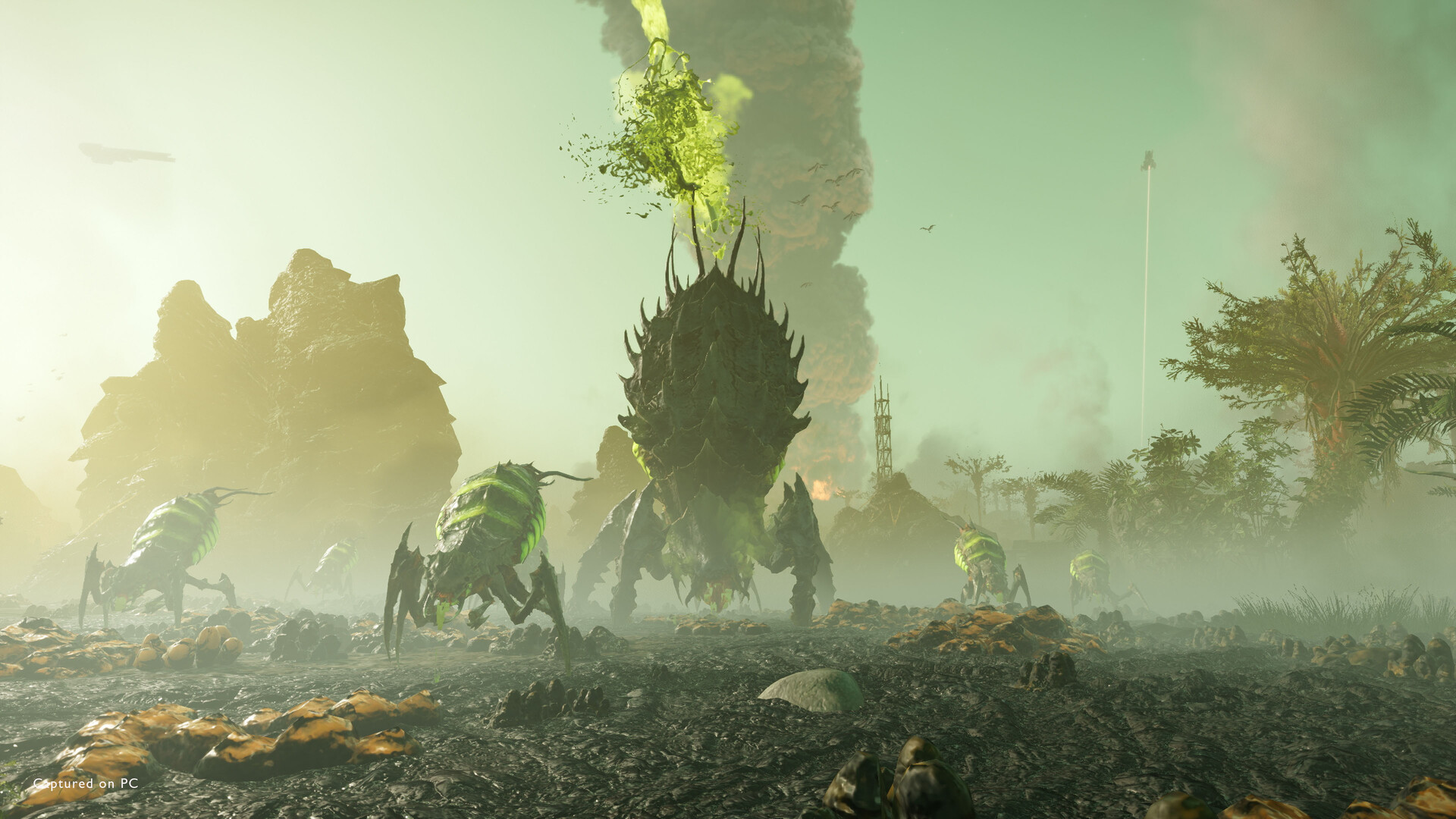
Quick Answer: Helldivers 2 Latest News and Updates mostly matter for beginners because balance, anti-cheat, and reward changes can shift the early grind, but the best start is still the same: unlock key stratagems, practice objective play, and spend resources carefully.
Helldivers 2 is a fast, chaotic co-op shooter where strong fundamentals beat raw aim. As a beginner, your goal is simple: survive longer, extract more often, and unlock the tools that make every mission easier. The game’s current reception is still strong, with Steam listing it as “Mostly Positive” (75.1% positive) across 1151055 reviews Source and Metacritic aggregating an 82/100 critic score across 69 professional reviews Source. That says a lot about the game’s staying power, but it also hints at a truth new players feel immediately: Helldivers 2 rewards knowledge far more than button mashing.
The good news is that the beginner phase is short if you focus on the right things. The bad news is that the game doesn’t always explain those things clearly. You can waste early samples, pick the wrong stratagems, or rush into harder missions before you have the tools to carry your weight. This guide keeps things practical and current, with the kind of advice that still matters even as Helldivers 2 Latest News and Updates continue to tweak the wider meta.
First-Hour Checklist
Your first hour in Helldivers 2 should be spent learning the ship, clearing low-risk missions, and unlocking a core loadout instead of chasing flashy kills. The early game is less about “winning hard” and more about building habits that keep you alive when the screen fills with bugs, bots, and stratagem chaos.
1) Finish the tutorial and inspect every ship console
Your first action should be to complete the tutorial, then walk around your Destroyer and interact with the ship systems before jumping into a mission. The tutorial teaches the basics of movement, shooting, calling stratagems, and extraction, but the real beginner trap is skipping the ship UI.
Pay attention to these early examples:
- Warbond menu: this is where you see unlock tracks and plan what to buy first.
- Stratagem console: this is where you’ll eventually choose support weapons, sentries, and orbital tools.
- Operations terminal: this is where you select planets and mission types.
If you understand where these systems live, you waste less time later when the match timer is ticking and your squad is yelling for reinforcements.
2) Play on the lowest difficulty until you can extract reliably
Start with the easiest difficulty available and focus on mission completion over kill count. In Helldivers 2, survival and extraction are what convert a mission into progress. A run where you finish objectives but die repeatedly is still less valuable than a calm mission where you extract with samples and Super Credits intact.
Use your first few missions to learn:
- How enemies react when you shoot them from behind cover.
- How fast your reloads, reload canceling, and stamina management matter.
- How to call down an extraction zone without panicking.
Two concrete beginner examples:
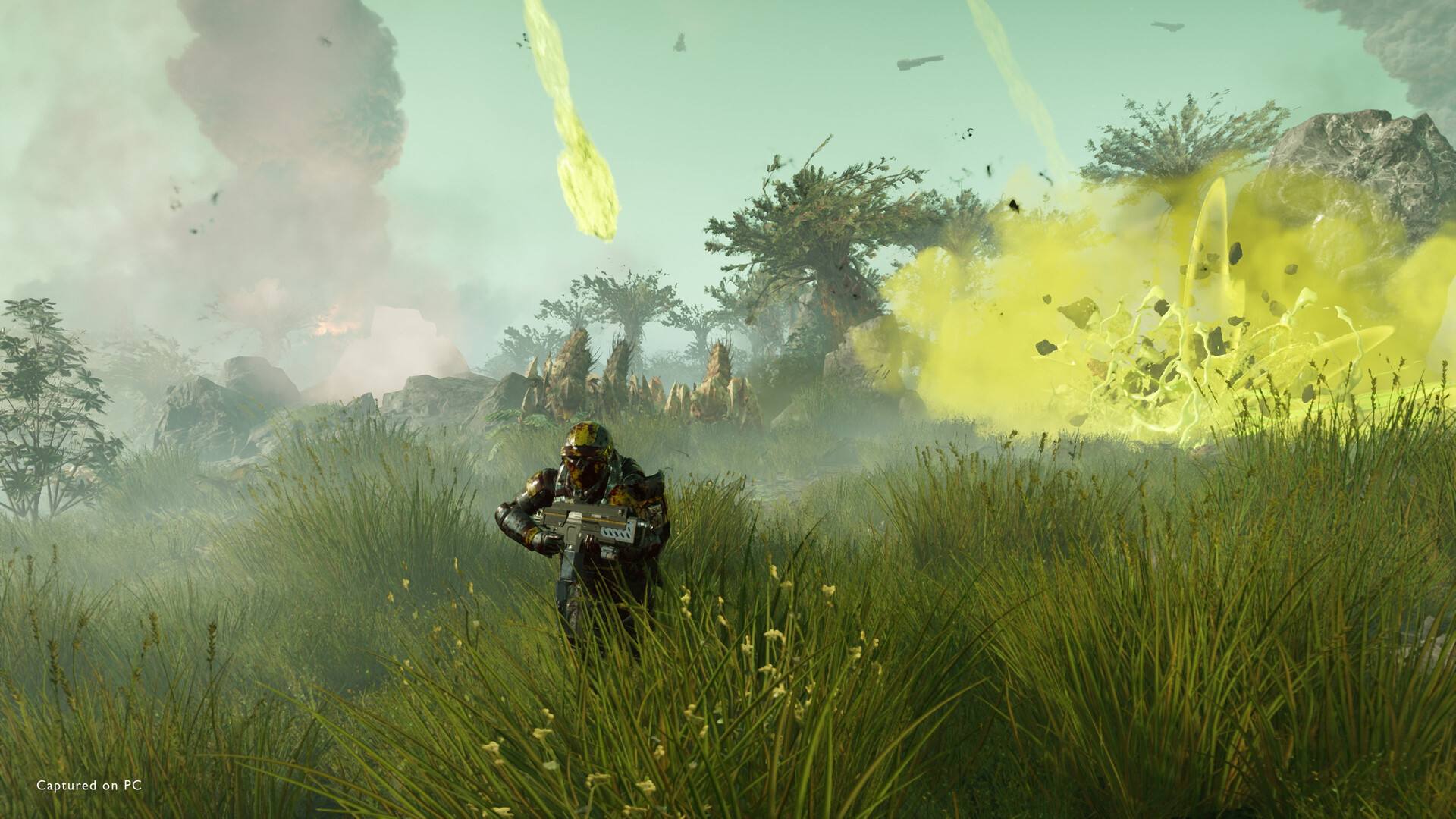
- On a Terminid nest mission, practice using terrain to break line of sight while bugs funnel through choke points.
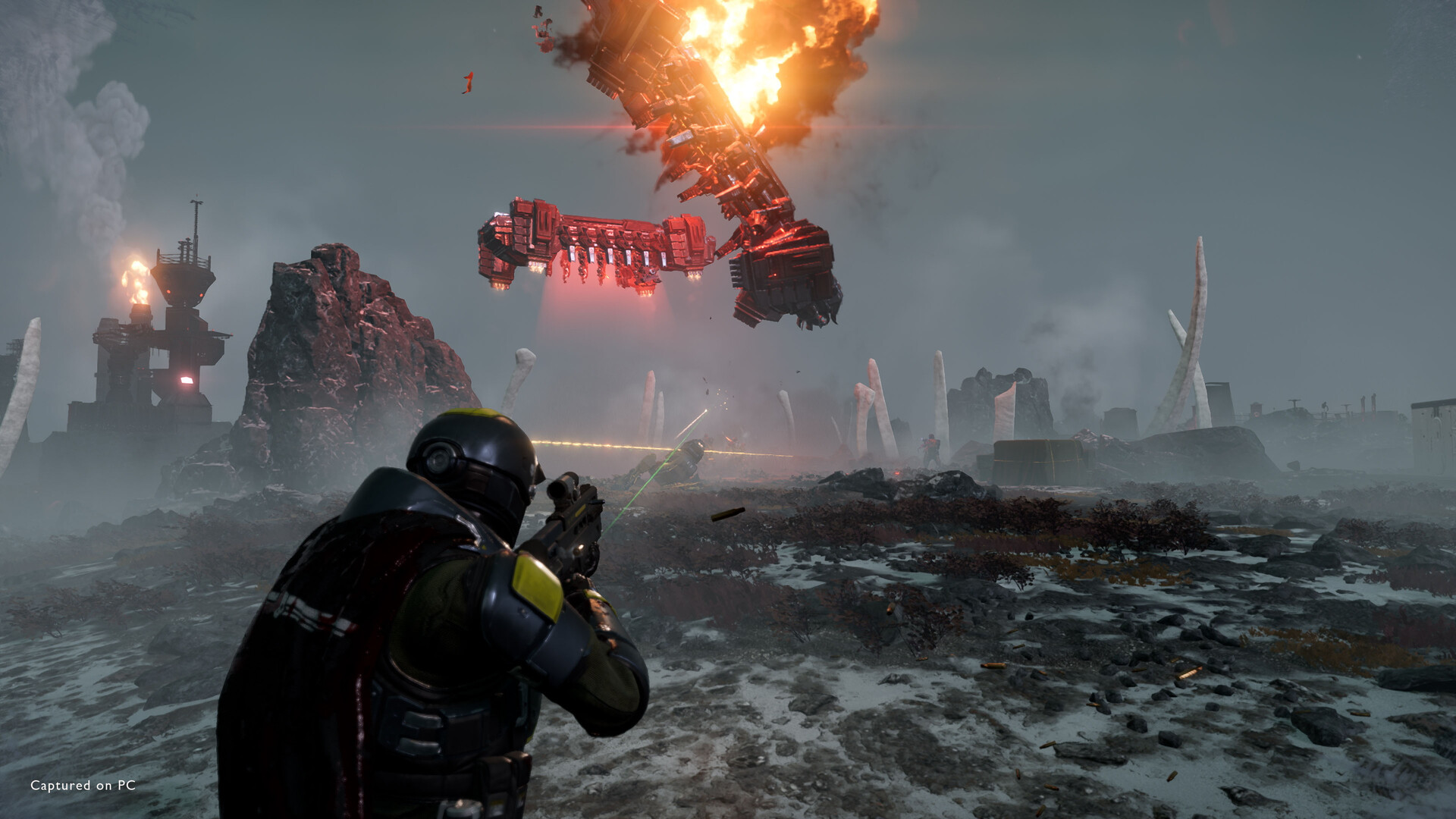
- On an Automaton outpost mission, learn to respect rocket fire and use hard cover instead of open sprinting.
3) Unlock one reliable support weapon and one defensive stratagem
Your first unlocks should be simple, dependable, and useful in almost every mission. Do not spend early resources on gimmicks just because they sound cool. In the early game, you want tools that help when your primary weapon starts to feel weak.
Good beginner-friendly examples include:
- A support weapon that solves armored targets or crowd control.
- A sentry that buys you space during objectives and extraction.
- A defensive orbital that clears a spawn wave or objective rush.
The exact best choice can shift with Helldivers 2 Latest News and Updates, but the beginner principle does not: one tool for armor, one tool for area control, one tool for emergencies.
4) Test your equipment in live missions, not just menus
A weapon that feels strong on paper can be awkward in real missions. Fire it at patrols, armors, and objective defenders before you decide it’s your “main.”
Examples of what to test right away:
- A primary rifle against small enemies and mid-range targets.
- A shotgun or close-range weapon when defending a console or terminal.
- A grenade or explosive stratagem on clustered enemies and nests.
You are looking for feel, not just damage. If a weapon makes you miss often, reload at bad times, or overcommit in close quarters, it may be a poor beginner choice even if experienced players praise it later.
5) Leave your first session with one repeatable loop
By the end of your first hour, you should know how to do this loop:
- Pick a low-risk mission.
- Land near the objective.
- Clear patrols calmly.
- Complete the objective.
- Extract with samples and currency.
- Spend only on one or two meaningful unlocks.
That loop is the foundation of your entire early progression. Once it feels natural, you can start experimenting with harder planets, higher difficulties, and more specialized loadouts.
Resource Priority Order
Your resource priority should be progress first, flexibility second, and luxury unlocks last. Helldivers 2 gives you several progression currencies and upgrade paths, and beginners often dilute their progress by buying too many sidegrades before they have a stable core build.
Spend first on dependable stratagems, not novelty picks
Your earliest spends should go into stratagems that help in almost every mission type. Think in terms of “mission survival” rather than “cool factor.”
A sensible early priority looks like this:
| Priority | What to Focus On | Why It Matters Early | Beginner Example |
|---|---|---|---|
| 1 | Reliable support weapon | Lets you handle armor and stronger targets | Anti-armor launcher, machine-gun-style support |
| 2 | Defensive stratagem | Keeps you alive during objectives and extraction | Sentry turret, orbital crowd control |
| 3 | Mobility/survival utility | Helps reposition and recover from mistakes | Stamina-friendly tools, emergency escape options |
| 4 | Armor or weapon sidegrades | Improves comfort once your core kit works | Special armor perks, situational primaries |
| 5 | Fun or niche picks | Great later, but not your first efficiency buy | Experimental orbital choices, roleplay loadouts |
The reason this works is simple: a new player’s biggest problem is usually not “I need one more damage upgrade,” but “I got overwhelmed, pinned down, or deleted by armor.” Tools that solve those problems raise your mission success rate immediately.
Hoard samples until you know what your build needs
Samples are one of the most important beginner resources because they are tied to ship progression, and ship modules can dramatically improve the feel of your loadout. The mistake is spending them too early on upgrades that sound useful but don’t match your current weapons or playstyle.
A better approach:
- Hoard samples early until you know what stratagems you want to use regularly.
- Upgrade modules that support your most-used tools first.
- Do not spread upgrades across everything equally just because you can.
For example:
- If you run sentries often, module improvements that make defensive setups smoother are valuable.
- If you prefer direct combat and repositioning, upgrades that help your strike timing or survival may matter more.
- If your squad already has a dedicated anti-armor specialist, you can delay some heavy-investment choices and focus on support utility.
Treat Super Credits as a strategic currency
Super Credits deserve extra care because they can be earned in missions or purchased, and current anti-cheat/news coverage has highlighted that the economy around them is still a live topic. A recent report about Arrowhead’s anti-cheat actions noted that the system now tracks abnormal Super Credit farming, which tells you the currency remains important enough to monitor closely. That matters for beginners because it reinforces the rule: don’t waste premium-style resources on impulse buys.
Use Super Credits for:
- Warbond unlocks you will actually use.
- Armor or weapons that fit your preferred role.
- Progression paths you can keep using across several mission types.
Save them instead of spending them the moment you get them. The early game becomes much smoother when you have enough to unlock a genuinely useful item instead of a cosmetic or niche option that looks good but doesn’t help you survive.
Delay expensive experimentation until your core loop is stable
Once your first missions feel consistent, then it becomes reasonable to test more specialized tools. Until then, avoid “collection brain,” where every new unlock distracts from your main progression path.
A good rule of thumb:
- If you cannot reliably extract on easy missions, do not branch into three different weapon families.
- If you do not yet understand how armor classes pressure your squad, do not spend on pure novelty.
- If you are still missing extraction often, prioritize survival and mission control over damage tinkering.
That resource discipline is one of the fastest ways to turn Helldivers 2 Latest News and Updates into practical progress instead of just patch-reading.
You might also like
- Helldivers 2 fourth faction alternative multiple enemies planet why Beginner Guide
- Helldivers 2 Which enemy faction do you enjoy fighting in: Beginner Guide
- Helldivers 2 Reviewed by Game878Helldivers 2Read Full Review Story5Gameplay9Visuals9Audio8Value forMoney8 Beginner Guide
- Helldivers 2 fan creates indoor dungeon mission concept: Beginner Guide
- Helldivers 2 How to Destroy Fuel Silos and Stockpiled Ammunition
Common Mistakes New Players Make
The most common beginner mistakes in Helldivers 2 come from rushing, overcommitting, and ignoring mission flow. This game looks like a pure shooter, but many failures happen because players misunderstand pacing, stratagem timing, or team roles.
1) Sprinting into every fight
New players often assume speed equals progress, so they run straight into patrols, objective zones, and extraction points without checking the map or enemy density. That usually turns one small mistake into a full reinforcement chain.
Why it happens: the game is exciting, and enemies can be beaten in short bursts, so players think aggression is always correct.
Fix: slow down before every objective and clear patrols from cover. Examples:
- On Terminid missions, stop sprinting the instant you hear bug chatter or see movement near a nest.
- On Automaton missions, use hard cover and let enemy fire reveal their position before you push.
- During extraction, hold a defensive angle instead of chasing kills into the open.
2) Ignoring stratagem code practice
A lot of beginners look at stratagem inputs as a menu detail instead of a combat skill. Then they panic when a titan, hulk, or swarm appears and they misinput the call.
Why it happens: stratagems feel optional at first, and their buttons are easy to forget under pressure.
Fix: practice your most-used codes during quiet moments and mission downtime. Examples:
- Call a sentry at the start of a defend mission until the input becomes automatic.
- Rehearse your support weapon drop before hard objectives.
- Learn one emergency orbital you can call without staring at the screen.
3) Spending samples on random upgrades
Beginners often dump samples into whatever module looks strongest on the current screen. Then they realize later that the upgrade doesn’t fit the weapons they actually use.
Why it happens: upgrade descriptions sound helpful, and the game doesn’t loudly warn you about long-term efficiency.
Fix: build around your real loadout first. Examples:
- If you always bring a sentry, prioritize upgrades that help that playstyle.
- If your squad lacks armor control, save for tools that solve that gap.
- If you switch weapons every mission, choose universal upgrades before specialist ones.
4) Bringing too many offensive tools and not enough survival tools
New players love damage, so they bring multiple explosions and no plan for when the fight goes wrong. That creates short, dramatic deaths instead of steady mission clears.
Why it happens: big explosions are fun and make you feel powerful immediately.
Fix: balance offense with control and escape. Examples:
- Pair an orbital strike with a defensive sentry or shield-style utility.
- Bring one tool for groups and one for armor.
- Use your primary weapon for small targets instead of spending every stratagem on them.
5) Fighting every patrol instead of choosing battles
Not every enemy group needs to die. Beginners often engage patrols that could have been avoided, which burns ammo, time, and reinforcements.
Why it happens: players assume every visible enemy is a mandatory fight.
Fix: identify when to pass by, when to clear, and when to disengage. Examples:
- If a patrol is far from the objective, move around it.
- If an outpost is optional and your squad is low on resources, skip it.
- If you trigger a bad engagement near extraction, break line of sight and regroup.
6) Picking difficulty based on ego instead of readiness
It is tempting to jump to harder missions because the rewards look better or because your friends want to push. But in Helldivers 2, readiness is more important than bravery.
Why it happens: higher difficulty sounds like faster progression and better loot.
Fix: move up only when you can complete lower missions cleanly. Examples:
- You should extract consistently from your current tier before moving on.
- You should know how to handle both bug swarms and bot fire.
- You should have one dependable answer for armor, crowds, and emergencies.
Pro Tips
These advanced beginner tips help you feel stronger without requiring perfect aim or a full meta loadout. They are small habits that create big results over time.
Tip 1. Use cover before you use ammo
If you are about to shoot across open ground, move first and fire second. Helldivers 2 rewards players who reduce incoming damage before they try to maximize outgoing damage. A rock, wall, hill, or objective structure can be the difference between a clean defense and a wasted reinforcement.
Tip 2. Save your support weapon for the target it solves
If your support weapon exists to kill armor, do not waste it on tiny enemies. Use your primary or a teammate’s area control instead. For example, anti-armor tools should be reserved for enemies like Chargers or Hulks, not for every small patrol that wanders into view.
Tip 3. Drop stratagems before the fight fully starts
When you suspect a big engagement is coming, call your tools early. A sentry placed before enemies swarm is worth far more than one dropped after your team is already surrounded. This is especially true on defense missions, objective holds, and extraction.
Tip 4. Learn one “panic reset” route on each map
Every map has safer ground, retreat lanes, and awkward terrain that can save your run. Once you know a route where you can reset after a bad pull, you stop losing missions to one mistake. Think in terms of hills, chokepoints, and cover chains rather than just the shortest line to the objective.
Tip 5. Let your squad specialize naturally
A strong beginner squad does not need four copies of the same loadout. If one player brings armor control, another can lean into crowd clear, and a third can focus on utility. Even without voice chat, you can often tell who should bring what by watching what the team already lacks after the first mission.
Tip 6. Farm calm missions for consistency, not chaos for ego
If you need samples, medals, or practice, choose missions where you can keep the situation under control. Repetition on manageable content teaches more than repeated failure on content that is technically above your current skill ceiling.
Graduation Threshold
You are out of the beginner phase when you can extract consistently, understand your role in a squad, and build a loadout around mission goals instead of random gear you just unlocked. There is no single level number or perfect badge for this transition, because Helldivers 2 is skill-driven, not just progression-driven.
A practical graduation checklist looks like this:
- You can complete low and mid-tier missions without constant reinforcement losses.
- You understand when to fight patrols and when to bypass them.
- You have at least one answer for armored enemies, one answer for swarms, and one tool for defense.
- You know how to read mission objectives quickly and move with purpose.
- You spend samples and credits intentionally, not impulsively.
You can also tell you’ve outgrown the beginner stage when the game starts to feel like a tactical rhythm rather than a panic simulator. For example, you may notice that on Terminid extermination missions you naturally set up kill zones, while on Automaton operations you instinctively take cover and stagger enemy advances. That’s the point where you stop learning only the controls and start learning the game’s deeper decision-making.
A useful benchmark is your mission consistency, not your kill count. If you are finishing objectives, keeping reinforcements under control, and extracting with resources often enough that progression feels steady, you are ready to move beyond starter advice. At that stage, Helldivers 2 Latest News and Updates become more about adapting your builds than saving your fundamentals.
Related Guides
These next-step guides are the natural follow-ups once you finish the basics and want to sharpen your loadout or campaign planning.
- helldivers 2 available platforms Helldivers 2 Best Early Game Stratagems
- related guide Helldivers 2 Beginner Loadouts for Bugs and Bots
- helldivers 2 why tips Helldivers 2 Ship Module Upgrade Priority Guide
- related guide Helldivers 2 Warbond Unlock Guide
- rock galactic remnant outriders Helldivers 2 Mission Types and Objectives Explained
Sources
- https://store.steampowered.com/app/553850/
- https://www.metacritic.com/game/helldivers-2
- https://howlongtobeat.com/?q=helldivers2
- https://steamcommunity.com/stats/553850/achievements
See also
- Helldivers 2 Beginner Guide: Start Strong, Spend Smart, and Survive the Early War
- Helldivers 2 Pages using DynamicPageList3 parser function: Beginner Guide
- Helldivers 2 How to Fix Stuck in Drop Pod Bug
- Helldivers 2 How to Get the EX-03 Prototype 3 Armor Set
- Helldivers 2 Unnamed Super Earth Fighter Craft Beginner Guide
- Helldivers 2 Helldivers 1:Chief Communications Officer Beginner Guide
- Helldivers 2 Pages using Tabber parser tag Beginner Guide
- Helldivers 2 Failed to Establish Network Connection Error Beginner Guide
- Helldivers 2 patch notes 2026-07-23: Patch Notes Explained
- Helldivers 2 Does Support Crossplay and Cross Save: Beginner Guide
Screenshots


Reviewed by
HD2 Guides Editorial
Expertise: Editorial team behind HD2 Guides. Content is compiled from official patch notes, community wikis, and playthrough notes, then reviewed and updated on schedule.
Sources
Helldivers 2 Missions Guides →
Browse the complete missions collection and its focused guides.
Related Guides
🔥 Popular Guides
Helldivers 2 Tier List — Weapons, Warbonds, Armor & Stratagems
Master Helldivers 2 tier list hub: warbond rankings, armor passives, weapons, and stratagems. Jump to the warbond or armor list for your build.
Helldivers 2 Armor Tier List — Best Passives Ranked
Helldivers 2 armor tier list ranked by passive value: scout, medium, heavy, and specialist sets. Best passives for solo, co-op, and high difficulties.
Helldivers 2 Warbond Tier List — Best Warbonds to Buy First
Ranked Helldivers 2 warbond tier list: which warbonds to buy first, best value for medals, and what to skip. Updated for current meta.

Helldivers 2 Weapon Tier List: Best Weapons for Every Loadout
Compare the best Helldivers 2 weapons, budget substitutes, late-bloomers, reroll advice, and endgame loadout investments.
📋 Patch Notes & Updates
🛠️ Popular Tools
Was this guide helpful?
Rate this guide so we can improve it.
Share your own tip
Found something not in the guide? Submit it below — our editors review every tip before publishing. No account required.