 Helldivers 2
Helldivers 2 General Brasch Beginner Guide
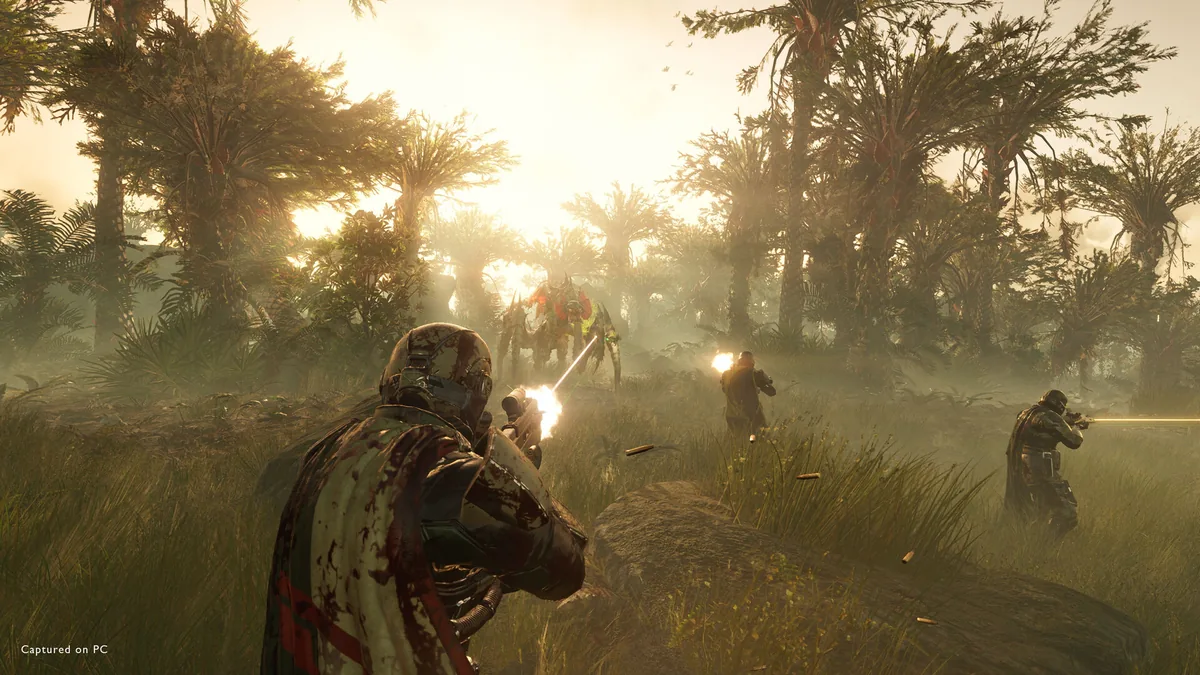
Quick Answer: Helldivers 2 General Brasch is the game’s over-the-top training voice and patriotic mascot, and the best beginner approach is to treat his advice as a mindset: learn objectives fast, survive first, and unlock practical stratagems before chasing flashy gear.
Helldivers 2 throws you into a chaotic co-op war where discipline matters more than ego, which is exactly why so many new players search for Helldivers 2 General Brasch. He represents the game’s core lesson: you do not win by looking heroic for ten seconds, you win by finishing objectives, keeping your squad alive, and extracting with your rewards. That matters because this is a live co-op shooter with a huge player base. Steam’s official page currently shows a "Mostly Positive" 75.1% positive rating across 1151055 reviews and about 29205 players in game on Steam right now Source. HowLongToBeat also pegs the main story path at 32.43 hours Source, so even though your first hour is important, the early game is really about building habits that will carry you much further.
What Helldivers 2 General Brasch Means for Beginners
Helldivers 2 General Brasch matters to beginners because he symbolizes the correct way to approach the game: stay mission-focused, accept that death happens, and learn systems before chasing style points.
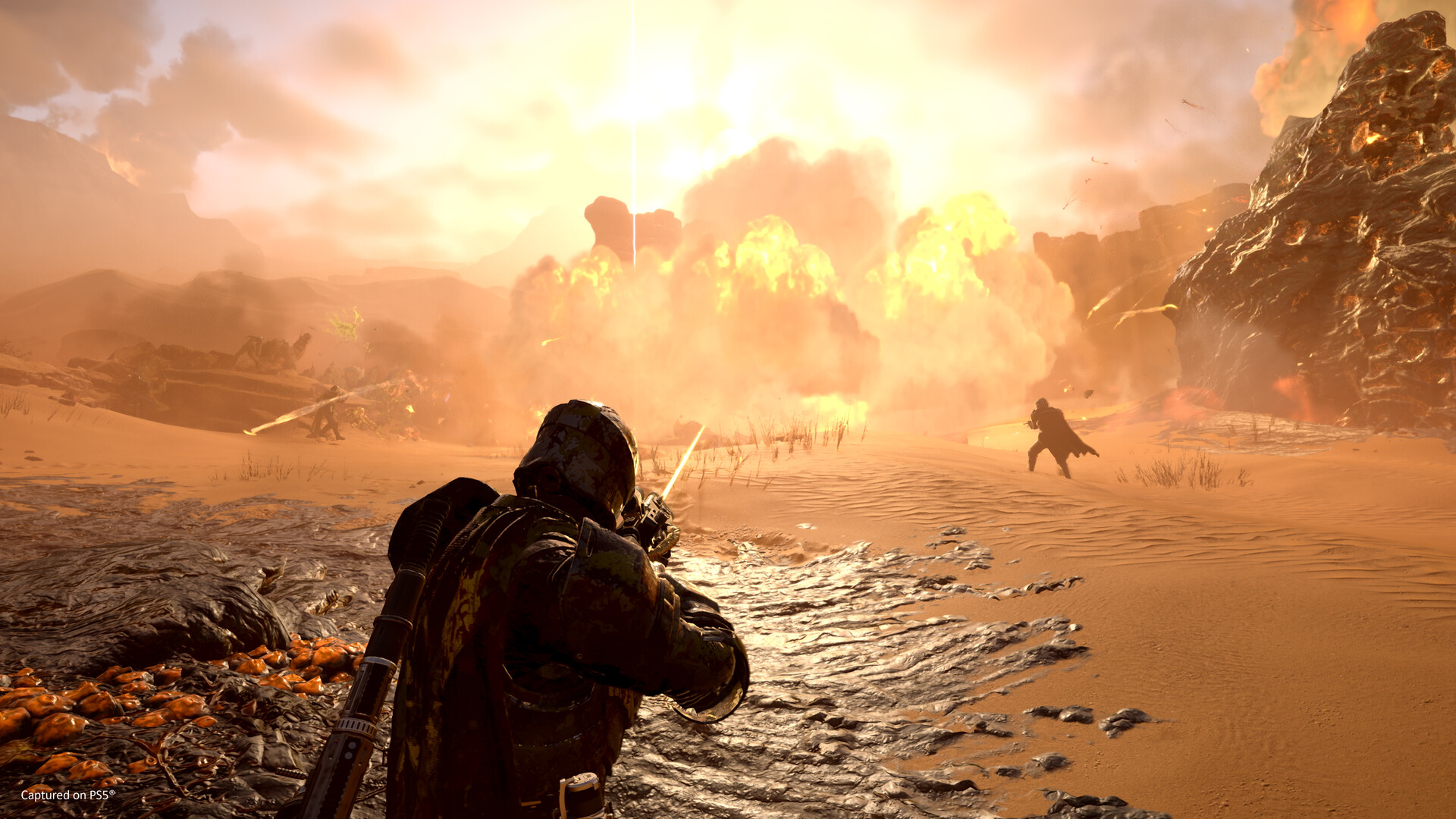
If you are brand new, it helps to understand that Brasch is not just a funny propaganda character. He frames the game’s tone, but he also points at the underlying rhythm of play. HELLDIVERS 2 is described by Steam as a fight for freedom across a hostile galaxy in a “fast, frantic, and ferocious third-person shooter” Source. That wording is accurate. The pace is intense, enemies swarm fast, and the game expects you to make decisions under pressure.
For beginners, that means three things right away:
- Your job is to complete objectives, not to clear every enemy on the map.
- Your loadout matters, but your movement and awareness matter more.
- Friendly fire is part of the game, so positioning is a real skill, not a side detail.
General Brasch’s style pushes the fantasy that every Helldiver is an elite hero, but the practical reading is more useful: play like a disciplined soldier, not like a lone action star. In real matches, that means knowing when to throw an Eagle strike, when to save a reinforcement, and when to simply disengage and move to the next terminal, uplink, or extraction zone.
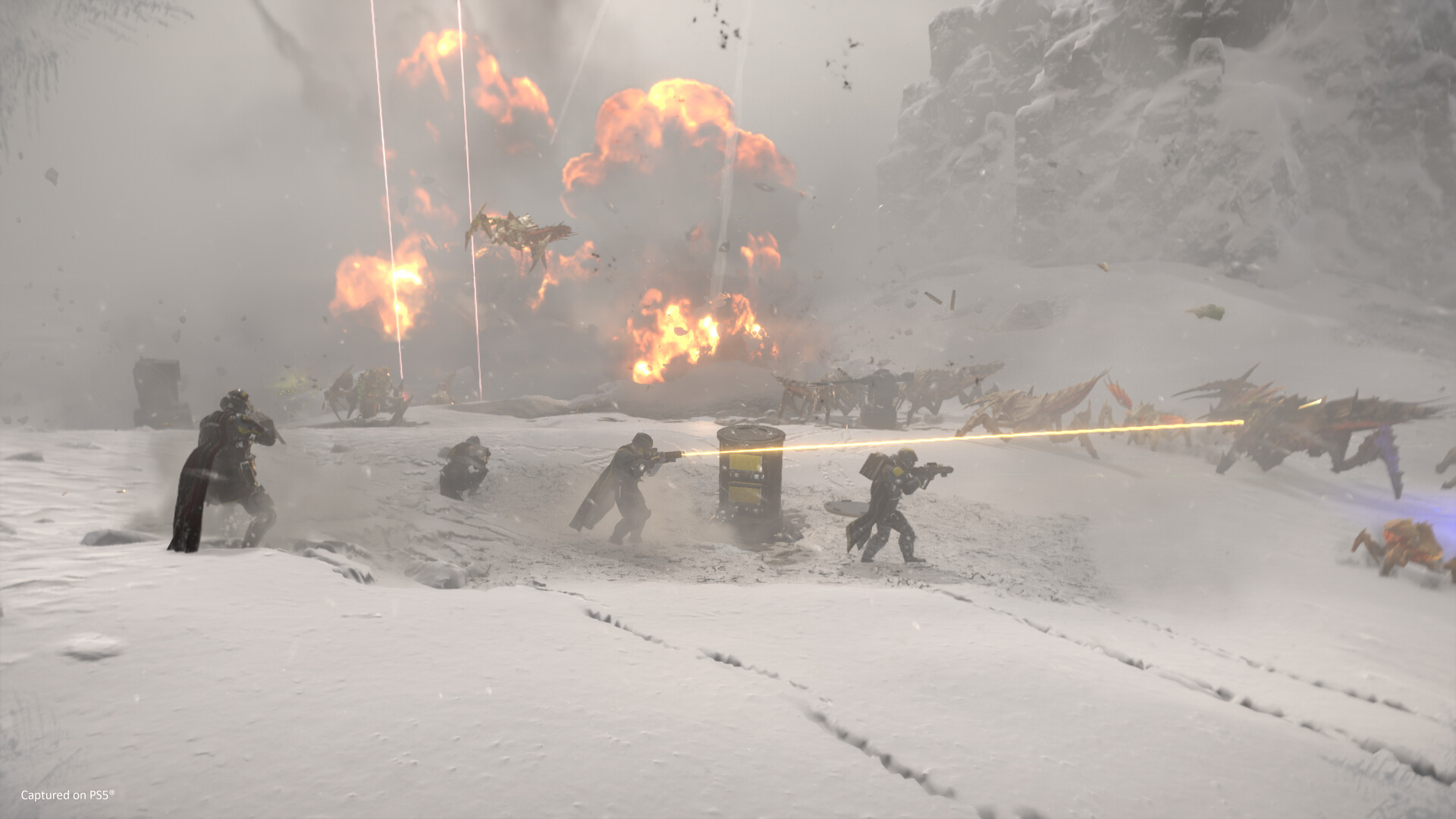
You can see this difference very early. A new squad on bug planets often gets stuck fighting endless breaches instead of sealing nests or moving to the objective. A new squad on Automaton worlds often stands in the open trading shots with Devastators or Hulks instead of using rocks, terrain, and quick flanks. In both cases, the “Brasch-approved” answer is simple: finish the mission first, clean up second.
This also helps explain why the early game feels rough for some players. The learning curve is less about recoil control and more about battlefield judgment. You need to recognize when a Charger is worth kiting, when a Bile Titan needs anti-heavy tools, and when a bot outpost is not worth a prolonged firefight. If you adopt that mindset early, the rest of the beginner phase becomes much smoother.
First-Hour Checklist
Your first hour in Helldivers 2 should be spent unlocking core systems, learning objective flow, and building a reliable starter loadout instead of experimenting with every flashy option.
A lot of new players waste their opening sessions because they bounce between menus, queue into missions above their comfort level, or buy things that look cool but do not solve common early problems. A better first-hour path is much more focused.
First 15 Minutes: Learn the Ship and Terminals
- Walk through your ship and interact with the mission table, armory, and acquisition menus.
- Check where stratagems are equipped and how weapons, grenades, and armor are changed.
- Run the tutorial if you have not completed it yet, especially to lock in calling stratagem inputs under pressure.
- Pay attention to how reinforcements, resupplies, and extractions are requested.
This sounds basic, but it prevents a common early problem: players entering missions without knowing how to call supplies, redeploy allies, or adjust equipment.
Next 20 Minutes: Run Low-Stress Operations
- Queue for easier missions first, ideally against enemies whose behavior is easier to read at low intensity.
- Prioritize missions with clear objectives like destroying nests, uploading data, or activating terminals.
- Practice extraction timing and how long holding a zone feels when enemies keep spawning.
- Learn how side objectives and points of interest appear on the map.
Your goal here is not kill count. Your goal is to understand mission flow:
- Drop in.
- Reach objective.
- Clear enough space to interact.
- Finish the task.
- Move before the enemy momentum snowballs.
- Extract with samples and rewards.
Final 20-25 Minutes: Test Core Battlefield Habits
- Practice using cover against Automatons rather than standing still and firing.
- Practice circling and spacing against Terminids rather than backing into walls.
- Throw resupply where your team can safely reach it, not into active chaos.
- Start tagging enemies and points of interest so you build team awareness.
- Extract at least once with samples so you understand their value.
A strong first-hour checklist also includes trying a few common situations on purpose. Let one bug breach happen so you can see how quickly a fight escalates. Approach a bot patrol carelessly once so you understand why stealth and route discipline matter. Throw an explosive too close and learn how easily friendly fire happens. These are controlled mistakes, and they teach faster than theory.
If you only remember one first-hour rule, make it this: every mission should teach one practical skill. For example, one mission teaches stratagem input speed, another teaches objective defense, and another teaches sample collection. By the end of that hour, you want to feel comfortable with the loop, not overloaded by gear choices.
You might also like
- Helldivers 2 fourth faction alternative multiple enemies planet why Beginner Guide
- Helldivers 2 Which enemy faction do you enjoy fighting in: Beginner Guide
- Helldivers 2 Super Destroyer Screen Display Interactive Update: Beginner Guide
- Helldivers 2 Ground All Terrain Extraction Rig GATER Beginner Guide
- Helldivers 2 Reviewed by Game878Helldivers 2Read Full Review Story5Gameplay9Visuals9Audio8Value forMoney8 Beginner Guide
Resource Priority Order
The best early resource plan in Helldivers 2 is to spend for reliability first, hoard premium currency unless you know exactly what you want, and treat samples as long-term progression fuel rather than something optional.
Helldivers 2 has a few resource tracks that new players can easily mix up. The main beginner mistake is assuming every currency should be spent as soon as it appears. That is not true. Some resources are for immediate account growth, while others are more valuable when saved until you understand your preferred playstyle.
Early Priority Order
| Resource or Unlock Type | Early Priority | Beginner Rule |
|---|---|---|
| Medals | Very high | Spend on practical Warbond progression that improves everyday missions |
| Requisition Slips | High | Buy stratagems that solve common problems first |
| Samples | Very high | Extract them consistently for ship upgrades; do not treat them like bonus loot |
| Super Credits | Medium to high | Save them until you know which Warbond or unlock path fits your playstyle |
| Cosmetic picks | Low | Delay these until your mission tools feel stable |
What to Spend First
- Requisition Slips should go into practical stratagems before niche or funny picks.
- Medals should go toward useful baseline gear in your available progression path.
- Samples should shape how you play every mission: if you find them, try to leave with them.
Practical beginner purchases usually beat specialized gear. In the early game, reliable resupply access, anti-armor answers, area denial, and defensive call-ins carry more value than weapons that only shine in very specific squad setups. For example, a stratagem that helps handle medium armor repeatedly is usually a better first buy than a gimmick tool that needs perfect timing. Likewise, an airstrike that clears a nest or bot position cleanly often gives more day-to-day value than something designed for one dramatic screen wipe.
What to Hoard First
- Super Credits are the main thing worth protecting until you understand the game better.
- If you are unsure between a cool unlock and a practical one, wait one or two sessions.
- Do not buy based on hype clips alone; many tools look stronger in curated videos than in average public matchmaking.
This matters more now because Super Credits tie into Warbond progression and are valuable over time. Patch chatter has also kept attention on Super Credit gain and use, so there is extra reason to be deliberate about that resource path. New players often regret impulse spending once they realize they prefer a different weapon family or utility style.
What to Craft or Upgrade First
Ship module upgrades should favor things that improve your most-used support tools. If you frequently rely on Eagle stratagems, support weapons, or sentries, upgrades affecting those categories usually return value every mission. A narrow upgrade for something you barely equip can wait.
The beginner-friendly rule is simple:
- Invest in tools you call almost every mission.
- Delay upgrades for tools you are “planning” to learn later.
- Build around consistency, not novelty.
That approach gets you out of the shaky early game much faster.
Common Mistakes
The most common beginner mistakes in Helldivers 2 are overfighting, misusing stratagems, ignoring team spacing, and treating progression like a race instead of a survival test.
Mistake 1. Fighting every patrol
The mistake: New players engage every enemy group they see.
Why it happens: Many co-op shooters reward map clearing, so beginners assume every patrol is mandatory.
The fix: Skip fights that do not protect an objective, extraction, or important sample route. If you can crouch past a patrol or take a wider route, do it.
Mistake 2. Throwing offensive stratagems too close
The mistake: Players drop airstrikes, orbitals, or sentries directly on top of teammates.
Why it happens: Under pressure, beginners focus on the target and forget blast radius, landing delay, or turret firing lanes.
The fix: Throw from an angle, not straight through your squad. Call your strike early, then move your team sideways. With sentries, place them where they can shoot past the fight, not into your backs.
Mistake 3. Standing still against Automatons
The mistake: Players take open duels with ranged bots.
Why it happens: Bots feel like standard shooter enemies, so players fall into cover-shooter habits without enough movement.
The fix: Use hard cover, peek briefly, reposition often, and break line of sight when rockets or heavy fire start coming in. Rocks, ridges, and buildings matter a lot more on bot missions.
Mistake 4. Backing into terrain against Terminids
The mistake: Players keep retreating in a straight line until they hit a wall, nest, or cliff.
Why it happens: Bug pressure creates panic, and panic makes people run backward without checking space.
The fix: Strafe in curves, keep open ground behind your planned route, and rotate around terrain rather than straight through it. Chargers and hunters punish tunnel vision.
Mistake 5. Ignoring samples during otherwise clean missions
The mistake: Squads complete objectives but leave valuable progression behind.
Why it happens: Beginners think extraction rewards alone are enough and do not yet understand how important ship upgrades become.
The fix: Make sample pickup part of your route planning. If one player grabs a cluster near a side objective, the whole squad benefits if that player extracts.
Mistake 6. Burning reinforcements too fast
The mistake: Teams respawn players instantly into bad positions and turn one wipe into a chain wipe.
Why it happens: New players panic when someone dies and want to fix it immediately.
The fix: Reinforce into safe terrain or after the danger spike passes. It is better to lose a few seconds than to drop a teammate directly into a Hulk, Bile Titan, or active barrage zone.
Mistake 7. Overvaluing raw damage over utility
The mistake: Players pick weapons only because they seem powerful in clips or tier debates.
Why it happens: Damage is easy to understand; utility is learned through experience.
The fix: Bring tools that solve real mission problems. A loadout that handles armor, crowds, and objective defense is better than one that only deletes light enemies quickly.
These mistakes are common because the game is noisy, funny, and intentionally chaotic. General Brasch’s whole presentation nudges you toward glorious action, but the winning habit is calm execution. When you stop trying to look heroic every second, your success rate climbs fast.
Pro Tips
The best beginner-to-intermediate tips in Helldivers 2 all revolve around tempo control, smarter positioning, and using your tools before a fight becomes unmanageable.
Tip 1. Start difficult fights on your terms
If you spot a nest, fabricator area, or defensive objective, do not run straight in. Reload first, check stratagem cooldowns, and decide where your retreat lane is. This is especially important before attacking bug holes or bot outposts.
Tip 2. Use objectives to control spawns, not just to earn rewards
Many fights get worse the longer you delay. On upload terminals, artillery tasks, and extraction holds, finishing interaction steps quickly often matters more than chasing kills around the perimeter.
Tip 3. Drop support gear where you can revisit it
If you call in a support weapon, backpack, or resupply, try to place it on a route you may pass again. In longer operations, that gives you a fallback point after a wipe or messy retreat.
Tip 4. Learn one anti-armor answer you trust
Every beginner should get comfortable with at least one reliable answer to heavily armored threats. It does not need to be the flashiest option. It just needs to be something you can deploy under pressure when a Charger, Hulk, or similar priority target shows up.
Tip 5. Ping before you pull
Public teammates often react well to pings even without voice chat. Mark a patrol, sample cluster, bunker, or heavy enemy before you engage. That one second of communication reduces accidental pulls and overlapping stratagem waste.
Tip 6. Extraction is a defense puzzle, not a duel
At extraction, do not spread randomly and chase every contact. Pick arcs, protect revive space, and keep one eye on where reinforcements can land safely. A clean extraction often looks less dramatic because the team holds ground instead of overextending.
Tip 7. Build a “boring” loadout you can always fall back on
You should have one dependable setup for rough public matches. That means a primary you can control, a support option you understand, and stratagems that help in messy situations. Save experimentation for lower-pressure sessions.
Tip 8. Read the faction before the mission starts
Terminids and Automatons punish different mistakes. Bugs usually test space management and swarm control. Bots usually test cover use and target priority. If you carry the same mindset into both, one faction will always feel harder than it should.
These tips go beyond the obvious beginner advice because they focus on how experienced players stay stable when missions go bad. That is the real turning point in Helldivers 2: not when you stop dying, but when you can recover after things go wrong.
When You’re No Longer a Beginner
You are out of the beginner phase in Helldivers 2 when you can reliably contribute to mission success without needing to be carried, even when the squad gets messy or the plan falls apart.
This graduation point is not about a specific level, weapon, or unlock. It is about repeatable competence. A new player can occasionally survive a hard mission with strong teammates. A player who has moved beyond the beginner phase can actively stabilize the mission.
Signs You’ve Graduated
- You know when to avoid patrols and when to commit to a fight.
- You can complete terminal-style objectives under pressure without freezing.
- You regularly extract with samples instead of forgetting them.
- You stop killing teammates with your own stratagems except for the occasional true accident.
- You can recognize which squad role is missing and adjust your loadout.
- You can survive a death spiral long enough to re-establish control after reinforcements.
- You understand the difference between bug spacing and bot cover discipline.
A useful self-test is to think through three common mission moments.
First, can you handle a heavy threat without panicking? For example, if a Charger breaks the line or a Hulk locks down a lane, do you already know your answer? Second, can you read the map and route efficiently between main objectives and useful side rewards? Third, can you help public teammates succeed even when they are not communicating much?
If the answer is yes most of the time, you are no longer in the true beginner bracket.
There is also a softer sign: you start making fewer “movie logic” decisions. You stop sprinting into red beams, stop dueling across open ground, and stop assuming every death must be avenged immediately. That mental shift is very much in line with the Helldivers 2 General Brasch fantasy translated into actual skill. The joke version of Brasch says to be fearless. The experienced version understands that discipline is what lets courage matter.
For context, this is not a short game you master in one evening. HowLongToBeat lists 32.43 hours for the main story, 65.01 hours with extras, and 89.29 hours for completion Source. So if you still feel like you are learning after several sessions, that is normal. The early game ends when your decisions become intentional, not when the clock says so.
Related Guides
These are the next guides that naturally follow once you understand the General Brasch mindset and want to sharpen your builds, routes, and mission picks.
- helldivers 2 available platforms - Best early stratagem unlocks for Helldivers 2
- related guide - Best beginner loadouts for Terminids and Automatons
- a new enemy faction - Helldivers 2 sample farming walkthrough
- related guide - Best Warbond picks for new players
- helldivers 2 similar tips - Helldivers 2 difficulty progression guide
- related guide - How to beat Chargers, Hulks, and other armored enemies
- legendary warbond release date - Best solo-friendly missions in Helldivers 2
FAQ
Who is General Brasch in Helldivers 2?
General Brasch is a propaganda-heavy military figure used to sell the fantasy of heroic service in Super Earth’s war machine. For players, he is best understood as a comedic mascot for the game’s tone and training philosophy rather than a system you directly build around.
Is General Brasch important to gameplay?
General Brasch is important more as a framing device than as a stat-driven mechanic. The practical takeaway is that his messaging points beginners toward the right habits: finish objectives, use stratagems intelligently, and stop playing like a lone wolf.
What should I unlock first in Helldivers 2?
You should unlock tools that solve common mission problems first. Prioritize practical stratagems, dependable anti-armor options, and progression that improves your average mission rather than niche or highly specialized gear.
Should beginners fight bugs or bots first?
Most beginners find one faction easier than the other based on their shooter habits, so try both early. Bugs test movement and swarm control, while bots test cover use and ranged target priority. The better starting faction is the one that helps you learn mission flow without constant panic.
How long does it take to stop feeling new?
For most players, it takes several sessions before the game’s chaos starts to feel readable. Since the broader playtime arc is substantial, with HowLongToBeat listing 32.43 hours for main story pacing Source, it is normal to still be learning well past your first few operations.
Is Helldivers 2 still active for new players?
Yes. Steam’s official store page currently shows about 29205 players in game on Steam right now and a 75.1% positive review summary across 1151055 reviews Source, so beginners should still find squads, discussion, and matchmaking activity.
Sources
See also
- Helldivers 2 fan creates indoor dungeon mission concept: Beginner Guide
- Helldivers 2 How to Destroy Fuel Silos and Stockpiled Ammunition
- Helldivers 2 How to Check Galactic War Progress: Beginner Guide
- Helldivers 2 How to Get the EX-03 Prototype 3 Armor Set
- Helldivers 2 How to Fix Stuck in Drop Pod Bug
- Helldivers 2 Pages using DynamicPageList3 parser function: Beginner Guide
- Helldivers 2 Unnamed Super Earth Fighter Craft Beginner Guide
- Helldivers 2 Helldivers 1:Chief Communications Officer Beginner Guide
- Helldivers 2 Pages using Tabber parser tag Beginner Guide
- Helldivers 2 Failed to Establish Network Connection Error Beginner Guide
Screenshots

Reviewed by
HD2 Guides Editorial
Expertise: Editorial team behind HD2 Guides. Content is compiled from official patch notes, community wikis, and playthrough notes, then reviewed and updated on schedule.
Sources
Helldivers 2 Missions Guides →
Browse the complete missions collection and its focused guides.
Related Guides
🔥 Popular Guides
Helldivers 2 Tier List — Weapons, Warbonds, Armor & Stratagems
Master Helldivers 2 tier list hub: warbond rankings, armor passives, weapons, and stratagems. Jump to the warbond or armor list for your build.
Helldivers 2 Armor Tier List — Best Passives Ranked
Helldivers 2 armor tier list ranked by passive value: scout, medium, heavy, and specialist sets. Best passives for solo, co-op, and high difficulties.
Helldivers 2 Warbond Tier List — Best Warbonds to Buy First
Ranked Helldivers 2 warbond tier list: which warbonds to buy first, best value for medals, and what to skip. Updated for current meta.

Helldivers 2 Weapon Tier List: Best Weapons for Every Loadout
Compare the best Helldivers 2 weapons, budget substitutes, late-bloomers, reroll advice, and endgame loadout investments.
📋 Patch Notes & Updates
🛠️ Popular Tools
Frequently Asked Questions
Quick answers from the guide · click a question to expand.
Who is General Brasch in Helldivers 2?
General Brasch is a propaganda-heavy military figure used to sell the fantasy of heroic service in Super Earth’s war machine. For players, he is best understood as a comedic mascot for the game’s tone and training philosophy rather than a system you directly build around.
Is General Brasch important to gameplay?
General Brasch is important more as a framing device than as a stat-driven mechanic. The practical takeaway is that his messaging points beginners toward the right habits: finish objectives, use stratagems intelligently, and stop playing like a lone wolf.
What should I unlock first in Helldivers 2?
You should unlock tools that solve common mission problems first. Prioritize practical stratagems, dependable anti-armor options, and progression that improves your average mission rather than niche or highly specialized gear.
Should beginners fight bugs or bots first?
Most beginners find one faction easier than the other based on their shooter habits, so try both early. Bugs test movement and swarm control, while bots test cover use and ranged target priority. The better starting faction is the one that helps you learn mission flow without constant panic.
How long does it take to stop feeling new?
For most players, it takes several sessions before the game’s chaos starts to feel readable. Since the broader playtime arc is substantial, with HowLongToBeat listing 32.43 hours for main story pacing Source, it is normal to still be learning well past your first few operations.
Is Helldivers 2 still active for new players?
Yes. Steam’s official store page currently shows about 29205 players in game on Steam right now and a 75.1% positive review summary across 1151055 reviews Source, so beginners should still find squads, discussion, and matchmaking activity.
Was this guide helpful?
Rate this guide so we can improve it.
Share your own tip
Found something not in the guide? Submit it below — our editors review every tip before publishing. No account required.