 Helldivers 2
Helldivers 2 Galactic Terminal Beginner Guide
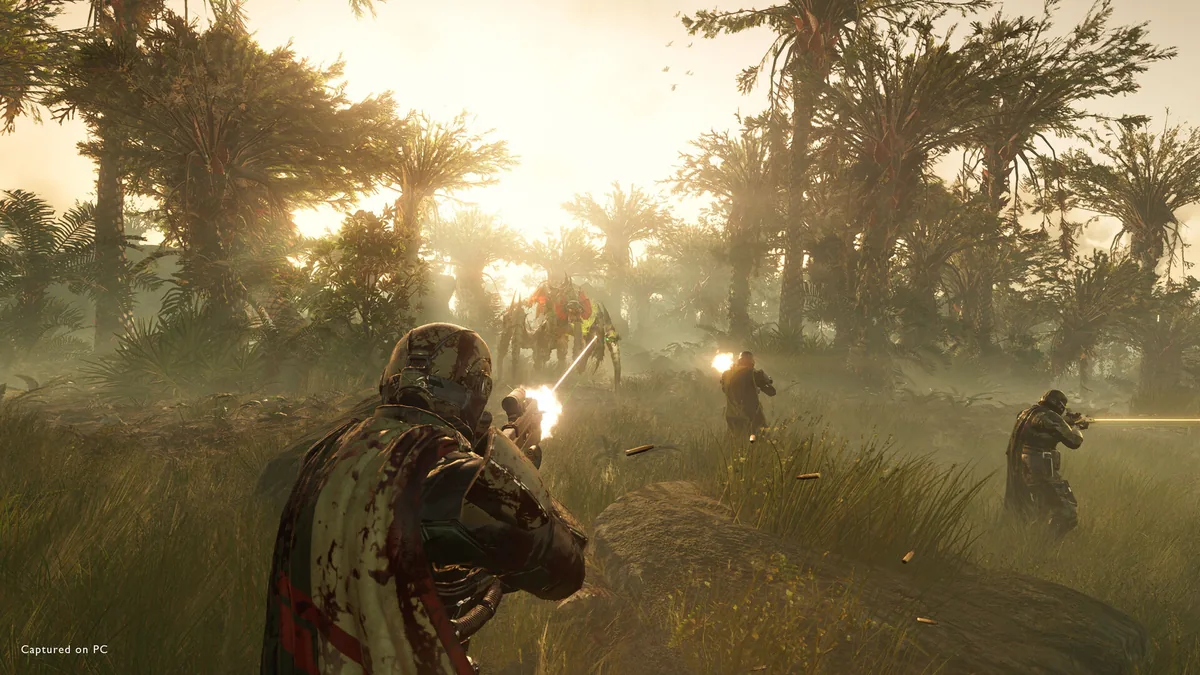
Quick Answer: The Helldivers 2 Galactic Terminal is your mission-selection map and war-status hub, and beginners should use it to pick manageable operations, target the right enemy front, and avoid jumping into difficulty levels they are not ready for.
Helldivers 2 throws you into a fast, chaotic co-op war where the map matters almost as much as your gun. The Helldivers 2 Galactic Terminal is not just a fancy menu screen on your ship. It is the place where you choose campaigns, read the state of the war, follow active fronts, and decide whether your squad is about to crush a bug nest, survive a bot ambush, or get shredded because somebody clicked too high a difficulty.
That matters because this is a game built around pressure, teamwork, and fast decisions. Steam describes it as a "fast, frantic, and ferocious third-person shooter" Source, and that description is dead on for your first few hours. New players often mistake the war table for a passive interface, but it is really the control room for your progression. Use it well and your first sessions feel focused. Ignore it and you will bounce between operations, waste medals, and learn bad habits against the wrong enemy type.
It also helps to remember this is not a tiny niche shooter. Steam's official review summary currently reads "Mostly Positive" with 75.1% positive across 1151055 reviews Source, so a huge number of players have already pushed through the same early-game confusion you are dealing with now. The trick is making your first hour deliberate instead of random.
What the Galactic Terminal actually does for a beginner
The Galactic Terminal is your strategic navigation screen, and beginners should treat it as the command center for picking the right planet, operation, and difficulty for their current gear.
A lot of new players interact with the star map as if it only exists to launch missions. That is the basic function, yes, but the terminal does much more than that in practical play:
- It shows which fronts are active and where Super Earth wants pressure.
- It lets you choose operations with mission sets rather than isolated one-off deployments.
- It helps you avoid enemy factions you are not ready to fight yet.
- It gives your squad a shared place to decide whether you want quick farming, steady progression, or harder combat practice.
- It frames the whole game loop: pick target, deploy, extract, spend rewards, repeat.
That last point is huge. The moment you understand the flow between the Helldivers 2 Galactic Terminal, your Armory, your Ship Management station, and your Stratagem unlocks, the game starts making sense. You are not just queueing for action. You are selecting the kind of pressure test you want.
How to read the map early on
In your opening sessions, keep your terminal decisions simple:
- Favor lower-difficulty operations until you can reliably extract.
- Stick with one enemy faction long enough to learn its patterns.
- Pick mission types with clear objectives instead of the most chaotic modifiers.
- Stay on planets where visibility and terrain are readable.
For example, fighting Terminids on a relatively open map teaches target prioritization, movement, and swarm control. Fighting Automatons teaches positioning, cover, and the danger of ranged fire. Both are valuable, but bots punish beginners much harder if they are still learning how to read the battlefield.
Why mission choice beats raw aim at first
A strong shooter player can still fail badly here because Helldivers 2 is about procedures, not just headshots. You need to call stratagems cleanly, recognize when to disengage, and understand when extraction matters more than chasing kills. The terminal is where those decisions start.
Choose a Blitz mission too early and you may feel rushed before you even know how sidearms, reinforcements, and support weapons fit together. Choose an elimination-focused assignment with a squad that is not coordinating, and the enemy spawn pressure can spiral fast. Choose a more straightforward objective chain and you get space to actually learn.
This is also why the game's completion times are useful context. HowLongToBeat reports 32.43 hours for the main story, 65.01 hours with extras, and 89.29 hours for completion Source. In other words, this is not a game you "finish" in a night. The terminal is part of a longer progression arc, so there is no benefit to forcing late-game habits in your first hour.
First-Hour Checklist: what to do in your first 60 minutes
Your first hour should focus on unlocking core functionality, surviving clean extractions, and learning how to use the Galactic Terminal without overreaching on difficulty.
Here is the cleanest first-hour path for most beginners:
- Complete the tutorial and do not rush through stratagem input practice.
- Walk your ship and identify the key stations: Galactic Terminal, Armory, Acquisitions, Ship Management.
- Open the Helldivers 2 Galactic Terminal and select a low-pressure operation.
- Stay on a lower difficulty until you understand reinforcements, resupplies, and extraction timing.
- Prioritize finishing mission objectives over hunting every patrol.
- Extract if possible, even if the mission felt messy.
- Spend your first rewards only after you understand what category they belong to.
- Run at least one more mission against the same faction before switching fronts.
Step 1: Learn the ship loop
The ship is not decorative. Before your second mission, physically check these stations:
- Galactic Terminal for mission and planet selection.
- Armory for weapons, armor, and cosmetic loadout checks.
- Acquisitions for Warbond progression and unlock browsing.
- Ship Management for module upgrades that affect your broader support toolkit.
This matters because many beginners finish a mission, immediately re-queue, and never realize they are sitting on enough currency to improve their next deployment.
Step 2: Pick a forgiving early mission
Good first missions teach mechanics one at a time. Favor objectives where you can learn:
- How terminals and uploads work.
- How enemy alerts escalate.
- How to create breathing room before interacting with mission objectives.
Examples of good learning moments include entering a terminal input under pressure, covering a teammate while they activate an objective, and surviving extraction with limited ammo. Those are universal skills whether you later favor anti-bug builds or anti-bot kits.
Step 3: Practice stratagem discipline immediately
Do not wait until higher difficulties to build this habit. In your first hour, actively practice:
- Calling resupply in safe spots instead of panic-dropping it in the middle of enemy fire.
- Throwing support weapons where the team can actually reach them.
- Looking before you toss explosive stratagems near allies.
- Re-entering the stratagem code calmly after getting bumped or interrupted.
A new player who can reliably call useful tools is more valuable than a better aimer who keeps team-killing with orbital strikes.
Step 4: End the hour with one takeaway
After your first few runs, ask yourself one simple question: what killed me most often?
- Getting surrounded by Terminids?
- Standing still during bot fire?
- Calling stratagems too late?
- Wandering away from the squad?
- Forgetting extraction can turn into the hardest fight of the mission?
That answer tells you what your next terminal choice should be. If swarms overwhelmed you, queue another mission where you can practice movement and crowd control. If ranged enemies punished you, run another bot operation and focus on cover. The terminal becomes much more useful once you use it to practice specific weaknesses instead of just clicking whatever is available.
You might also like
- Helldivers 2 Available Platforms Updated 3/7/2024 See all the available platforms and consoles for Beginner Guide
- Helldivers 2 similar games co op shooter deep rock galactic remnant outriders Beginner Guide
- Helldivers 2 fourth faction alternative multiple enemies planet why Beginner Guide
- Helldivers 2 Why Now May Be the Perfect Time for a New Enemy Faction
- Helldivers 2 Which enemy faction do you enjoy fighting in: Beginner Guide
Resource Priority Order: what to spend first and what to hoard
Your best early resource plan is to unlock practical combat tools first, avoid impulsive spending, and save valuable currencies for upgrades that improve mission consistency rather than flashy niche picks.
Helldivers 2 spreads progression across several systems, which is why beginners often feel richer than they really are. You may finish a few missions and think you can buy freely, but the smart approach is measured. Different currencies feed different power spikes, and not all early unlocks give equal value.
Early priority order
| Priority | Resource or system | What to do first | Why it matters early |
|---|---|---|---|
| 1 | Basic loadout familiarity | Learn your starting tools before replacing them | Skill with a simple kit beats owning gear you do not understand |
| 2 | Medals / Warbond unlocks | Buy broadly useful early items first | These shape your regular combat rhythm |
| 3 | Requisition-related unlock choices | Focus on practical stratagem access | Reliable support tools improve every mission |
| 4 | Ship upgrades / long-term progression | Invest in upgrades that support survival and consistency | These pay off over many operations |
| 5 | Premium-style or niche purchases | Hoard until you know your preferred playstyle | Prevents waste on gear that does not fit you |
What to spend first
Spend first on things that solve common beginner problems:
- Running out of ammo or tools.
- Lacking a dependable answer to armor or elite enemies.
- Struggling to survive extraction waves.
- Needing more forgiving utility instead of specialist gimmicks.
Examples of smart early-value categories include practical support weapons, easy-to-use call-ins, and Warbond unlocks that strengthen your baseline infantry role. A beginner benefits more from a flexible anti-armor answer than from a high-skill novelty pick that only shines in coordinated squads.
What to hoard early
Hold back on spending when you are unsure about:
- Highly specialized weapons.
- Gear tuned for a specific faction you barely understand yet.
- Purchases that look cool but do not fix your current weak point.
- Anything you only want because another player made it look overpowered in one mission.
This is especially important because early impressions can be misleading. A teammate using a heavy support weapon effectively may already know positioning, reload timing, and target priority. If you buy that same tool before learning the basics, it may feel terrible.
A simple beginner spending rule
Use this rule for the first several sessions:
- Buy upgrades that help you complete more missions.
- Delay upgrades that only become amazing in optimized squad play.
- Keep a reserve so you can react when you finally identify your preferred role.
That role might be crowd control against Terminids, anti-armor support, objective runner, or defensive utility against Automatons. Until you know which lane feels natural, flexible progression wins.
Also, note the broader ecosystem around the game. A recent report highlighted that systems are tracking abnormal Super Credits gain as part of anti-cheat efforts Source. For a normal player, the takeaway is simple: treat your progression as a long game, not something to brute-force. There is no need to chase weird shortcuts when steady mission completion already builds your account.
Common Mistakes
The biggest beginner mistakes in Helldivers 2 come from treating it like a standard horde shooter instead of a tactical co-op game with friendly fire, mission pressure, and layered progression.
Mistake 1. Picking difficulty too high from the Galactic Terminal
Why players do it: They assume better loot and faster progression always outweigh the risk.
Fix: Stay at a difficulty where your squad can finish objectives and extract more often than not. Clean completions beat chaotic wipes for early progression.
A lot of players see the Helldivers 2 Galactic Terminal as a ladder they should climb immediately. That backfires. Higher difficulties add stress before you have learned stratagem timing, elite priority, and how fast things can unravel during extraction.
Mistake 2. Fighting every patrol on the map
Why players do it: The action is fun, and new players think clearing enemies is the main objective.
Fix: Break contact whenever possible and move toward mission goals. Kill what blocks the objective, not everything that exists.
This is one of the biggest mindset shifts in the game. Helldivers 2 is often about speed, direction, and objective execution. Endless patrol fighting drains ammo, burns stratagem cooldowns, and creates worse engagements.
Mistake 3. Calling explosives too close to allies
Why players do it: Panic and tunnel vision.
Fix: Throw offensive stratagems with extra space, announce them mentally before throwing, and reposition before impact.
Friendly fire is not a side mechanic here. It is core to the experience. New players often get excited by orbitals or eagle strikes and forget that one mistimed throw can wipe the squad.
Mistake 4. Ignoring extraction prep
Why players do it: They feel the mission is "done" once the last objective is completed.
Fix: Reload, resupply, reposition, and save major call-ins for the extraction holdout.
Extraction is frequently the most dangerous part of the mission. A beginner squad that blows all major tools in the final objective can get crushed on the landing zone.
Mistake 5. Splitting too far from the team
Why players do it: They want samples, side objectives, or a clean flank.
Fix: Stay close enough for reinforcement support and shared fire coverage unless the squad intentionally splits.
Going solo can work with experience, but beginners usually die off-screen, waste reinforcements, and force the team into bad recovery routes.
Mistake 6. Buying gear before understanding a role
Why players do it: They chase whatever looked strongest in a random lobby.
Fix: Identify whether you enjoy anti-armor, wave clear, utility, or objective support before committing your resources.
The right unlock for one player is wasted on another. A support weapon that carries a bot mission may feel awkward if your instincts are built around mobile bug clearing.
Pro Tips
The best beginner-to-intermediate leap comes from using small tactical habits that make every mission cleaner, safer, and more efficient.
Tip 1. Use the terminal to practice one enemy faction at a time
If you keep bouncing between Terminids and Automatons every mission, your learning gets muddy. Spend a few operations focusing on one front so enemy tells, weak spots, and engagement ranges start feeling automatic.
Tip 2. Start objective interactions only after checking patrol routes
Before someone touches a console, upload point, or launch sequence, scan the area and clear immediate threats. This prevents getting locked into an input while enemies collapse from multiple directions.
Tip 3. Save one answer for armored threats
Even if your squad feels in control, keep one meaningful anti-armor option available. Chargers, Hulks, and similar threats become much scarier when the whole team has already spent their big answers on medium targets.
Tip 4. Drop resupplies where the team will return, not where you are standing now
A great resupply lands near an objective staging point, extraction route, or defensive corner you expect to revisit. A bad one lands in a panic spot that the team abandons ten seconds later.
Tip 5. Use deaths as intel, not just failure
When you go down, note whether it was line of sight, swarm pressure, terrain funneling, or your own stratagem. The fastest players improve because they diagnose deaths instantly and adapt next mission.
Tip 6. Learn one emergency disengage pattern
Pick a repeatable escape habit: sprint to cover, break line of sight, call reinforcement or support, then rotate. Against Automatons, cover and angles matter. Against Terminids, spacing and movement lanes matter.
Tip 7. Build extraction discipline
Treat extraction like a separate event. Reload before the timer starts, identify fallback angles, and decide who is watching which approach. A lot of failed runs come from reaching the end and then playing sloppily.
When you are no longer a beginner
You are out of the beginner phase when you can use the Galactic Terminal deliberately, finish operations consistently, and understand why your squad won or lost instead of blaming chaos.
This is less about raw hours and more about confidence with the full gameplay loop. Some players reach this point quickly if they squad up with experienced friends. Others take longer because the game is punishing and the mission variety can scramble your learning.
Signs you have graduated past the beginner phase
- You choose planets and operations for a reason, not at random.
- You understand the difference between bug-fighting habits and bot-fighting habits.
- You rarely die to your own stratagems.
- You can extract consistently on your regular difficulty.
- You know what role your current loadout is supposed to fill.
- You can identify when the squad should push, hold, or disengage.
- You spend your currencies with a plan instead of impulse-buying.
A strong benchmark is when you can join a random squad, open the Helldivers 2 Galactic Terminal, see the operation type, and immediately start making useful decisions before drop-in. That means the strategic layer has clicked.
Another sign is that your mistakes become specific. Beginners say, "This game is chaos." Graduating players say, "We lost because we fought too many patrols before extraction," or "We lacked anti-armor against Hulks," or "We split for samples at the wrong time." That is real progress.
Achievement data also hints at how many players reach deeper competence. Valve's global achievement stats show the rarest of 38 tracked achievements is unlocked by only 10.7% of players Source. That does not mean achievements define skill, but it does underline a truth: many players touch the game, fewer master its higher-pressure demands. Reaching the point where the war map, loadouts, and mission flow all make sense already puts you ahead of the truly lost early crowd.
How to use the Galactic Terminal for steady progression
The smartest way to use the Galactic Terminal is to turn it into a progression filter, selecting missions that teach the next skill you need instead of just feeding you random action.
Once your first hour is done, the star map becomes even more important. This is where you stop being reactive and start building a routine.
A simple progression loop
- Pick one faction you want to improve against.
- Choose an operation type you mostly understand.
- Bring one familiar loadout piece and one experimental piece.
- Complete the mission and judge the experimental slot honestly.
- Spend resources only after two or three missions confirm what you are missing.
This loop keeps your growth stable. If you constantly change faction, weapon, stratagems, and difficulty all at once, you will not know what caused success or failure.
Match mission type to practice goal
Use the terminal with a purpose:
- Want cleaner objective execution? Pick operations with more interaction-based tasks.
- Want better crowd control? Choose bug-heavy missions where swarm handling matters.
- Want stronger cover discipline? Queue bot operations where ranged punishment is real.
- Want extraction practice? Stay in mission types that reliably produce tense final holds.
The terminal is not just where you find content. It is where you choose your lesson.
Think in operations, not isolated wins
A lot of beginners judge themselves mission by mission. A better way is to think in short operation blocks. Over three to five missions, ask:
- Did I die less often?
- Did I waste fewer stratagems?
- Did I recognize elite threats faster?
- Did I help the squad extract more consistently?
That is better evidence of improvement than one lucky clear or one ugly wipe.
For broad context, Helldivers 2 remains a major multiplayer game, with SteamSpy estimating ownership between 20,000,000 .. 50,000,000 Steam accounts Source. There is a reason so many players stick with it: the long-term loop is satisfying once you stop treating the Galactic Terminal like a simple matchmaking screen and start using it like a tactical planning table.
Related Guides
- Best Early Stratagem Unlocks in Helldivers 2
- Helldivers 2 Best Beginner Weapons and Armor
- Helldivers 2 Terminids Beginner Walkthrough
- Helldivers 2 Automatons Beginner Walkthrough
- How to Farm Samples Efficiently in Helldivers 2
- Best Solo Loadouts in Helldivers 2
- Helldivers 2 Ship Module Upgrade Order
Sources
- https://store.steampowered.com/app/553850/
- https://howlongtobeat.com/?q=helldivers2
- https://steamcommunity.com/stats/553850/achievements
- https://steamspy.com/app/553850
- https://steamstore-a.akamaihd.net/news/externalpost/Gamemag.ru/1837955055358705
See also
- Helldivers 2 Super Destroyer Screen Display Interactive Update: Beginner Guide
- Helldivers 2 Ground All Terrain Extraction Rig GATER Beginner Guide
- Helldivers 2 Reviewed by Game878Helldivers 2Read Full Review Story5Gameplay9Visuals9Audio8Value forMoney8 Beginner Guide
- Helldivers 2 fan creates indoor dungeon mission concept: Beginner Guide
- Helldivers 2 Beginner Guide: Start Strong, Spend Smart, and Survive the Early War
- Helldivers 2 How to Destroy Fuel Silos and Stockpiled Ammunition
- Helldivers 2 How to Check Galactic War Progress: Beginner Guide
- Helldivers 2 How to Get the EX-03 Prototype 3 Armor Set
- Helldivers 2 How to Fix Stuck in Drop Pod Bug
- Helldivers 2 Pages using DynamicPageList3 parser function: Beginner Guide
Screenshots


Reviewed by
HD2 Guides Editorial
Expertise: Editorial team behind HD2 Guides. Content is compiled from official patch notes, community wikis, and playthrough notes, then reviewed and updated on schedule.
Sources
Helldivers 2 Missions Guides →
Browse the complete missions collection and its focused guides.
Related Guides
🔥 Popular Guides
Helldivers 2 Tier List — Weapons, Warbonds, Armor & Stratagems
Master Helldivers 2 tier list hub: warbond rankings, armor passives, weapons, and stratagems. Jump to the warbond or armor list for your build.
Helldivers 2 Armor Tier List — Best Passives Ranked
Helldivers 2 armor tier list ranked by passive value: scout, medium, heavy, and specialist sets. Best passives for solo, co-op, and high difficulties.
Helldivers 2 Warbond Tier List — Best Warbonds to Buy First
Ranked Helldivers 2 warbond tier list: which warbonds to buy first, best value for medals, and what to skip. Updated for current meta.

Helldivers 2 Weapon Tier List: Best Weapons for Every Loadout
Compare the best Helldivers 2 weapons, budget substitutes, late-bloomers, reroll advice, and endgame loadout investments.
📋 Patch Notes & Updates
🛠️ Popular Tools
Was this guide helpful?
Rate this guide so we can improve it.
Share your own tip
Found something not in the guide? Submit it below — our editors review every tip before publishing. No account required.