 Helldivers 2
Helldivers 2 SC-34 Infiltrator Beginner Guide
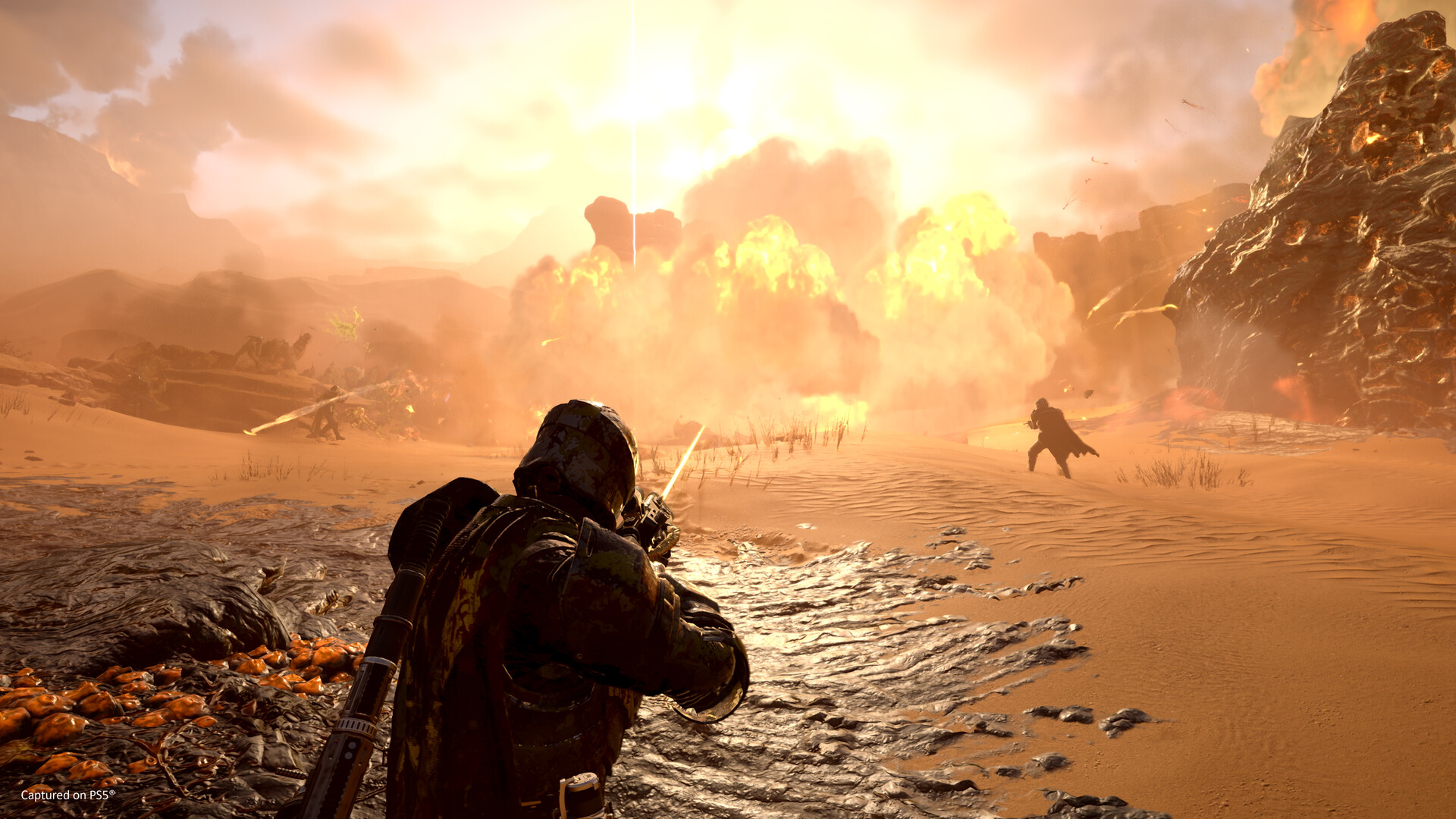
Quick Answer: Helldivers 2 SC-34 Infiltrator is an early-game armor choice built around mobility, stealth value, and cleaner positioning, and beginners get the most from it by pairing careful map routing, objective discipline, and smart stratagem spending.
Helldivers 2 is built around fast co-op decision-making, not just raw aim. That matters immediately if you are starting with, unlocking, or simply curious about the SC-34 Infiltrator. The armor sits in a lane many new players misunderstand: it is not a license to run alone and ignore the squad, and it is not a pure stat check piece that solves survivability by itself. Instead, it supports a cleaner early-game playstyle built on movement, aggro management, and choosing when to fight.
That framing is important because Helldivers 2 is a large live-service co-op shooter with serious player volume and long-tail progression. Steam’s official page currently lists the game as “Mostly Positive” (75.1% positive) across 1151055 reviews, with about 29205 players in game on Steam right now Source. On the progression side, HowLongToBeat reports 32.43 hours for the main story, 65.01 hours with extras, and 89.29 hours for completion Source. For a beginner, that means two things:
- Your first impressions matter because the game asks for a real time investment.
- Early resource choices and armor habits scale into the midgame more than most players expect.
This guide treats the Helldivers 2 SC-34 Infiltrator as a beginner anchor: what role it actually fills, what to do in your first hour, how to spend early resources without griefing your future unlock path, what mistakes slow new players down, and how to tell when you are ready to move past beginner-level play. Where useful, I will point to helldivers 2 available platforms placeholders for next-step reading.
What the SC-34 Infiltrator Actually Does for Beginners
The Helldivers 2 SC-34 Infiltrator is best understood as a beginner-friendly armor for players who want safer map movement and better engagement control, not as a front-line tank set. That distinction fixes a lot of confusion before it turns into bad habits.
New players often sort armor mentally into simple buckets like “fast,” “tank,” or “best.” The Infiltrator does not fit cleanly into that kind of tier list logic because its value depends on how you approach missions. If you constantly sprint into patrol lines, overstay in breach loops, or stand exposed during terminal interactions, the armor will feel underwhelming. If you route carefully, keep line of sight broken, avoid unnecessary alerts, and rotate between objectives instead of farming endless waves, its value becomes much more obvious.
For beginners, the armor teaches three strong fundamentals:
- Positioning over panic fighting: Instead of treating every enemy contact like a mandatory full clear, you learn to break away, re-angle, and finish objectives efficiently.
- Objective-first gameplay: The game rewards successful mission flow more than random kill volume. The Infiltrator naturally nudges you toward terminals, uplinks, bug nest demolition, and clean extraction setup.
- Squad spacing awareness: You still play with the team, but you stop clumping so tightly that one grenade, bile burst, or Automaton rocket punishes everyone at once.
In practical terms, that means the armor tends to feel strongest in situations like these:
- You are flanking a Bug nest to throw explosives into openings without dragging every nearby patrol onto the team.
- You are approaching an Automaton outpost from an off-angle so a turret, fabricator, or devastator line does not instantly lock the whole squad.
- You are slipping to a side objective like a radar station or artillery prep while the squad already has local control.
It tends to feel weaker when beginners misuse it in situations like these:
- Standing in the open during a prolonged defense objective and expecting armor choice alone to offset bad cover usage.
- Running far ahead of the squad and triggering several patrol chains before teammates can reinforce or support.
- Treating stealth value as invisibility and refusing to help when a fight is already committed.
The current appeal of this armor also fits the game’s broader identity. Valve’s store description calls Helldivers 2 a “fast, frantic, and ferocious third-person shooter” Source. In that tempo, micro-advantages in movement and engagement timing matter a lot. The SC-34 Infiltrator helps beginners survive not by making them absorb more mistakes, but by encouraging fewer mistakes in the first place.
If you like armor that rewards cleaner decision-making, this set is a solid early foundation. If you prefer to anchor the squad, body-block pressure, and absorb chaotic close-range fights, you may outgrow it faster than someone who enjoys scouting lanes and objective routing.
First-Hour Checklist for SC-34 Infiltrator Players
Your first hour with Helldivers 2 SC-34 Infiltrator should focus on learning mission flow, not chasing kills or overcomplicating loadouts. If you use that first session to build good habits, the armor starts paying off almost immediately.
Use this checklist as your first-hour route:
Play low-pressure operations first
Start on easier missions where you can read enemy behavior, map icons, and extraction timing without constant wipe pressure. Good early examples are simple bug elimination, upload-style objectives, or light outpost clearing. The goal is not efficiency speedrunning; it is learning how the map breathes.Test how close you can move near patrols before committing
With the SC-34 Infiltrator, spend a few minutes intentionally observing patrol routes instead of auto-firing. Do this against Terminid roaming groups, Automaton foot patrols, and enemies near side objectives. You are learning when movement discipline avoids a useless fight.Practice objective entry and exit
Run one or two objectives where your focus is: approach from cover, interact fast, then rotate out before spawns stack. Good examples include terminal uploads, SEAF artillery setup, and radar dish interactions. This matters more for beginners than landing every shot.Call stratagems in safe space, not on top of yourself
Early players lose more runs to bad stratagem placement than weak gear. Practice dropping support weapons, resupply, and defensive tools with spacing. Use a clear patch of ground before a fight starts, not in the middle of a panic retreat.Learn the extraction rhythm
Extraction is where beginners often throw away otherwise clean missions. Stay mobile, keep a fallback lane, and avoid bunching directly on the shuttle beacon. The Infiltrator performs better when you kite and re-enter than when you stand still in a kill box.Pick one anti-armor answer and one crowd-control answer
You do not need a perfect build in the first hour, but you do need role coverage. For example, if your squad already has orbital clears, bring something that helps on medium armor targets. If your team is overloaded on anti-tank, bring better wave control.Loot points of interest without overfarming
Check containers, side paths, and minor structures for progression materials and Super Credit opportunities, but do not turn every mission into a sightseeing run. The beginner trap is spending too long looting while patrol density ramps up.Revive quickly and reinforce intelligently
If a teammate dies, reinforce where they can recover safely and rejoin the objective. New players often throw reinforcements directly into enemy clusters or terrain traps. Your armor’s value goes up when the squad’s formation stays stable.
The first hour is also where you should start reading the macro pace of the game. SteamHunters tracks 38 achievements and 0 currently unobtainable achievements Source, which tells you this is a progression space where almost everything remains accessible over time. There is no reason to panic-rush every unlock. Build foundational habits first.
A strong first-hour session with the Helldivers 2 SC-34 Infiltrator looks like this:
| First-Hour Goal | What You Actually Do | Why It Matters |
|---|---|---|
| Learn aggro control | Avoid firing on every patrol you see | Preserves ammo, cooldowns, and squad tempo |
| Learn objective routing | Clear main objective first, side content second | Prevents time-loss spirals |
| Learn extraction discipline | Hold angles and move, not camp in one spot | Reduces wipe risk late in mission |
| Learn role coverage | Bring complementary stratagems | Stops loadout overlap from crippling the squad |
If you finish your first hour understanding when to disengage, when to commit, and how to support the team without overpulling the map, you are ahead of a huge share of new players.
You might also like
- Helldivers 2 How to Destroy Fuel Silos and Stockpiled Ammunition
- Helldivers 2 How to Fix Stuck in Drop Pod Bug
- Helldivers 2 Super Earth issued Tool Rack Beginner Guide
- Helldivers 2 Battle Pass Guide: How to Progress Warbonds
- Helldivers 2 Beginner Guide: Smart First Steps, Resources, and Common Mistakes
Resource Priority Order for Early Progression
The correct early resource priority in Helldivers 2 is to spend on tools that widen mission capability first, while hoarding premium or flexible resources until you understand your preferred role. For a beginner using the SC-34 Infiltrator, that usually means prioritizing practical combat options and ship progression over cosmetic or niche experiments.
Because the game layers several progression systems together, new players often make poor decisions simply by not knowing which currency should be flexible and which should be protected. A clean early priority order looks like this:
| Priority | What to Focus On | Why It Comes First |
|---|---|---|
| 1 | Core stratagem unlocks for anti-armor and sustain | Fixes actual mission problems immediately |
| 2 | Warbond items that improve your usable kit | Expands real loadout options |
| 3 | Ship module upgrades with broad mission value | Improves long-term squad performance |
| 4 | Armor sidegrades and niche picks | Useful, but less urgent than capability |
| 5 | Style-first or highly situational buys | Fine later, weak early return |
1. Spend first on mission-solving stratagems
Your first real spending goal should be unlocking tools that answer common early failure points:
- Enemies that your primary weapon cannot handle efficiently
- Objective zones that get overrun by repeated waves
- Resupply or sustain problems during longer operations
Concrete early examples of “real problem solvers” include:
- A reliable anti-armor call-in for Chargers, Hulks, or other durable threats
- A support weapon that gives your squad a stable damage plan instead of gambling everything on primaries
- A defensive or area-control stratagem for extraction and terminal holds
These purchases are more impactful than chasing a stylish but redundant weapon. If your team cannot crack armored targets or stabilize a defense circle, better fashion will not save the run.
2. Be selective with Warbond spending
Warbond progression is where many beginners waste value. The smart approach is to buy items that slot into multiple mission types rather than forcing one gimmick setup. As an SC-34 Infiltrator player, you usually want pieces that support flexible movement and clean utility rather than heavy specialization too early.
Look for early unlocks that help in at least two of these scenarios:
- Bug nest demolition
- Automaton outpost pressure
- Extraction wave control
- Medium armor target removal
Avoid the trap of buying several overlapping sidegrades before you have a dependable baseline loadout.
3. Hoard Super Credits until you understand your actual playstyle
This is the most common early economy mistake. The patch context around anti-cheat attention specifically mentions tracking anomalously high Super Credit earnings and notes that Super Credits are used for unlocking warbonds with weapons and armor. That matters because the currency has high flexibility in your account economy. Spend it casually and you can slow your build path; hoard it intelligently and you keep future options open.
For most beginners, the right play is:
- Save Super Credits until you know whether you prefer stealth-leaning utility, anti-armor support, or generalist objective play
- Avoid impulse purchases based on one match highlight
- Compare whether a new purchase solves a consistent problem or just looks interesting
4. Upgrade broad-value ship modules before niche optimization
Ship modules are long-term force multipliers. Early on, broad-value upgrades that improve regularly used stratagem classes are stronger than niche improvements tied to a single gimmick loadout. If you repeatedly use support weapons, sentries, or orbitals, build around the systems you actually deploy every mission.
Beginners often delay this because armor and weapons feel more visible. That is understandable, but inefficient. The returns from account-level upgrades show up across many missions, especially once difficulty increases and execution margins tighten.
5. Treat armor as a role tool, not an automatic priority ladder
The Helldivers 2 SC-34 Infiltrator is useful because it shapes behavior, but it should not make you overspend on armor at the expense of tactical coverage. Armor is the multiplier on good decisions, not the replacement for them.
A good beginner economy mindset is simple:
- Buy capability first
- Preserve flexibility second
- Specialize later
That structure keeps your account from stalling when the game starts asking more of your squad composition.
Best Early Playstyle and Loadout Logic with the SC-34 Infiltrator
The best early playstyle for Helldivers 2 SC-34 Infiltrator is a mobile objective support role that clears space, avoids unnecessary alerts, and helps the squad solve fights efficiently rather than trying to top damage charts. This is where the armor consistently gives beginners value.
The core idea is to become the player who keeps a mission smooth. In practice, that means you are often the one who:
- Reaches terminals from a safer angle
- Loops around a bug nest to destroy openings cleanly
- Repositions during Automaton pressure instead of tunnel-visioning one target
- Keeps enough spacing from the squad to avoid chain deaths, while staying close enough to reinforce or assist
Primary role: objective mover
If you are using this armor in the current meta, your highest-value lane is usually objective mover. That does not mean solo wolfing the map. It means handling interactions and rotations with discipline.
Good situations for this role include:
- A teammate with heavy anti-tank is holding a lane while you finish a terminal sequence
- The squad is drawing fire from an Automaton base, and you rotate to hit a side angle on a fabricator
- Bugs are stacking at a breach, and you cut out to collapse a nearby nest cluster before the map state worsens
Secondary role: cleanup and support fire
The armor also works well for players who clean up dangerous medium threats and keep the team from getting pinned. You do not always need to be first into a fight. Often, you get more value by staying one layer behind the front pressure and removing what slips through.
Examples:
- Picking off Hunters that break toward your backline
- Assisting on Devastators or similar medium threats while a teammate handles heavier armor
- Clearing small enemies off a teammate locked into a reload, revive, or stratagem input
What not to do
The SC-34 Infiltrator underperforms when beginners force it into roles it does not naturally support:
- Static anchor role: If the plan is to hard-hold one open position through repeated waves, a different armor philosophy may feel better.
- Pure solo scout fantasy: The game can punish isolated players hard, especially if they trigger reinforcements away from squad support.
- All-speed, no-answer loadouts: Mobility is not enough if you cannot contribute to armored target breakpoints or extraction control.
Build logic, not fixed build worship
Because live-service balance can shift, the right way to think is in role packages instead of one sacred build. A solid beginner package includes:
- One weapon or stratagem answer for armored threats
- One answer for dense trash waves
- One utility slot for ammo, support, or defensive stabilization
- A primary you can use comfortably during mobile engagements
That logic scales across both major enemy archetypes:
| Matchup | What You Need Most | Good Beginner Habit |
|---|---|---|
| Terminids | Wave thinning, nest pressure, anti-Charger plan | Fight only when it advances objective tempo |
| Automatons | Cover use, angle discipline, medium armor removal | Avoid open-field duels and rotate flanks |
| Mixed squad needs | Complementary role coverage | Fill what the team lacks, not what looks coolest |
If you are learning the game, this armor is most rewarding when you define success correctly. Success is not “I survived alone for a while.” Success is “I made the mission easier for the team by moving smart, keeping alerts manageable, and finishing tasks cleanly.”
That mindset is what turns the Helldivers 2 SC-34 Infiltrator from a misunderstood early armor into a legitimate beginner development tool.
Common Mistakes
The biggest beginner mistakes with Helldivers 2 SC-34 Infiltrator come from treating it like either a stealth cloak or a stat-stick. Both readings are wrong, and both produce avoidable deaths and weak progression.
Mistake 1. Pulling every patrol you see
The mistake: Shooting on sight at every moving enemy group.
Why players fall into it: New players assume more kills equals better play, especially in the first few missions.
Concrete fix: Only commit when a patrol blocks your route, threatens an objective, or is already alerted. On bug missions, walk around roaming packs when possible. On Automaton maps, use terrain and buildings to break line of sight before firing.
Mistake 2. Running too far ahead because the armor feels mobile
The mistake: Outpacing the squad and starting fights alone.
Why players fall into it: Mobility-oriented armor creates false confidence, especially after a few clean dodges or flanks.
Concrete fix: Stay within practical reinforce distance. If you push a side angle, do it while the squad can still cover, revive, or follow. A good rule is to create spacing, not separation.
Mistake 3. Standing still during objectives
The mistake: Treating terminal use or uplink interaction like a safe pause.
Why players fall into it: Beginners tunnel on the mini-game or input and forget the battlefield keeps evolving.
Concrete fix: Clear approach lanes before interacting, assign one teammate to cover, and reposition immediately after the objective step completes. If you are soloing a quick interaction, scout your exit route first.
Mistake 4. Building for speed and forgetting anti-armor
The mistake: Taking a comfortable primary and utility tools but no dependable answer for durable enemies.
Why players fall into it: Early missions can mask this weakness until a Charger, Hulk, or fortified position turns into a wipe.
Concrete fix: Every loadout should have at least one realistic anti-armor plan. That can be your support weapon, an orbital solution, or coordinated team coverage, but it must exist before deployment.
Mistake 5. Overlooting points of interest
The mistake: Turning routine missions into full-map scavenger marathons.
Why players fall into it: Beginners correctly hear that side loot matters, then overcorrect and lose tempo.
Concrete fix: Loot what is on your route or one short detour away. If patrol density is climbing and the main objective is still unfinished, reset priorities and move.
Mistake 6. Bad reinforcement placement
The mistake: Calling teammates back directly into enemy control, cliffs, fire zones, or objective chaos.
Why players fall into it: Panic. Players want to revive fast without reading the local space.
Concrete fix: Reinforce slightly behind cover or on the edge of the fight, where the returning player can gather gear and re-enter with control. This is especially important on Automaton maps with ranged fire lanes.
Mistake 7. Treating stealth value like invisibility
The mistake: Assuming the SC-34 Infiltrator lets you ignore enemy awareness rules.
Why players fall into it: The armor fantasy encourages overconfidence in disengage and approach windows.
Concrete fix: Think of the armor as helping you manage detection and spacing, not deleting detection. Crouch approach when relevant, avoid obvious lines, and do not sprint through active sightlines expecting no response.
These mistakes are common because the game’s systems are noisy and fast. That is normal. The goal is not perfect execution; it is reducing the specific errors that cause mission spirals.
Pro Tips
The best pro tips for Helldivers 2 SC-34 Infiltrator players are about tempo control, not mechanical flash. The armor gets stronger the more precisely you manage when fights happen and where the squad stands.
Tip 1. Start fights from objective-winning angles
If you know a bug nest or Automaton outpost must be engaged, do not open from the front just because it is closest. Circle first and attack from the angle that gives you immediate structure damage, terminal access, or cover. The trigger here is any time the objective can be progressed faster by position than by raw damage.
Tip 2. Use the squad as a threat split, not a death ball
When the team is approaching an objective, stagger your spacing so enemies do not get perfect splash or line attacks on all four players. This is especially strong against Automaton rocket pressure and bug swarms trying to collapse one clump. You are not abandoning the team; you are denying enemy efficiency.
Tip 3. Pre-place resupply before the hold starts
When you know an upload, extraction, or defense event is about to begin, call resupply before the first real wave arrives. The trigger is simple: if the team is below comfortable ammo and the event is unavoidable, place the sustain early while the area is still manageable.
Tip 4. Finish side objectives on the rotation, not after the map turns hostile
A lot of beginners leave radar stations, artillery prep, or sample-adjacent tasks for “later” and then discover the map has become much harder to traverse. If a side objective is on your route and local pressure is light, do it now. The SC-34 Infiltrator thrives on clean rotations before chaos spikes.
Tip 5. Break contact sooner than your instincts tell you
If a fight is no longer improving the mission state, leave. That is one of the strongest habits this armor supports. The trigger is repeated reinforcements with no objective progress: if you have destroyed no nest, completed no terminal step, and gained no meaningful space, rotate out.
Tip 6. Use terrain folds as your real defense stat
The armor helps movement, but terrain wins survivability. Small ridges, rocks, wreckage, walls, and elevation changes matter constantly. On Automaton missions, a tiny angle break can deny a lethal ranged burst. On bug maps, terrain lets you funnel pursuers into cleaner fire lines.
Tip 7. During extraction, defend the approach lanes, not the beacon itself
Beginners often stand right on extraction and get surrounded. A better setup is to hold the lanes enemies use to reach it, then collapse back only when needed. The trigger is any extraction with open surrounding ground or multiple entry vectors. Mobility armor gets more value from lane control than from static beacon hugging.
These tips are what start separating a basic user of the armor from someone who is actually leveraging it. They are not advanced because they are complicated; they are advanced because they improve mission success in ways that are easy to overlook.
When You Are No Longer a Beginner
You are out of the beginner phase in Helldivers 2 SC-34 Infiltrator once you can consistently read mission tempo, build loadouts around team needs, and complete objectives without turning every contact into a panic fight. The graduation line is less about account age and more about repeatable decision quality.
A good benchmark is whether you are making the game easier for random teammates, not just surviving your own mistakes. That usually shows up in a few visible ways.
Signs you have crossed the beginner threshold
You stop overfighting patrols
You know when to bypass, when to burst quickly, and when to disengage. On bug maps, you no longer chase every roaming group. On Automaton maps, you avoid lazy open-field duels.Your loadout has intentional coverage
You deploy with a plan for armor, wave clear, and sustain or utility. You are not just bringing weapons you personally like; you are answering mission demands.You handle objectives under pressure
You can complete terminals, demolish nests, or stabilize defense points without needing the whole team to overcommit around you. This is a major marker of SC-34 Infiltrator mastery.Your reinforcement calls improve the squad state
Dead teammates return in useful positions, recover gear faster, and re-enter cleaner. That sounds small, but it is a real mid-skill separator.You understand faction-specific priorities
Against Terminids, you read swarm spacing and breach risk. Against Automatons, you use cover and angle denial naturally. You no longer play both factions with the same autopilot rhythm.
Practical graduation tests
Here are simple self-checks:
| Graduation Test | Beginner Result | Post-Beginner Result |
|---|---|---|
| Patrol encounter | Fires immediately | Decides based on route and objective value |
| Extraction hold | Camps beacon in a clump | Controls lanes and rotates intelligently |
| Heavy enemy spawn | Panics or kites uselessly | Uses assigned anti-armor answer quickly |
| Side objective call | Ignores timing and overcommits | Clears it when route and pressure align |
Another good sign is when your progression goals become more specific. New players ask, “What should I unlock next?” Post-beginner players ask, “What does my squad lack against bots on this operation?” That shift in thinking matters more than raw hours.
For context, the game supports a long skill curve. HowLongToBeat’s 32.43 hours main story and 65.01 hours with extras Source suggest there is plenty of room between first competence and full comfort. You do not need to master everything quickly. You just need to graduate from reactive play into intentional play.
If the Helldivers 2 SC-34 Infiltrator has taught you spacing, route discipline, threat selection, and objective tempo, then it has done its beginner job well.
Related Guides
The next best guides after this Helldivers 2 SC-34 Infiltrator beginner article are the ones that expand your build logic, faction matchup knowledge, and progression planning.
- helldivers 2 why tips - Helldivers 2 Best Early Stratagems for New Players
- related guide - Helldivers 2 Beginner Loadouts for Bugs and Automatons
- legendary warbond release date - Helldivers 2 Best Armor for Solo Queue and Squad Play
- related guide - Helldivers 2 Warbond Priority Guide
- 03 prototype 3 armor - Helldivers 2 Ship Module Upgrade Order
- related guide - Helldivers 2 Sample Farming Walkthrough
- helldivers 2 reviewed tips - Helldivers 2 Extraction Guide for Higher Difficulties
Sources
- https://store.steampowered.com/app/553850/
- https://howlongtobeat.com/?q=helldivers2
- https://steamhunters.com/apps/553850/
- https://steamstore-a.akamaihd.net/news/externalpost/Gamemag.ru/1837955055358705
See also
- Helldivers 2 How to Use the Safe and Unsafe Railgun Modes
- Helldivers 2 Beginner Guide
- Helldivers 2 Beginner Guide: Start Strong on Super Earth
- Helldivers 2 How to Get and Use the Anti-Materiel Rifle
- Helldivers 2 Beginner Guide: Xbox Launch and ODST Warbond Release Time
- Helldivers 2 All You Need To Know: Beginner Guide
- Helldivers 2 New Heart of Democracy Missions Beginner Guide
- Helldivers 2 How to Get the CM-17 Butcher Armor Set
- Helldivers 2 Former President of Super Earth Beginner Guide
- Helldivers 2 How to Farm Super Credits: Tips and Tricks
Screenshots

Reviewed by
HD2 Guides Editorial
Expertise: Editorial team behind HD2 Guides. Content is compiled from official patch notes, community wikis, and playthrough notes, then reviewed and updated on schedule.
Sources
Helldivers 2 Missions Guides →
Browse the complete missions collection and its focused guides.
Related Guides
🔥 Popular Guides
Helldivers 2 helldivers 2 warhammer 40k collaboration update Patch Notes Explained
Helldivers 2’s Warhammer 40K crossover adds Castellan’s Creed, new weapons, armor, enemies, missions, SEAF allies, and more.
Helldivers 2 super helldive achievement guide
Achievement guide for Helldivers 2 covering rare trophies, hidden requirements, missable timing, and a full Super Helldive completion route.
HELLDIVERS™ 2 all achievements: complete achievements guide
Full Helldivers 2 achievements guide with rarest trophies, hidden unlocks, missables, and a 100% completion route.
Helldivers 2 patch notes 7.0.2: What changed in the Void update era
What changed in Helldivers 2 patch notes 7.0.2, including new Illuminate threats, SEAF support, the level cap increase, and squad action items.
📋 Patch Notes & Updates
🛠️ Popular Tools
Was this guide helpful?
Rate this guide so we can improve it.
Share your own tip
Found something not in the guide? Submit it below — our editors review every tip before publishing. No account required.