 Helldivers 2
Helldivers 2 All You Need To Know: Beginner Guide
Quick Answer: Helldivers 2 All You Need To Know for beginners is this: learn the basics of stratagems, prioritize survivability over flashy kills, unlock useful gear early, and focus on completing missions and extracting alive.
Helldivers 2 is a co-op third-person shooter where teamwork, positioning, and mission objectives matter more than raw aim. The game is built around short, intense operations across hostile planets, and the learning curve is mostly about understanding how to survive your own tools as much as the enemy.
What Helldivers 2 Is and How It Plays
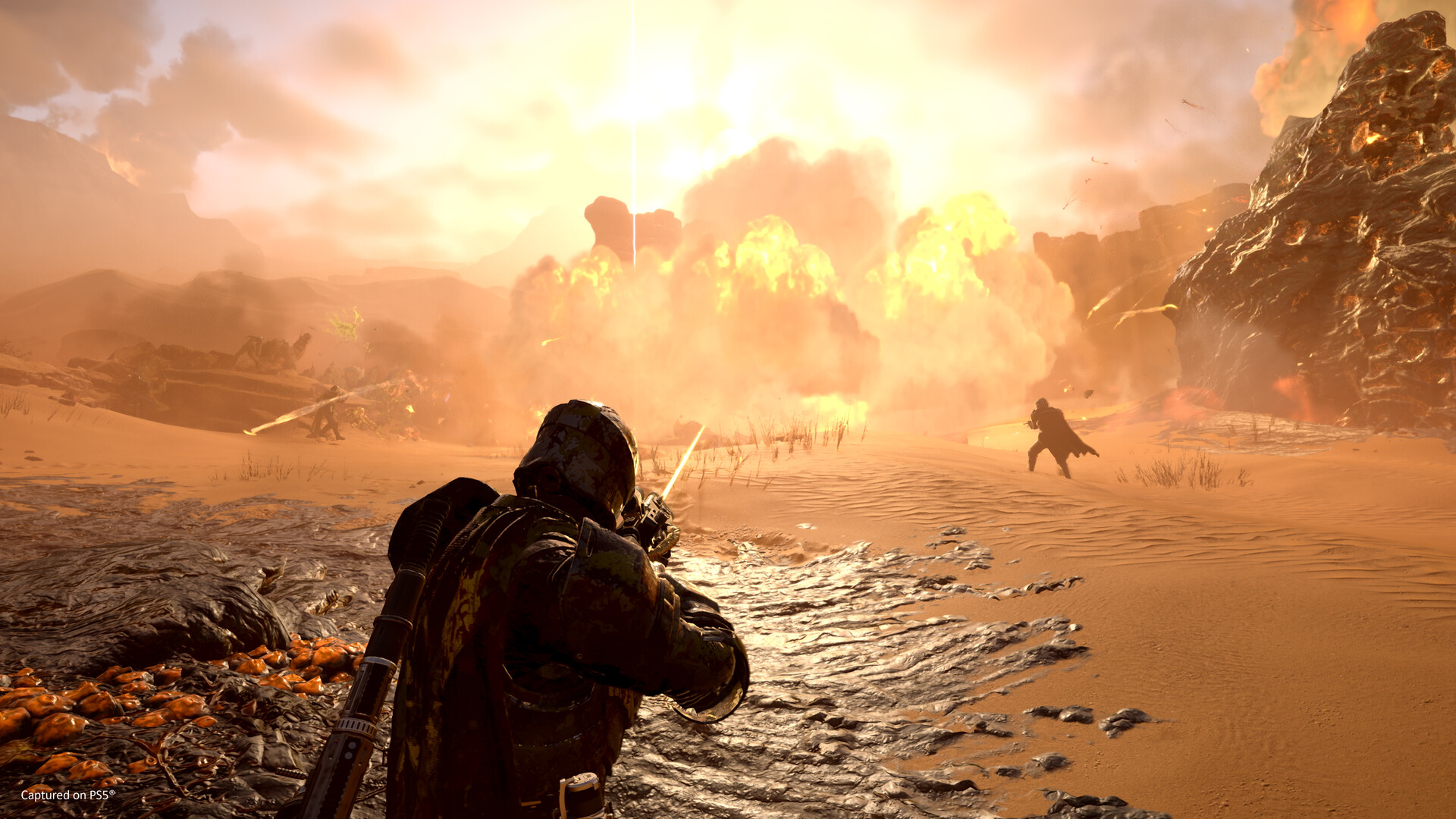
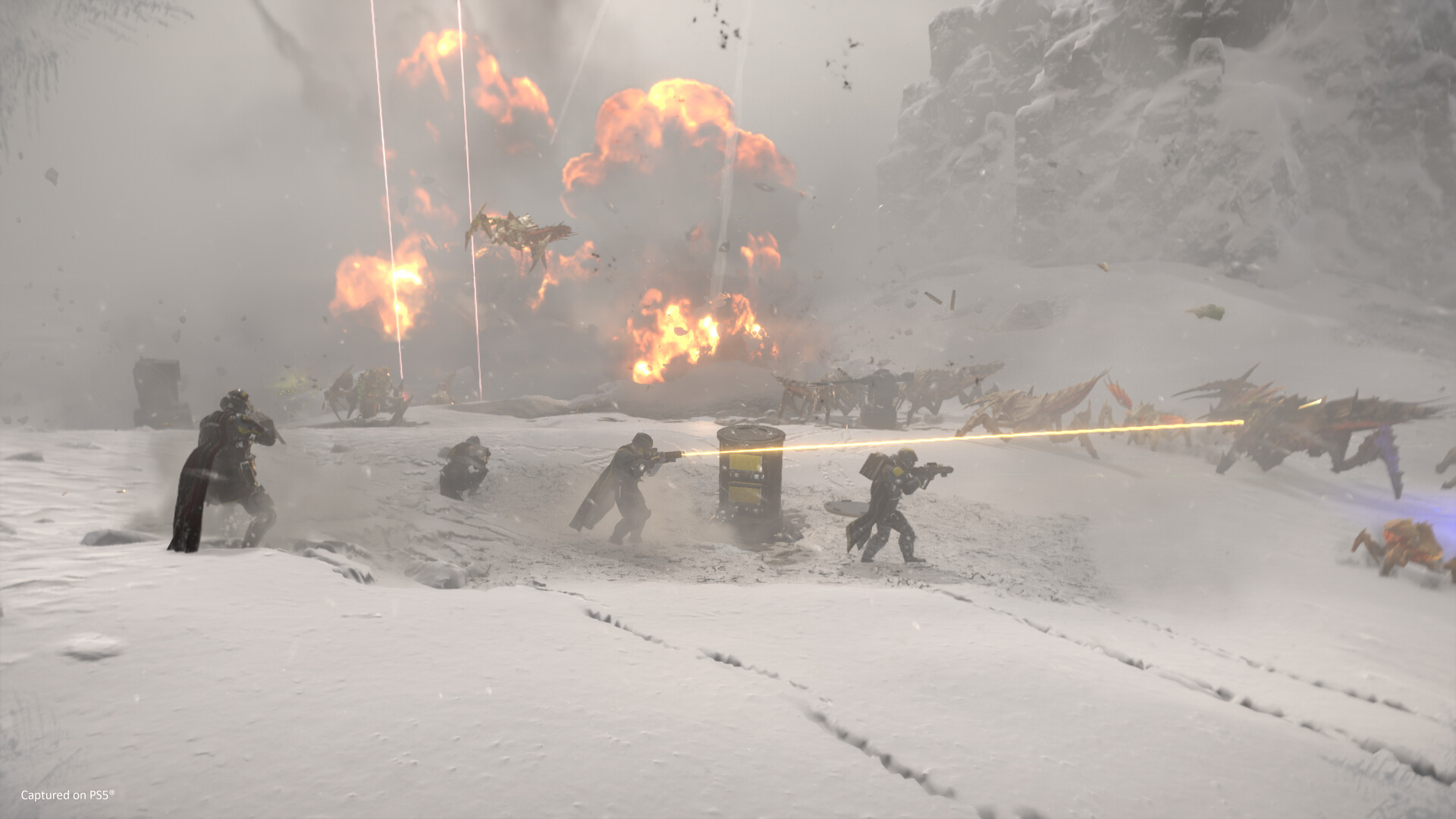
Helldivers 2 is a cooperative third-person shooter about dropping into dangerous planets, completing objectives, and extracting before overwhelming enemies wipe your squad out. The game is officially described as “The Galaxy’s Last Line of Offence,” and it casts you as a Helldiver fighting for Super Earth in a fast, frantic, and ferocious war across the galaxy Source. It is a sequel to Helldivers and is set in the 22nd century, where the Helldiver Corps spreads managed democracy through force Source.
For beginners, the most important thing to understand is that Helldivers 2 is not a traditional cover shooter or a pure horde game. You can absolutely mow down bugs, bots, and later enemy factions, but your real win condition is usually mission progress and extraction. That means even a fight where you personally get many kills can still be a failure if the squad runs out of reinforcements, misses the objective, or gets trapped by bad positioning. New players often focus on shooting everything that moves, but experienced squads focus on route planning, stratagem timing, and preserving resources for the final push.
A second key idea is that almost every system is designed to punish carelessness. Friendly fire is always relevant, stratagems can land on allies, and heavy weapons can be as dangerous to your squad as to the enemy. That is why the learning process is less about memorizing one “best gun” and more about learning how the game’s flow works. In an early session, you may use the standard assault rifle, a machine gun support weapon, and a simple orbital strike. Later, you will start building around specific enemy types, mission modifiers, and squad roles.
If you are looking for Helldivers 2 All You Need To Know in practical terms, the biggest lesson is that the game rewards consistency. Survive the early minutes, call in the right tools at the right time, and learn when to disengage. Your first few hours should be treated as training in mission discipline, not as a quest to top the scoreboard.
First-Hour Checklist
Your first hour should be spent learning movement, stratagems, mission structure, and a basic loadout that keeps you alive. The goal is not to unlock everything immediately; it is to build habits that prevent avoidable deaths and wasted mission time.
1) Finish the tutorial-style basics with intention
Use the opening missions to practice the core loop, not just to rush objectives. Pay attention to how you call stratagems, how your ammo and stims feel, and how quickly enemies can overwhelm a bad position. The early game is the safest place to make mistakes with the reinforcement system, stratagem codes, and mission pacing.
A useful first-hour habit is to deliberately test a few things:
- Call in a resupply and watch where it lands.
- Practice throwing an eagle or orbital call-in away from teammates.
- Learn how your primary weapon feels against light enemies and medium targets.
- Notice how often you need to stim after taking chip damage.
These small experiments matter because Helldivers 2’s difficulty often comes from execution errors, not hidden systems. If you know how far your stratagem can scatter, how fast you can reload under pressure, and how quickly the mission timer starts to matter, you will already be ahead of many new recruits.
2) Unlock a simple, survivable loadout path
Spend your earliest progression on tools that help you stay in the mission longer. In the first hour, you generally want a balanced setup rather than a narrow specialist kit. A beginner-friendly loadout usually includes:
- A reliable primary for clearing light enemies.
- A support weapon that can answer armored targets.
- One defensive or utility stratagem.
- One strong area-damage stratagem for emergencies.
For example, a standard rifle plus a machine gun-like support weapon handles swarms differently from a shotgun plus anti-armor launcher. Similarly, an orbital strike helps you escape bad fights, while a defensive emplacement can stabilize a position during objective defense. The exact tools you use will depend on what you have unlocked, but the principle is the same: cover your weaknesses before chasing fancy damage.
3) Learn extraction rules early
Extraction is not automatic, and surviving to the end is often harder than completing the objective. In your first hour, intentionally experience at least one successful extraction and one messy one so you understand the rhythm. The best way to learn is to see how the squad holds the landing zone, how reinforcements get used, and how enemies pressure the shuttle area.
Remember that sometimes you should leave instead of fighting every patrol. If a bug breach or bot drop gets out of control, moving to a safer point and regrouping is often smarter than staying to trade deaths. Beginners frequently overcommit to fights that are no longer important. The correct move is often to finish the objective, retreat, and reset.
4) Spend samples and currency carefully
During your first hour, do not spread upgrades randomly. Save progression for general-purpose unlocks that work across many missions. You do not need a specialized late-game concept on day one. You need reliability, convenience, and tools that make your next ten missions smoother.
A practical first-hour checklist looks like this:
- Complete the opening missions and learn one full mission loop.
- Test at least two weapon types and one support weapon.
- Practice one orbit/airstrike stratagem in a live mission.
- Extract successfully at least once.
- Open the progression screens and identify your next useful unlock.
If you finish your first hour with a clearer sense of mission flow, stratagem timing, and one dependable setup, you are already on the right track.
You might also like
- Helldivers 2 Available Platforms Updated 3/7/2024 See all the available platforms and consoles for Beginner Guide
- Helldivers 2 Reviewed by Game878Helldivers 2Read Full Review Story5Gameplay9Visuals9Audio8Value forMoney8 Beginner Guide
- Helldivers 2 Why Now May Be the Perfect Time for a New Enemy Faction
- Helldivers 2 How to Destroy Fuel Silos and Stockpiled Ammunition
- Helldivers 2 How to Fix Stuck in Drop Pod Bug
Resource Priority Order
Your resource priority should favor permanent account progress first, mission stability second, and cosmetic or niche choices last. Helldivers 2 has multiple progression layers, so beginners often waste time by chasing the wrong unlock at the wrong moment.
What to spend first
Your earliest spending priorities are usually:
- General-purpose ship and combat unlocks that improve almost every mission.
- Reliable stratagems that solve common problems, such as armor, swarm control, or survival.
- Core weapon options that let you adapt to different enemy compositions.
- Convenience and comfort upgrades that reduce friction in normal play.
- Specialized or meme builds once you understand the game well enough to support them.
That order works because beginners fail most often when they cannot answer common threats. A tool that helps against several enemy types is worth more than a niche option that looks powerful in one clip but underperforms in regular missions.
What to hoard instead of spending immediately
Some resources are better saved until you know what you actually like. In early progression, you should avoid impulse-spending on:
- Niche loadouts built around a single enemy type.
- Cosmetic purchases that do not change mission performance.
- Repetitive upgrades that do not solve your current problem.
- Loadout concepts you have not tested in live missions.
The reason is simple: a beginner’s understanding of the game changes quickly. You may think you want the hardest-hitting launcher, only to discover that your real weakness is survivability during objective defense. Or you may think you need more raw damage, when the actual issue is that you die while reloading or calling stratagems. Save your resources until you have seen enough mission variety to make informed choices.
Resource order table
| Resource / progression layer | Best early use | Why it matters for beginners |
|---|---|---|
| Ship-related permanent upgrades | Improve common mission outcomes | Permanent value across many runs |
| Support stratagems | Cover armor, area control, or extraction | Solves the game’s most common threats |
| Core weapon unlocks | Build a stable primary/support pair | Makes your loadout adaptable |
| Samples / mission-earned materials | Save for broadly useful upgrades | Prevents regret from rushed spending |
| Premium or cosmetic spending | Delay until you know your playstyle | Least impact on first-hour success |
How to think about “best value”
The best value is whatever keeps your team alive long enough to finish missions. For one squad, that may be a defensive sentry plus a support weapon. For another, it may be a long-range anti-armor answer paired with a safe retreat tool. The point is not to mimic a top-tier build blindly; it is to stop spending on tools that solve problems you do not yet have.
If you want a simple rule, spend first on anything that helps with one of these three situations:
- Surviving bad engagements.
- Removing armored threats.
- Extracting under pressure.
Those three situations appear constantly, whether you are fighting Terminids, Automaton forces, or later mission variants.
Common Mistakes and How to Fix Them
Common newbie mistakes in Helldivers 2 usually come from treating the game like a normal shooter instead of a squad-based extraction war. The good news is that each mistake has a direct fix you can apply immediately.
Mistake 1: Sprinting into every fight
Many beginners rush every enemy patrol because they assume more shooting means more progress. They fall into this habit because the combat feels fast and satisfying, and early enemies do not always punish bad decisions immediately.
Fix: Only fight when the fight helps the objective. If a patrol is between you and the mission target, clear it efficiently; if it is off-route, often leave it alone. Use pings, keep moving, and save your strongest stratagems for actual mission pressure.
Mistake 2: Throwing stratagems without checking teammates
New players often call in orbital strikes, eagle runs, or support equipment directly on top of the squad because they are focused on the enemy, not the landing zone. Friendly fire is common enough that one bad throw can collapse a whole run.
Fix: Before any high-damage stratagem, move your camera and confirm where allies are standing. If the team is clustered, call it behind the enemy line or wait for a reposition. In co-op, a slightly delayed strike is usually better than a perfect strike that kills two teammates.
Mistake 3: Ignoring ammo, stims, and reinforcement discipline
Beginners sometimes use their last magazine and then panic when the next wave arrives. They also burn stims too early or too late, and they waste reinforcements on recoverable situations.
Fix: Reload before you are empty whenever possible, stim after you can still move safely, and treat reinforcements as a squad resource rather than an individual reset button. If a teammate is isolated, regroup first and revive with a purpose instead of reviving into another wipe.
Mistake 4: Building for damage only
Some new players stack only offensive tools because kills are the most visible stat. They choose flashy damage options and ignore mobility, defense, or objective control.
Fix: Build around a problem, not a fantasy. Include at least one tool for swarms, one for armor, and one for survival or repositioning. A balanced setup makes missions more consistent than a pure damage setup that fails the moment you get pinned down.
Mistake 5: Standing still during objective defense
Players often plant themselves in one spot during upload, defense, or extraction phases because holding ground feels natural. The problem is that Helldivers 2 frequently punishes stationary play with surrounding enemies, splash damage, and overlapping attack vectors.
Fix: Move within the objective area instead of anchoring to one exact point. Use terrain, rocks, walls, and elevation changes. During extraction, rotate around the landing zone and clear angles rather than staring at the shuttle beacon.
Mistake 6: Treating every mission like a solo run
A lot of beginners assume they should handle everything themselves, even in a squad. That leads to duplicated loadouts, missed roles, and poor communication.
Fix: Split responsibilities naturally. One player can focus on anti-armor, another on crowd control, another on support, and another on objective cleanup. Even without voice chat, simple pings and sensible spacing can turn a messy squad into a functional team.
Common Mistakes
The most important beginner mistakes in Helldivers 2 are the ones that repeatedly cause mission failure, extra deaths, or wasted progression. These are worth calling out separately because they are easy to repeat without noticing.
Mistake: Over-chasing kills instead of mission goals.
Why it happens: the combat loop is satisfying, so new players stay in firefights too long.
Fix: finish the objective route first, then fight only if the engagement protects extraction or mission progress.Mistake: Calling explosives too close to allies.
Why it happens: stratagem throws are exciting and the squad is often clustered around an objective.
Fix: throw from a flank or use the map to choose a clear landing zone before activating the call-in.Mistake: Ignoring enemy armor thresholds.
Why it happens: beginners assume all weapons should work on all targets.
Fix: keep at least one support answer for armored enemies and switch targets instead of dumping ammo into the wrong foe.Mistake: Entering high difficulty too early.
Why it happens: the game’s progression makes higher levels look like the “real” game.
Fix: move up only after your squad can complete lower missions with consistent extracts and low reinforcement waste.Mistake: Spending resources on flashy but narrow tools.
Why it happens: a weapon or stratagem looks powerful in one situation and gets overvalued.
Fix: prioritize broad utility first, then branch into specialty gear once you know your preferred role.Mistake: Separating too far from the squad.
Why it happens: players want to speed up scavenging or objective completion.
Fix: stay close enough to reinforce, assist, and cover each other when a breach or drop occurs.
Pro Tips
Advanced beginner tips in Helldivers 2 are mostly about timing, positioning, and learning how to make the game’s systems work for you instead of against you.
Tip 1. Throw stratagems while moving, not while panicking
If you stop dead in the open to input every code, you are making yourself an easy target. Practice moving to cover first, then calling in your stratagem from relative safety. A short retreat behind rocks, ridges, or a structure can save a mission more reliably than a faster input.
Tip 2. Use terrain to break enemy pressure
If you are fighting Terminids near narrow passes or cliffs, the terrain can keep you from being surrounded. If you are facing Automatons, line-of-sight breaks matter even more because you can force enemies to re-approach through predictable angles. The same principle works on extraction pads, uplink points, and movement between objectives.
Tip 3. Save one “panic” tool for emergencies
Every loadout should have at least one emergency answer, whether that is a crowd-clearing strike, a defensive call-in, or a support weapon that can instantly stop pressure. Do not spend everything at the first sign of trouble. A squad that keeps one answer in reserve usually recovers from bad spawns much better than one that empties all cooldowns at once.
Tip 4. Learn when to disengage from a losing fight
Helldivers 2 often rewards retreat more than stubbornness. If a mission area has turned into a death loop, pull back, reset, and re-approach from a better angle. This is especially important when multiple enemies converge, your reinforcements are dropping fast, or the objective can still be completed without clearing every last threat.
Tip 5. Build around your squad, not your favorite clip
A strong team usually has overlap in survival tools and specialization in one or two roles. If one player brings heavy anti-armor, another can lean into control or anti-swarm. If one teammate is handling objectives, another can cover extraction or perimeter defense. In other words, good loadouts are relational: they complement the squad’s weaknesses.
Tip 6. Practice mission exits as much as mission starts
A lot of squads learn how to land and clear the first room, but not how to leave under pressure. Extraction is where many beginner runs collapse. Treat the final minute as a separate skill: watch the shuttle zone, avoid unnecessary loot detours, and keep enough ammo and support tools for the run back to safety.
Graduation Threshold
You are out of the beginner phase when you can complete missions reliably without leaning on random success. That does not mean you know everything; it means you understand the core loop well enough to make steady progress across different mission types and enemy pressure levels.
A simple way to judge your readiness is to ask whether you can do the following consistently:
- Read the mission flow quickly after landing.
- Choose a loadout that covers armor, swarms, and survival.
- Use stratagems without repeatedly downing allies.
- Handle extraction without burning through the squad’s last reinforcements.
- Adjust your behavior when the mission goes wrong instead of forcing fights.
If you can do those things, you are no longer learning the absolute basics. At that point, you can start thinking about specialized roles, tougher difficulties, and more deliberate progression through ship upgrades, weapon choices, and squad synergies. The transition is usually visible in your mission results: fewer accidental deaths, more clean objective completions, and less time spent scrambling to recover from preventable errors.
Another good benchmark is comfort with different mission types. When you can move from a straightforward bug-hunt style operation to a more defense-heavy or objective-heavy mission without feeling lost, you have crossed the beginner threshold. Likewise, if you know when to ignore fights, when to hold ground, and when to extract early, you are already playing with a more experienced mindset.
For many players, this point arrives before they have everything unlocked. That is normal. Helldivers 2 is not a game where you “graduate” by owning every item; you graduate by understanding how the pieces fit together. Once you stop asking “What gun is best?” and start asking “What does this mission need?”, you have moved into the next phase.
Related Guides
If you are ready to go beyond Helldivers 2 All You Need To Know basics, these follow-up articles are the natural next step.
- Helldivers 2 Best Early Loadouts
- Helldivers 2 Stratagem Tier Guide
- Helldivers 2 Mission Walkthroughs for Beginners
- Helldivers 2 Best Weapons for New Players
- Helldivers 2 Ship Upgrades Guide
- Helldivers 2 Difficulty Explained
- Helldivers 2 Solo vs Squad Guide
FAQ
Is Helldivers 2 beginner-friendly?
Yes, Helldivers 2 is beginner-friendly if you accept that teamwork and survival matter more than perfect aim. The game is easy to understand at a glance, but mastering movement, stratagem timing, and extraction discipline takes practice.
What should I unlock first in Helldivers 2?
You should unlock broadly useful tools first, especially anything that improves survival, anti-armor options, or mission control. Early value comes from flexibility, not from the flashiest damage option.
Can I play Helldivers 2 solo as a beginner?
You can, but the game is much more forgiving and enjoyable with a squad. Solo play teaches fundamentals, but beginners usually learn faster with teammates who can reinforce, distract enemies, and cover different roles.
What is the biggest mistake new players make?
The biggest mistake is overcommitting to fights instead of focusing on objectives and extraction. Helldivers 2 punishes tunnel vision, so learning when to disengage is one of the most valuable early skills.
How do I know if my loadout is good?
A good beginner loadout can answer three problems: swarms, armor, and survival. If your setup struggles against any of those, it needs adjustment before you push harder missions.
Sources
- https://store.steampowered.com/app/553850/
- https://en.wikipedia.org/wiki/Helldivers_2
- https://howlongtobeat.com/?q=helldivers2
- https://www.metacritic.com/game/helldivers-2
- https://store.steampowered.com/app/553850/
See also
- Helldivers 2 Beginner Guide: Start Strong, Spend Smart, and Survive the Early War
- Helldivers 2 Battle Pass Guide: How to Progress Warbonds
- Helldivers 2 How to Get the EX-03 Prototype 3 Armor Set
- Helldivers 2 Advanced Combat Tips and Tricks for Beginners
- Helldivers 2 Beginner Guide: Smart First Steps, Resources, and Common Mistakes
- Helldivers 2 How to Use the Safe and Unsafe Railgun Modes
- Helldivers 2 How to Get and Use the Anti-Materiel Rifle
- Helldivers 2 Beginner Guide
- Helldivers 2 Beginner Guide: Xbox Launch and ODST Warbond Release Time
- Helldivers 2 Beginner Guide: Start Strong on Super Earth
Screenshots

Reviewed by
HD2 Guides Editorial
Expertise: Editorial team behind HD2 Guides. Content is compiled from official patch notes, community wikis, and playthrough notes, then reviewed and updated on schedule.
Sources
Helldivers 2 Missions Guides →
Browse the complete missions collection and its focused guides.
Related Guides
🔥 Popular Guides
Helldivers 2 helldivers 2 warhammer 40k collaboration update Patch Notes Explained
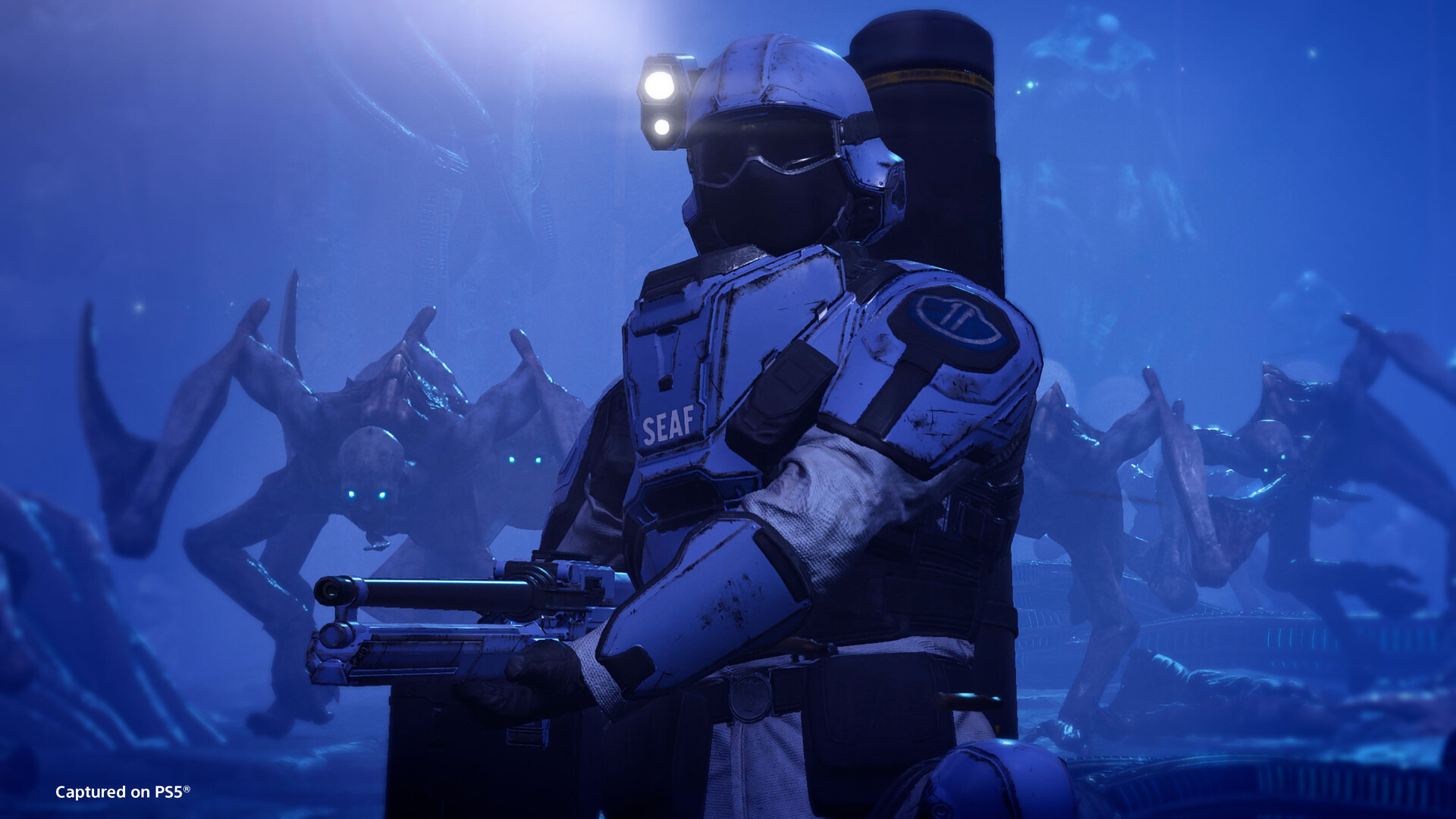
Helldivers 2’s Warhammer 40K crossover adds Castellan’s Creed, new weapons, armor, enemies, missions, SEAF allies, and more.
Helldivers 2 super helldive achievement guide
Achievement guide for Helldivers 2 covering rare trophies, hidden requirements, missable timing, and a full Super Helldive completion route.
HELLDIVERS™ 2 all achievements: complete achievements guide
Full Helldivers 2 achievements guide with rarest trophies, hidden unlocks, missables, and a 100% completion route.
Helldivers 2 patch notes 7.0.2: What changed in the Void update era
What changed in Helldivers 2 patch notes 7.0.2, including new Illuminate threats, SEAF support, the level cap increase, and squad action items.
📋 Patch Notes & Updates
🛠️ Popular Tools
Frequently Asked Questions
Quick answers from the guide · click a question to expand.
Is Helldivers 2 beginner-friendly?
Yes, Helldivers 2 is beginner-friendly if you accept that teamwork and survival matter more than perfect aim. The game is easy to understand at a glance, but mastering movement, stratagem timing, and extraction discipline takes practice.
What should I unlock first in Helldivers 2?
You should unlock broadly useful tools first, especially anything that improves survival, anti-armor options, or mission control. Early value comes from flexibility, not from the flashiest damage option.
Can I play Helldivers 2 solo as a beginner?
You can, but the game is much more forgiving and enjoyable with a squad. Solo play teaches fundamentals, but beginners usually learn faster with teammates who can reinforce, distract enemies, and cover different roles.
What is the biggest mistake new players make?
The biggest mistake is overcommitting to fights instead of focusing on objectives and extraction. Helldivers 2 punishes tunnel vision, so learning when to disengage is one of the most valuable early skills.
How do I know if my loadout is good?
A good beginner loadout can answer three problems: swarms, armor, and survival. If your setup struggles against any of those, it needs adjustment before you push harder missions.
Was this guide helpful?
Rate this guide so we can improve it.
Share your own tip
Found something not in the guide? Submit it below — our editors review every tip before publishing. No account required.