 Helldivers 2
Helldivers 2 FS-38 Eradicator Beginner Guide
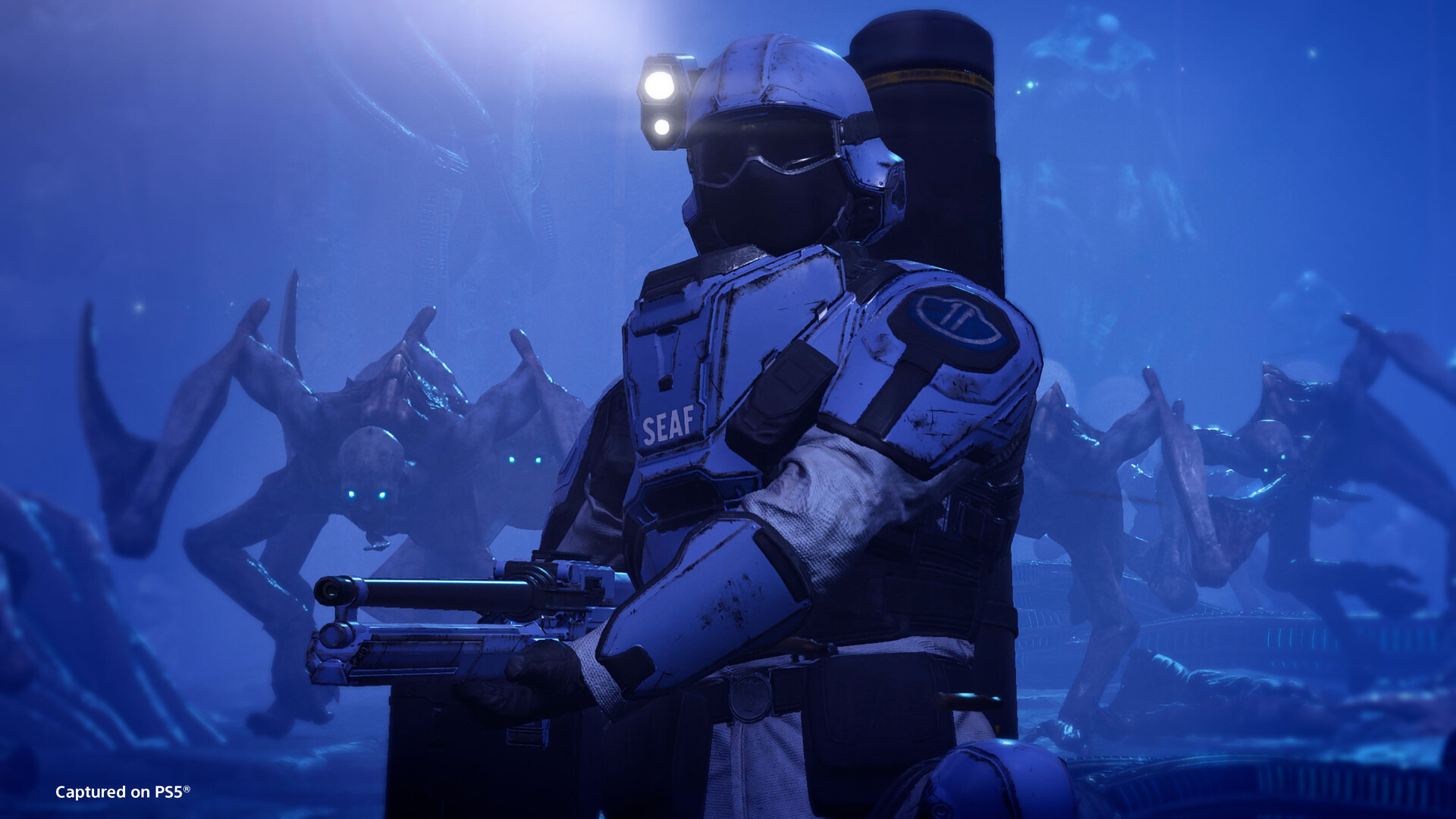
Quick Answer: Helldivers 2 FS-38 Eradicator is a beginner-friendly explosive support weapon pick in Helldivers 2 when you want strong crowd control, safer range, and easy team value without needing perfect aim.
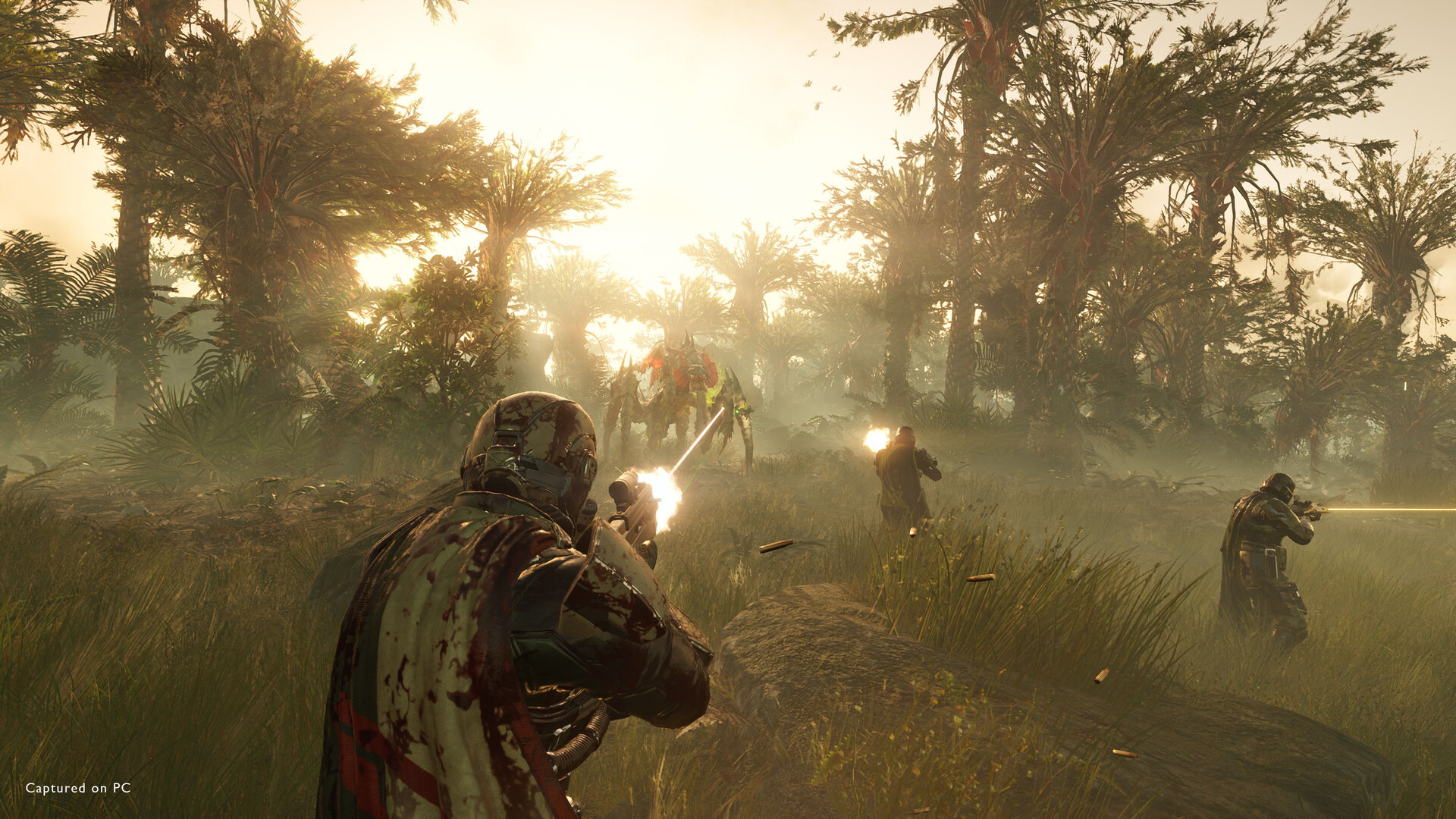
Helldivers 2 is a 2024 cooperative third-person shooter from Arrowhead Game Studios, built around chaotic squad play, friendly fire, and “managed democracy” across a hostile galaxy. The Steam store describes it as “The Galaxy’s Last Line of Offence,” which is basically the game’s way of saying, “Please bring your best teamwork and your most questionable life choices.” Source
What the Helldivers 2 FS-38 Eradicator is good at
The Helldivers 2 FS-38 Eradicator is best used as a mid-range explosive problem solver for new players who need help controlling groups, softening medium targets, and contributing without standing in melee range like a stunt double with a death wish.
In practice, the FS-38 Eradicator shines when your squad is being swarmed by bugs or pressured by patrols and you want something that can help clear a lane fast. Think of moments like holding a narrow objective, backing up a teammate carrying samples, or deleting a cluster of light enemies before they turn into a full-blown democracy-shaped traffic jam. If you are still learning the game’s flow, the Eradicator rewards positioning and patience more than fancy flick shots.
That matters because Helldivers 2 is not a “stand still and trade shots” game. It is a game of movement, target priority, and not getting emotionally attached to your own safety bubble. The Eradicator fits beginners who want to:
- support the team from a safer distance,
- learn enemy spacing,
- and avoid the chaos of close-quarters weapons that punish missed timing.
It is also a good teaching weapon because it naturally teaches one of Helldivers 2’s biggest lessons: explosive tools are fantastic, but they are also a social contract. The moment your squad bunches up, your glorious anti-enemy solution can become a comedy clip. That is true for the FS-38 Eradicator, orbital strikes, grenades, and pretty much anything with a blast radius.
The game itself is built around that same cooperative mayhem. On Steam, Helldivers 2 currently shows “Mostly Positive” at 75.1% positive across 1,151,055 reviews, which is a pretty strong sign that the game’s loop keeps people coming back even when the squad wipes in spectacular fashion. Source
First-hour checklist for new Helldivers
Your first hour should be spent unlocking basics, learning mission flow, and getting comfortable with how Helldivers 2 wants you to move, shoot, reinforce, and extract.
1) Play a few low-difficulty missions on purpose
Start on an easier difficulty and focus on surviving, not showing off. The goal is to learn how objectives work, how often you should call stratagems, and how enemy pressure escalates once you stop standing still. Run simple missions with clear goals like:
- activating an uplink,
- destroying enemy nests or factories,
- and extracting after the objective is complete.
A beginner mistake is assuming the game is mostly about aim. It is not. It is about process. Learn the mission rhythm first, then worry about optimizing kills. If you can finish a mission while keeping your team together and avoiding unnecessary deaths, you are already learning faster than the average “I can handle this solo” hero.
2) Practice stratagem input until it feels automatic
Your first hour should include repeated use of call-ins like support weapons, resupplies, and defensive tools. The game lives and dies on stratagem timing, so treat the input patterns like muscle memory training rather than a menu system.
Useful early examples include:
- calling a resupply when your team is half-empty, not fully dry,
- dropping a support weapon before the fight starts,
- and using defensive tools before enemies surround the objective.
If the input prompts still feel clunky, that is normal. Keep calling the same few stratagems repeatedly until you stop looking down at the screen like it owes you money.
3) Test at least one anti-horde and one anti-armor tool
You need one answer for swarms and one answer for tougher targets. That can be an explosive support weapon like the FS-38 Eradicator for groups, plus a stronger single-target option from your loadout or stratagems for armored enemies.
Examples of useful learning pairs:
- FS-38 Eradicator plus a reliable grenade,
- a crowd-control primary plus an anti-armor stratagem,
- or a team loadout where one player handles mobs while another handles heavies.
This teaches target selection. A new player who uses the wrong tool on the wrong target usually feels weak even when their gear is fine. The issue is often not power; it is matchup.
4) Learn the reinforcement habit immediately
You should understand reinforce calls in your first session, not after the first catastrophic wipe. If a teammate dies, help bring them back quickly and safely. If you die, learn where you spawned from, where your gear landed, and how to rejoin the fight without making the situation worse.
Common situations to rehearse:
- a teammate gets flattened by a Charger or Hulk,
- someone dies on a terminal during objective defense,
- or your squad wipes and respawns into a bad angle.
The game can spiral if nobody knows how to reset cleanly. A beginner who gets comfortable with reinforcement early becomes a much better squadmate than someone who only thinks about personal DPS.
5) Extract even when the mission feels messy
Do not treat extraction as a victory lap you only attempt when the mission was perfect. First-hour players should practice extracting under pressure because that is where a lot of panic happens.
During extraction, focus on:
- staying near cover,
- not sprinting into open ground for a flashy revive,
- and dropping useful defensive stratagems before the timer gets ugly.
This is also where explosive weapons like the FS-38 Eradicator matter. They can buy breathing room if enemies are swarming the pad, but only if you fire with discipline. If your squad is clustered at the beacon, hold your shot and let the horde come into a safer angle.
You might also like
- Helldivers 2 Available Platforms Updated 3/7/2024 See all the available platforms and consoles for Beginner Guide
- Helldivers 2 Why Now May Be the Perfect Time for a New Enemy Faction
- Helldivers 2 Reviewed by Game878Helldivers 2Read Full Review Story5Gameplay9Visuals9Audio8Value forMoney8 Beginner Guide
- Helldivers 2 How to Destroy Fuel Silos and Stockpiled Ammunition
- Helldivers 2 How to Fix Stuck in Drop Pod Bug
Resource priority order: what to spend, save, and unlock first
Your resource priority in Helldivers 2 should favor survivability, reliable mission tools, and flexible unlocks before you chase niche toys.
Here is the simplest beginner-friendly order:
| Priority | Spend on | Why it matters early | Example of a smart use |
|---|---|---|---|
| 1 | Reliable stratagems and core weapons | They help in almost every mission | A support weapon or defensive call-in that works on multiple enemy types |
| 2 | Ship modules that improve team value | Passive upgrades make every run smoother | Better cooldowns, stronger ordnance, or improved support performance |
| 3 | Warbond unlocks with broad use | Good primaries, armor perks, or utility | Weapons and gear that fit multiple mission types |
| 4 | Niche build pieces | Fun later, but not your first focus | Highly specific explosives or role-dependent options |
| 5 | Cosmetic or novelty goals | Nice to have, not mission-critical | Style picks after your loadout is stable |
For beginners, the biggest trap is hoarding everything “just in case” and then walking into missions under-equipped. Don’t do that. Spend to become functional, not fancy.
Super Credits and premium unlocks
Super Credits are the premium currency layer, and the important beginner question is not “Should I own everything?” but “What unlocks actually expand my options?” If a warbond item improves your ability to survive, revive, or handle common threats, it is usually more valuable than a cosmetic detour.
The current game economy also matters because Super Credits can be earned in missions or bought, which means patient players can progress without treating the store like a mandatory pit stop. Since Arrowhead has also been publicly addressing cheating concerns around abnormal Super Credit gains, it is another reminder that this currency is a live, monitored part of the game’s economy rather than a throwaway side system. Source
Samples, requisition, and upgrades
If you are wondering what to hoard, samples and upgrade materials are usually worth protecting more than flashy one-off drops. Samples feed progression that benefits your whole account, so losing them because you chased one extra enemy pack is a classic beginner tax.
Good early spending habits look like this:
- bank progression materials instead of panic-buying every new option,
- upgrade things that help common mission flow,
- and choose unlocks that work across multiple factions and objective types.
What to prioritize if you like the FS-38 Eradicator
If the Helldivers 2 FS-38 Eradicator is your favorite kind of chaos, prioritize upgrades and loadout pieces that support explosive play without making you reckless. That means anything that helps:
- keep enemies grouped or slowed,
- protect you while you reload or reposition,
- and cover your weakness against armored targets.
The weapon works best when the rest of your kit fills the gaps. Beginners often build only around what feels fun in the moment and then get stuck when a mission throws a different enemy mix at them. A balanced unlock plan solves that problem before it starts.
Common mistakes and how to fix them
New players usually make the same handful of mistakes, and almost all of them are fixable once you know what the game is actually asking from you.
1) Firing explosive weapons too close to the squad
Players do this because explosives feel powerful and urgent, especially when enemies are closing fast. The fix is to treat the FS-38 Eradicator and similar tools like lane-clearing weapons, not panic buttons right next to your own boots. Step back, fire into the path of the enemy wave, and communicate before you shoot.
2) Ignoring stratagem muscle memory
Players often rely on the menu prompts for too long, which makes them slow during real fights. The fix is simple: practice a small group of core calls repeatedly in easy missions until the inputs become automatic. If you can deploy resupply, support, and defensive tools without thinking, your survival rate jumps fast.
3) Overcommitting to every fight
Beginners see enemies and assume every patrol must be erased immediately. That habit burns ammo, creates noise, and drags more enemies into the area. The fix is to ask, “Do we need this fight?” If the answer is no, move past the patrol and save your resources for the objective.
4) Saving resupply for “later”
Players like to wait until everyone is basically empty before calling a resupply, which sounds efficient but usually creates a desperate scramble. The fix is to call it earlier, when the team is still stable enough to claim the box safely. That keeps your squad ready for the next objective instead of limping into it.
5) Standing still during extraction
People freeze on the pad because they are watching the timer or trying to secure one last kill. The fix is to use the extraction zone as a small moving battle space: rotate between cover, keep sightlines clean, and save your big explosives for when enemies actually pack in. If you are holding the FS-38 Eradicator, wait for a real cluster instead of wasting it on one lonely target.
6) Treating armor and enemy type as optional knowledge
A lot of beginners assume every weapon should work on everything. That is how you end up inefficient against armored threats or waste your best ammunition on trash mobs. The fix is to learn which tool is for which job. Examples:
- use anti-horde options on swarms,
- save heavier punches for durable targets,
- and let teammates cover your weak spot when the mission demands it.
7) Chasing samples or loot during a bad fight
This one is classic: the objective is under pressure, but someone sprints off for side loot and gets pasted. The fix is to finish the immediate threat first. Samples are great, but they are not worth turning a recoverable fight into a full wipe.
Pro Tips for smoother missions
These tips go beyond the obvious “stick together” advice and help you start playing like a competent squad member, not a random event generator.
Tip 1. Use the FS-38 Eradicator to shape enemy movement
Fire the Helldivers 2 FS-38 Eradicator where enemies want to go, not where they currently are. That means the opening of a choke point, the edge of an objective, or the approach lane to extraction. You are not just dealing damage; you are forcing enemies to move into worse positions.
Tip 2. Pre-drop support before the first fight
If you know a fight is coming, call your support weapon or defensive stratagem early. A support weapon sitting on the ground before contact is worth more than one you call while being chewed by patrols. This is especially useful on missions where the opening objective is immediately contested.
Tip 3. Save one answer for armored trouble
Even if your favorite setup is crowd-clear focused, keep one tool that can solve a stubborn heavy target. A squad with only horde damage often feels strong until a durable enemy walks through the fireworks like it owns the place. One backup answer keeps the mission from stalling.
Tip 4. Don’t waste revive momentum
When a teammate dies, think about where they need to return, not just whether you can press reinforce. Dropping them into the middle of a bad sightline can lose the fight again instantly. Choose a safer angle if the battlefield is messy, especially near objectives and extraction.
Tip 5. Learn which fights are “optional noise”
A patrol that is not blocking your route is often just that: noise. New players spend too much time polishing every edge encounter. If the objective is elsewhere, move with intent. Efficiency in Helldivers 2 is often about not getting distracted by every problem the galaxy throws at you.
Tip 6. Use terrain like a weapon
Rocks, walls, ridges, and narrow ramps matter a lot. If you are using an explosive tool like the FS-38 Eradicator, terrain can keep splash damage in a safer direction and reduce how often you clip yourself or teammates. Fighting from elevation or behind cover also gives you more time to reload and reposition.
When you are no longer a beginner
You are out of the beginner phase when you can consistently finish missions without the game feeling like a series of lucky escapes.
A good graduation threshold looks like this:
- you can identify enemy threats quickly,
- you know when to fight and when to move,
- you can call stratagems without slowing down,
- and you understand how your loadout supports the squad.
More concretely, you are probably ready to move past beginner status when you can do several of the following in real missions:
- complete an objective while staying calm under pressure,
- use reinforce and resupply at the right time,
- adapt your weapon choice when the enemy composition changes,
- and avoid dying to your own gear more than the enemies do.
You will also notice the game starts feeling more readable. Early on, every mission can feel like screaming, explosions, and someone blaming the stratagem menu. Later, you begin seeing patterns: where enemies spawn, which lanes are dangerous, when to push, and when to let the squad breathe.
For Helldivers 2 specifically, another sign you have graduated is that you stop building loadouts around “What looks coolest?” and start building around “What does this mission actually need?” That shift is huge. A player who understands mission needs can make the FS-38 Eradicator work as part of a broader plan instead of treating it as a stand-alone win button.
The game’s broader scale also tells you there is a lot to learn if you want to keep progressing. Steam has tracked 38 achievements, and the rarest one sits at only 10.7% of players, which is a nice reminder that even experienced squads still have plenty to chase. Source
Related Guides
- Helldivers 2 Best Early-Game Loadouts
- Helldivers 2 Stratagem Tier List
- Helldivers 2 Beginner Mission Walkthroughs
- Helldivers 2 Best Weapons for New Players
- Helldivers 2 Armor and Perk Guide
Sources
- Steam Store page
- HowLongToBeat Helldivers 2 page
- Steam achievement stats
- Game stat snapshot
- ProtonDB Helldivers 2 page
- SteamHunters Helldivers 2 page
- Metacritic Helldivers 2 page
See also
- Helldivers 2 Beginner Guide: Start Strong, Spend Smart, and Survive the Early War
- Helldivers 2 Super Earth issued Tool Rack Beginner Guide
- Helldivers 2 How to Get the EX-03 Prototype 3 Armor Set
- Helldivers 2 Battle Pass Guide: How to Progress Warbonds
- Helldivers 2 Beginner Guide: Smart First Steps, Resources, and Common Mistakes
- Helldivers 2 How to Get and Use the Anti-Materiel Rifle
- Helldivers 2 How to Use the Safe and Unsafe Railgun Modes
- Helldivers 2 All You Need To Know: Beginner Guide
- Helldivers 2 New Heart of Democracy Missions Beginner Guide
- Helldivers 2 Beginner Guide
Screenshots

Reviewed by
HD2 Guides Editorial
Expertise: Editorial team behind HD2 Guides. Content is compiled from official patch notes, community wikis, and playthrough notes, then reviewed and updated on schedule.
Sources
Helldivers 2 Missions Guides →
Browse the complete missions collection and its focused guides.
Related Guides
🔥 Popular Guides
Helldivers 2 helldivers 2 warhammer 40k collaboration update Patch Notes Explained
Helldivers 2’s Warhammer 40K crossover adds Castellan’s Creed, new weapons, armor, enemies, missions, SEAF allies, and more.
Helldivers 2 super helldive achievement guide
Achievement guide for Helldivers 2 covering rare trophies, hidden requirements, missable timing, and a full Super Helldive completion route.
HELLDIVERS™ 2 all achievements: complete achievements guide
Full Helldivers 2 achievements guide with rarest trophies, hidden unlocks, missables, and a 100% completion route.
Helldivers 2 patch notes 7.0.2: What changed in the Void update era
What changed in Helldivers 2 patch notes 7.0.2, including new Illuminate threats, SEAF support, the level cap increase, and squad action items.
📋 Patch Notes & Updates
🛠️ Popular Tools
Was this guide helpful?
Rate this guide so we can improve it.
Share your own tip
Found something not in the guide? Submit it below — our editors review every tip before publishing. No account required.