 Helldivers 2
Helldivers 2 Can You Play Solo: Beginner Guide

Quick Answer: Yes, you can play Helldivers 2 solo, but it is much harder than co-op; treat solo runs as scouting and objective play, rely on stealth, smart stratagems, and lower difficulties early.
Helldivers 2 is built around squad chaos, but solo play is absolutely possible if you adjust your expectations. The game’s best moments often come from teamwork, yet a careful lone Helldiver can clear objectives, extract samples, and learn the core loop without a full squad. The trick is knowing what to prioritize, what to avoid, and when to stop pretending you are invincible.
Can You Play Helldivers 2 Solo?
Yes, Helldivers 2 can be played solo, and many beginners should actually try it that way first. You will still face full enemy spawns, mission timers, and objective pressure, but you gain something important: control. You decide when to fight, when to break contact, and which objectives are worth the risk. That matters a lot in a game where one bad grenade, one miscalled stratagem, or one Charger at the wrong angle can wipe a team.
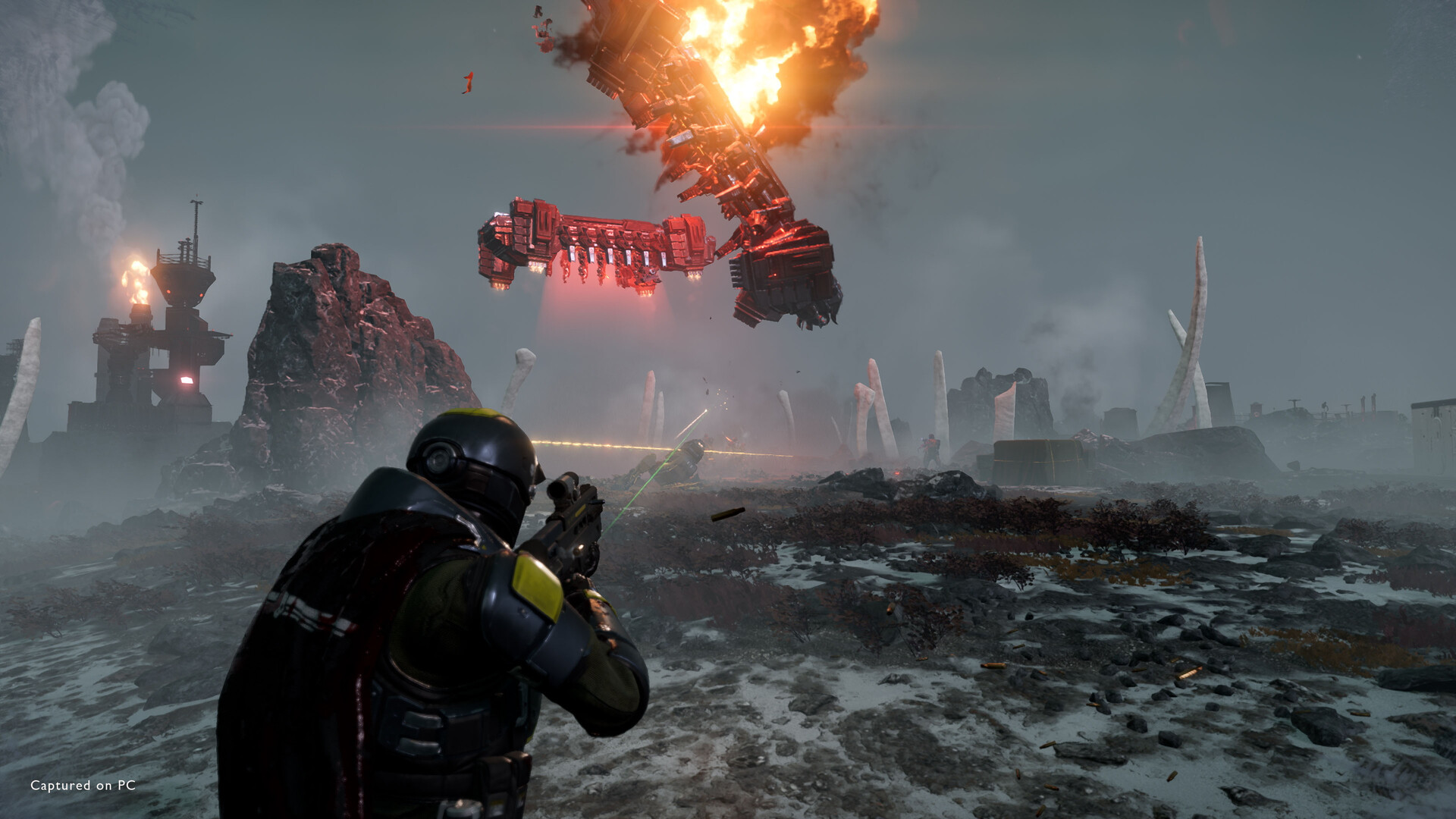
Solo is most comfortable when you think like a field operative instead of a hero. A lone player doing an Automaton outpost run, for example, is often better off sneaking around a fabricator line, dropping an Eagle Airstrike on a bunker, and leaving before reinforcement spirals out of control. Against Terminids, the same logic applies: you are usually safer completing a bug hole objective, dodging patrols, and moving on than trying to “clear the map.” On missions with simple goals like activating uplinks, launching artillery, or retrieving data, solo play can feel surprisingly manageable once you understand enemy sightlines and how reinforcement works.
The main limitation is that solo removes a lot of recovery tools. In a squad, one player can kite Hunters while another reloads a recoilless rifle, or a teammate can throw a reinforcement beacon when a Hulk melts the front line. Alone, every mistake costs more. That does not mean solo is bad; it means your loadout and mission choice need to be more deliberate. The safest beginner approach is to start solo on lower difficulties, learn the map flow, and then move into public matchmaking once you can survive on your own for short stretches.
For context, Helldivers 2 launched as a full-scale co-op third-person shooter in 2024 and remains a fast, frantic, and ferocious fight across a hostile galaxy Source. It is not a pure single-player campaign, but solo runs are a valid way to learn the game, especially if you want to understand stratagem timing and objective logic before jumping into squad chaos.
First-Hour Checklist
Your first hour should be spent learning movement, stratagem timing, and mission flow rather than chasing upgrades. The most valuable early actions are simple, repeatable, and low-risk, because Helldivers 2 punishes panic more than almost anything else.
1) Finish the tutorial carefully
Do the tutorial first and pay attention to how stratagem inputs work under pressure. The game expects you to call in supplies, support weapons, and orbital strikes while moving, under fire, and often while being chased. Practice the input rhythm on something easy like an SOS Beacon, Resupply, or Eagle Airstrike so you are not trying to memorize inputs in the middle of a nest fight.
2) Run low-difficulty operations before you get adventurous
Start on the easiest comfortable difficulty and use it to learn three things:
- how patrols react to noise and sight
- how quickly your primary weapon handles basic enemies
- how long it takes you to complete an objective and extract
A beginner on solo difficulty should not be trying to “clear everything.” Instead, test a simple loop such as landing, moving to one objective, calling supplies, completing the task, and extracting. If you can do that without burning all your reinforcements, you are learning the right lessons.
3) Unlock and test your first reliable stratagems
Early on, focus on tools that solve problems rather than flashy damage. Good examples include:
- Eagle Airstrike for deleting clustered enemies or structures
- Resupply for keeping your ammo economy stable
- Machine Gun or another early support weapon for holding a lane
- Orbital Precision Strike for a simple, hard-hitting option against durable targets
These are the kinds of tools that teach fundamentals. The Eagle line teaches timing and positioning. Support weapons teach you when to drop a secondary and when to commit to a fight. Resupply teaches discipline, because if you treat ammo as infinite, solo play gets much harder very fast.
4) Open your ship systems and spend only where power matters
Your first few upgrades should go toward the pieces that help you survive more missions, not the ones that merely look exciting. If a system gives you more survivability, better cooldown handling, or more room to experiment, it is usually worth prioritizing early.
5) Extract even from imperfect missions
A beginner mistake is restarting mentally after one bad fight. Don’t. In Helldivers 2, partial success is still progress. If you finish one objective, grab a few samples, and barely limp to extraction, that mission taught you more than a clean but unrealistic dream run. Solo players especially should value extraction practice, because extraction zones can become the most dangerous part of the run.
6) Learn one enemy faction at a time
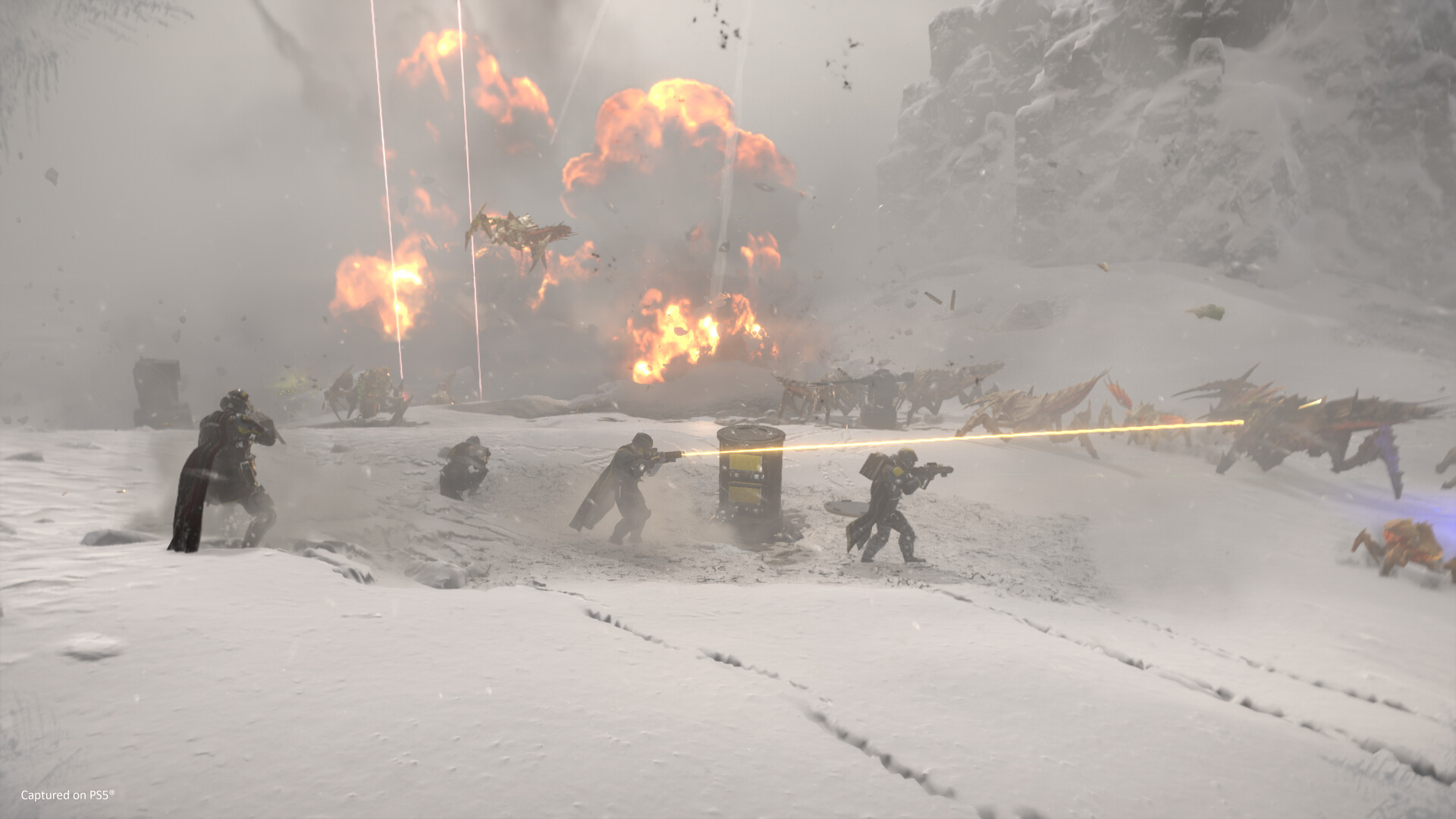
If you can choose, spend your first hour mostly fighting one faction before switching. Terminids teach crowd control, spacing, and escape routes. Automatons teach cover, anti-armor awareness, and how dangerous ranged fire can be. Learning both at once is possible, but beginners usually improve faster by focusing on one threat profile first.
You might also like
- Helldivers 2 similar games co op shooter deep rock galactic remnant outriders Beginner Guide
- Helldivers 2 Available Platforms Updated 3/7/2024 See all the available platforms and consoles for Beginner Guide
- Helldivers 2 fourth faction alternative multiple enemies planet why Beginner Guide
- Helldivers 2 Which enemy faction do you enjoy fighting in: Beginner Guide
- Helldivers 2 Why Now May Be the Perfect Time for a New Enemy Faction
Resource Priority Order
Your best early resource strategy is to spend on permanent power first, hoard flexible currencies next, and only then experiment with cosmetic or convenience choices. In Helldivers 2, a lot of your strength comes from loadout access and ship progression, so early spending discipline pays off.
| Priority | What to spend on first | Why it matters early | Example |
|---|---|---|---|
| 1 | Ship modules and core stratagem unlocks | These improve every future mission and make solo runs safer | Upgrading orbital support or improving cooldown utility |
| 2 | Warbond progression that unlocks useful weapons and armor | Better tools expand your mission options | A reliable primary, a utility armor perk, or a strong grenade option |
| 3 | Medals for practical gameplay unlocks | Medals often gate the gear that solves real problems | An assault rifle upgrade, utility booster, or armor set with useful passive value |
| 4 | Samples for ship upgrades | Samples are the backbone of long-term progression | Save them until you can claim a meaningful upgrade |
| 5 | Super Credits | These can be spent flexibly, so avoid impulse use | Hold them for warbond access or useful store options |
Your early priority should almost always be power that affects every mission, not novelty. If you are choosing between a flashy new item and a dependable upgrade that makes extraction more reliable, take the dependable upgrade. Solo players feel this even more sharply because there is no teammate to cover a weak point in your build.
What to hoard
Hoard anything that is expensive to replace or easy to waste on temporary comfort:
- Samples: do not spend them casually; they are key to ship progression
- Super Credits: save them for meaningful unlock paths rather than random purchases
- Medals: spend them on gear that improves your actual mission success rate
- Requisition slips: use them to unlock stratagems that solve common threats
The important mindset is that early progression in Helldivers 2 is about options. A solo beginner with the right options can choose safer fights, while a player who spends recklessly gets trapped with a narrow kit.
What to unlock first
A practical beginner unlock order often looks like this:
- one reliable anti-horde tool
- one anti-armor option
- one supply or sustain tool
- one mission utility stratagem
That could mean something like an Eagle Airstrike, a support weapon with steady damage, Resupply, and an orbital strike. The exact picks depend on what you have unlocked, but the structure matters. If your kit handles swarms but not heavy armor, or armor but not ammo economy, solo runs will punish that gap.
What not to rush
Do not rush deep into high-difficulty progression just because a currency is piling up. Harder missions are where you earn more, but they also increase the odds that you lose samples, burn reinforcements, and fail the mission outright. A stable mid-difficulty loop often gives beginners better long-term value than risky high-difficulty gambling.
Common Mistakes
Most new Helldivers fail for the same handful of reasons, and the good news is that each one has a simple fix. If you clean up these habits early, solo play becomes dramatically smoother.
1) Fighting every patrol
Players often shoot first because Helldivers 2 feels like an action shooter, but not every enemy group is worth the noise. Patrol fights can snowball into reinforcements, which then attract more patrols, and suddenly your “quick solo mission” turns into a panic retreat.
Why it happens: New players want to prove their build works, so they treat every contact like a combat challenge.
Fix: Avoid patrols unless they block your route or sit directly on an objective. Use terrain, crouch movement, and flanking routes to slip past. If you do engage, kill fast and move on before the area escalates.
2) Bringing a loadout that solves only one problem
A lot of beginners bring all anti-swarm gear or all anti-armor gear. That looks great in one fight and collapses in the next. A solo Helldiver needs at least basic answers to both crowds and tough targets.
Why it happens: Loadouts are fun to specialize, and early unlocks can make specialization feel natural.
Fix: Build around roles, not fantasies. Pair a dependable primary with one anti-armor stratagem and one crowd-control or support tool. For example, combine a steady rifle with Eagle Airstrike and a resupply-focused setup instead of stacking only explosive damage.
3) Ignoring extraction discipline
Players often think the mission is won the moment the objectives are complete, but extraction is a real test. The drop zone can be more dangerous than the middle of the map.
Why it happens: Completing the objective creates a false sense of safety.
Fix: Start moving toward extraction before the timer becomes a disaster. Clear nearby threats, drop supplies before the final call, and save one defensive stratagem for the landing pad. Solo players should treat extraction like a separate encounter, not an afterthought.
4) Burning reinforcements on avoidable mistakes
In solo, every reinforcement is precious. Dying because you stood too close to a stratagem marker or got trapped by your own explosive is especially painful because it is preventable.
Why it happens: The game is visually noisy, and beginners often focus on enemies instead of their own positioning.
Fix: Build the habit of throwing stratagems from safe angles, then moving immediately. Never stand on top of your call-in point unless you are sure the area is clear. If the fight is chaotic, retreat a few steps and reset instead of trying to win inside the blast zone.
5) Overcommitting to “full clear” habits
Helldivers 2 does not require you to fight every base and every nest every time. New players often assume completion means total destruction of the map.
Why it happens: Many games reward exhaustive clearing, so beginners carry that instinct over.
Fix: Focus on mission success first. Only clear side objectives, bases, or nests when they are convenient, reward samples, or are directly on your route. Solo progress is about efficient extraction, not total annihilation.
6) Not practicing stratagem inputs under stress
It is easy to call a resupply on an empty map. It is much harder to do it while being chased by Hunters or shelled by Automatons.
Why it happens: Practice usually happens in safe conditions, but the game demands execution in unsafe ones.
Fix: Spend part of your first hour deliberately calling down stratagems while moving. Practice the same inputs until they become muscle memory. Good solo players can summon support while retreating without losing their place or panicking.
Pro Tips
The fastest way to improve beyond beginner level is to start using small tactical habits that make your movement, timing, and target choice more efficient. These are not flashy tricks; they are the kind of details that quietly save missions.
Tip 1. Use terrain to break line of sight
If you are fighting Automatons, break sightlines with rocks, ridges, and building corners. This makes ranged fire easier to manage and buys time to reload or call a stratagem. Two examples: ducking behind a ridge after triggering a bot patrol, or using a bunker wall to reset before a Hulk advances.
Tip 2. Treat your stratagem beacon like a weapon and a hazard
A well-thrown beacon can solve a fight, but a poorly placed one can kill you or deny your own movement. Throw Eagle Airstrike, Orbital Precision Strike, or Resupply from a position that gives you a clean escape route, then move before the effect lands.
Tip 3. Learn when to disengage from Chargers and Hulks
If a heavy enemy has clean access to you and your anti-armor option is not ready, disengage instead of gambling. Running around a rock outcropping against a Charger or retreating through cover from a Hulk gives you time to reset and improves survival more than a desperate face-tank.
Tip 4. Keep one “panic button” in your kit
Always bring one tool that can save a collapsing fight. That might be an area denial stratagem, a defensive support weapon, or a quick answer to clustered enemies. If your first plan fails, your panic button is what keeps the mission alive.
Tip 5. Use objectives to control enemy movement
Some missions let you turn the map into a traffic pattern. For example, if you activate an objective and then move to a nearby safe spot, enemies often bunch up along predictable paths. That makes your explosives and sentries much more effective than firing at scattered targets.
Tip 6. Save ammo by aiming at the right body parts
Against weaker enemies, do not waste heavy fire. Against tougher enemies, use your strongest damage where it matters: armored weak points, exposed vents, or concentrated groups. A few accurate bursts are better than emptying a magazine into armor that soaks the shot.
Graduation Threshold
You are out of the beginner phase when you can survive solo mission pressure without constantly relying on luck. That point is less about level and more about consistency, because Helldivers 2 rewards players who understand pacing, not just damage.
A good sign you have graduated is that you can do the following across multiple missions:
- complete your primary objective without burning through reinforcements
- recognize when to fight and when to avoid patrols
- call in stratagems while moving under pressure
- extract with at least some samples most of the time
- adapt your loadout to the faction and mission type
Another strong indicator is that you stop blaming every failure on “bad luck” and start identifying the actual cause. If you die to a Hunter swarm, you know whether the issue was positioning, ammo, cooldown timing, or greedy objective routing. If a Charger ruins your solo attempt, you can explain whether you lacked anti-armor, got caught in open ground, or stayed too long after the objective was complete.
A practical milestone is when lower difficulties feel like routine warmups and medium difficulties feel readable rather than overwhelming. You should be able to enter a mission, evaluate the faction, identify the mission type, and sketch a rough plan before you even leave the drop zone. For example, “This is Terminids, so I want crowd control and an escape route,” or “This is Automatons, so I need cover and a way to answer armor.”
You are also ready to move on when solo play no longer feels like the only way you can survive. That sounds backward, but it matters. The true beginner phase ends when you can handle solo on purpose, not because you need it to compensate for not understanding the game. At that point, public squads become a performance boost rather than a crutch.
If you want a benchmark from the broader game ecosystem, the game’s completion pressure is real: HowLongToBeat lists roughly 32.43 hours for the main story, 65.01 hours with extras, and 89.29 hours for completion Source. That is a useful reminder that Helldivers 2 has plenty of room to grow into, so there is no need to rush your learning curve.
Related Guides
These are the best next reads once you can survive the basics and want to refine your build or route planning.
- Helldivers 2 Best Early-Game Loadouts
- Helldivers 2 Difficulty Guide
- Helldivers 2 Stratagem Tier List
- Helldivers 2 Beginner Walkthrough
- Helldivers 2 Solo Build Guide
- Helldivers 2 Best Weapons for New Players
- Helldivers 2 Sample Farming Guide
Sources
- https://store.steampowered.com/app/553850/
- https://howlongtobeat.com/?q=helldivers2
- https://www.metacritic.com/game/helldivers-2
See also
- Helldivers 2 Reviewed by Game878Helldivers 2Read Full Review Story5Gameplay9Visuals9Audio8Value forMoney8 Beginner Guide
- Helldivers 2 fan creates indoor dungeon mission concept: Beginner Guide
- Helldivers 2 How to Destroy Fuel Silos and Stockpiled Ammunition
- Helldivers 2 Beginner Guide: Start Strong, Spend Smart, and Survive the Early War
- Helldivers 2 Pages using DynamicPageList3 parser function: Beginner Guide
- Helldivers 2 How to Fix Stuck in Drop Pod Bug
- Helldivers 2 Unnamed Super Earth Fighter Craft Beginner Guide
- Helldivers 2 How to Get the EX-03 Prototype 3 Armor Set
- Helldivers 2 Helldivers 1:Chief Communications Officer Beginner Guide
- Helldivers 2 Pages using Tabber parser tag Beginner Guide
Screenshots

Reviewed by
HD2 Guides Editorial
Expertise: Editorial team behind HD2 Guides. Content is compiled from official patch notes, community wikis, and playthrough notes, then reviewed and updated on schedule.
Sources
Helldivers 2 Missions Guides →
Browse the complete missions collection and its focused guides.
Related Guides
🔥 Popular Guides
Helldivers 2 Tier List — Weapons, Warbonds, Armor & Stratagems
Master Helldivers 2 tier list hub: warbond rankings, armor passives, weapons, and stratagems. Jump to the warbond or armor list for your build.
Helldivers 2 Armor Tier List — Best Passives Ranked
Helldivers 2 armor tier list ranked by passive value: scout, medium, heavy, and specialist sets. Best passives for solo, co-op, and high difficulties.
Helldivers 2 Warbond Tier List — Best Warbonds to Buy First
Ranked Helldivers 2 warbond tier list: which warbonds to buy first, best value for medals, and what to skip. Updated for current meta.

Helldivers 2 Weapon Tier List: Best Weapons for Every Loadout
Compare the best Helldivers 2 weapons, budget substitutes, late-bloomers, reroll advice, and endgame loadout investments.
📋 Patch Notes & Updates
🛠️ Popular Tools
Was this guide helpful?
Rate this guide so we can improve it.
Share your own tip
Found something not in the guide? Submit it below — our editors review every tip before publishing. No account required.