 Helldivers 2
Helldivers 2 Ministry of Employment Beginner Guide: Your First Steps Into Managed Democracy
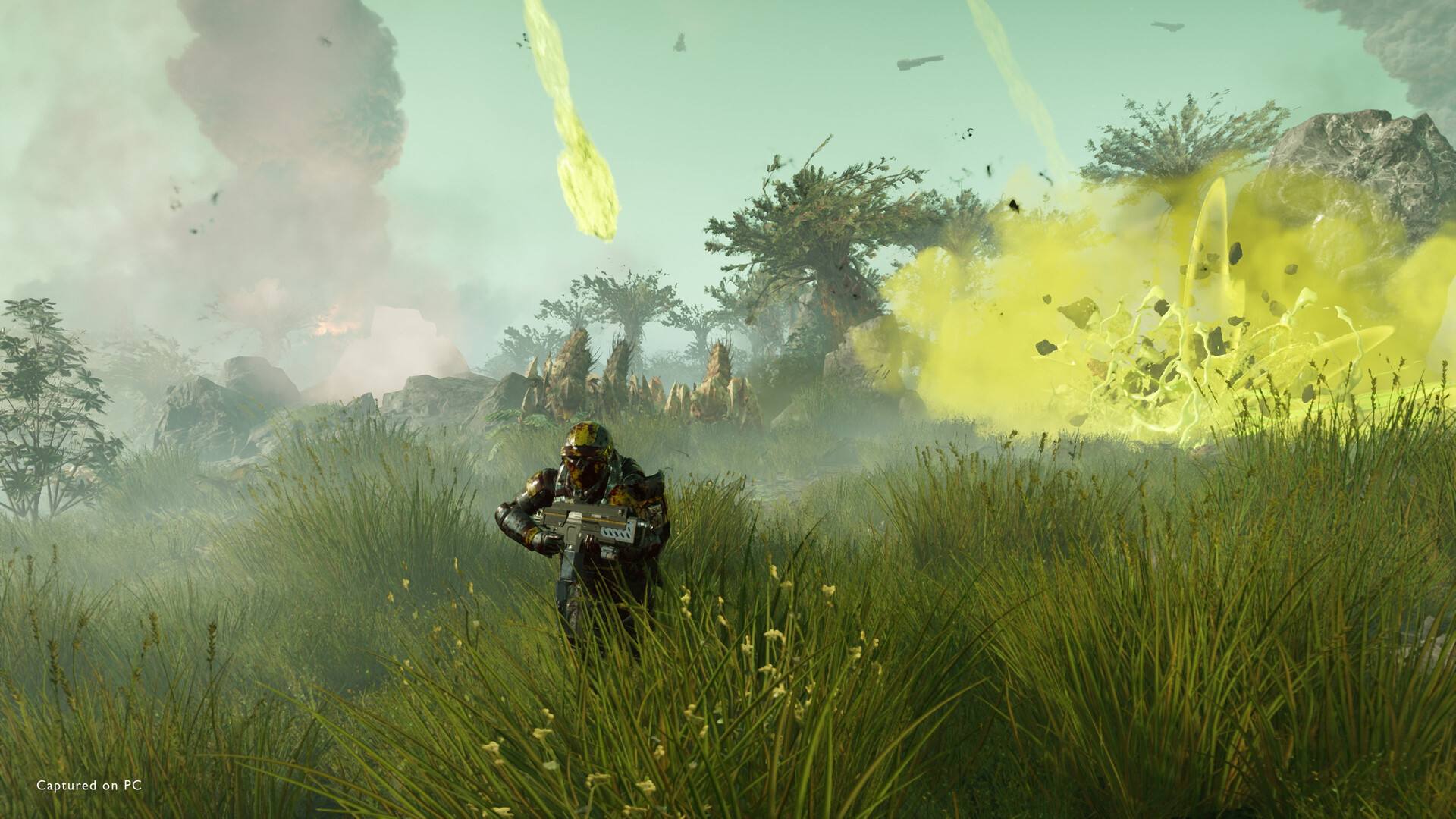
Quick Answer: Helldivers 2 Ministry of Employment is the best beginner starting point for learning the game’s core loop: do early missions on low difficulty, unlock key stratagems, spend Super Credits carefully, and focus on survivability before chasing damage.
What Helldivers 2 Is and What the Ministry of Employment Means for New Players
Helldivers 2 is a cooperative third-person shooter where you and your squad fight for Super Earth across hostile planets, and the “Ministry of Employment” idea is a playful way to think about your progression path: get assigned the right tools, learn your job, and become useful fast. The game is a 2024 co-op shooter from Arrowhead Game Studios and Sony Interactive Entertainment, set in the 22nd century with a strong satirical tone about “managed democracy” and military bureaucracy. That framing matters for beginners because the game is not really about solo heroics; it is about learning how to contribute without causing extra chaos.
If you are brand new, expect the first few sessions to feel messy. You will be learning how objectives work, how stratagems are called in, how friendly fire shapes every decision, and why positioning matters more than raw aim in many fights. The good news is that the early game has a very clear skill curve. You do not need perfect reflexes to be helpful. You need a steady approach, a few dependable tools, and the discipline to avoid overcommitting when the mission starts going sideways.
For context on the game’s scale and staying power, Steam currently shows “Mostly Positive” at 75.1% positive across 1,151,055 reviews Source, and the Steam store page also shows about 29,205 players in game right now Source. That does not tell you how to play, but it does tell you something useful: there is still a big player base, which means beginner lobbies, guides, and co-op opportunities are easy to find.
What you should expect from the first few hours
- Missions are short, but mistakes snowball fast.
- The game rewards coordination more than solo carry play.
- Friendly fire is always relevant, so “safe” positioning is a real skill.
- Early success comes from staying alive, not from topping the kill count.
- The Ministry-style progression mindset works best: learn one role, one loadout, one mission type at a time.
First-Hour Checklist: What to Do in Your First 60 Minutes
Your first hour should be spent unlocking the basics, testing equipment, and building a comfortable “default” loadout rather than chasing every shiny option. The fastest way to get overwhelmed in Helldivers 2 is to jump straight into unfamiliar missions with random gear and no plan. Instead, treat the first hour like onboarding: learn the controls, run easy missions, and gather enough currency to start making smart unlocks.
1) Complete the tutorial and read your stratagem list
Start with the tutorial and pay attention to how input timing works for stratagems, because calling them accurately is one of the most important core skills in the game. Practice your input rhythm until you can call an orbital strike or supply pod without staring at the code every single time. You will also want to learn the difference between offensive stratagems, defensive tools, and support weapons. For example, an Orbital Precision Strike is useful for simple target deletion, while an Eagle Airstrike gives you flexible area damage, and a Resupply keeps the squad alive and fighting.
2) Run low-difficulty missions with a simple objective focus
Your first missions should be on low difficulty so you can learn objective flow without being overwhelmed by armor-heavy enemies. Pick missions where you can practice a few basic behaviors:
- Move to objective.
- Clear enemies only when necessary.
- Finish the task.
- Extract with the team.
Good early examples include destroy-objective missions, simple clear-and-extract runs, and missions where you are asked to activate or defend a point. The point is not to farm efficiency yet. The point is to learn how to keep moving while staying aware of patrols and environmental hazards.
3) Try one primary weapon, one support weapon, and one survival stratagem
Do not swap gear constantly in the first hour. Pick one primary weapon you can control comfortably, one support weapon that gives you a safety net, and one stratagem that helps your team recover from mistakes. Good beginner-friendly examples include:
- A forgiving assault rifle as your primary.
- The Machine Gun as an early support weapon for sustained pressure.
- Resupply or Supply Pack-style support choices if available to your current setup.
The exact best pick depends on your unlocks, but the beginner rule is simple: choose consistency over “cool factor.” If a weapon is hard to aim, burns ammo too fast, or feels awkward under pressure, it is probably not your first-hour tool.
4) Learn how to ping, reinforce, and stay near the team
Team utility matters immediately. Use pings to show danger, objective locations, or extraction points. If a teammate dies, be ready to help with reinforcement rather than sprinting off alone. Staying close enough to help, but far enough to avoid chain deaths from explosives, is one of the most important beginner habits in the game. You do not need to stand on top of allies. You do need to be within practical help range.
5) Extract even when the mission feels messy
A “bad” run is still valuable if the squad extracts, completes objectives, and brings home rewards. Beginners often panic when the mission gets noisy and assume they have already failed. In Helldivers 2, partial success is still progress. Keep moving, keep the objective in mind, and extract whenever the team can do so safely. An imperfect completion is still better than a heroic wipe.
First-hour priorities at a glance
| First-hour action | Why it matters | Beginner example |
|---|---|---|
| Learn stratagem inputs | It is the core utility system | Resupply, Eagle Airstrike, Reinforce |
| Play low difficulty | Reduces pressure while learning | Basic objective missions and extracts |
| Keep one loadout stable | Builds muscle memory faster | Assault rifle + machine gun + support utility |
| Stay near the team | Reduces wipes and missed revives | Ping enemies, cover retreats, reinforce fast |
| Extract consistently | Progress beats perfection | Leave with samples and mission rewards |
If you do only these five things, you will already be ahead of many new players who spend the first hour chasing novelty instead of competence. For a deeper gear path, see helldivers 2 available platforms on early Helldivers 2 builds and related guide on the best beginner stratagems.

You might also like
- Helldivers 2 fan creates indoor dungeon mission concept: Beginner Guide
- Helldivers 2 Reviewed by Game878Helldivers 2Read Full Review Story5Gameplay9Visuals9Audio8Value forMoney8 Beginner Guide
- Helldivers 2 Pages using DynamicPageList3 parser function: Beginner Guide
- Helldivers 2 How to Destroy Fuel Silos and Stockpiled Ammunition
- Helldivers 2 Unnamed Super Earth Fighter Craft Beginner Guide
Resource Priority Order: What to Spend, Save, and Unlock First
Your resource priority should favor account-wide power first, then flexibility, then cosmetics or specialty options. Helldivers 2 uses multiple progression currencies and unlock tracks, and beginners often make the mistake of spreading them too thin. The result is a collection of half-finished unlocks that do not make you stronger in the missions you are actually running.
A useful beginner mindset is this: upgrade the tools that help you survive, complete objectives, and recover from errors. That usually means your earliest spending should support reliable weapons, useful stratagems, and ship improvements that benefit the whole squad.
Best early spending order
Unlock reliable stratagems first.
Focus on tools that solve common problems: crowd control, anti-armor, resupply, and emergency extraction support. Examples include the Eagle Airstrike, Orbital Precision Strike, Machine Gun, Anti-Materiel Rifle, and Resupply-related support options depending on what you have unlocked.Buy Warbond pages that improve fundamentals.
If you are choosing between a flashy niche item and a broadly useful one, choose the broadly useful item. Early armor with practical passive benefits, dependable primaries, and utility grenades are usually more valuable than situational gimmicks.Upgrade ship modules that improve universal performance.
Ship modules are often a better long-term investment than novelty unlocks because they improve the whole account’s effectiveness. Anything that boosts stratagem cooldowns, ammo economy, or support efficiency tends to pay off quickly.Save rare currencies until you know your preferred role.
Super Credits and similar premium-type resources should not be spent impulsively. If you do not yet know whether you prefer anti-armor, crowd control, or support play, keep your options open.Spend medals with a plan, not as soon as you earn them.
Medals are easy to trickle away on the first available cosmetic or side item. Instead, map out a few unlock goals and work toward them deliberately.
What to hoard and why
Some beginners feel pressure to spend everything immediately because the game constantly offers new unlocks. Resist that urge. Hoard when:
- You have not yet found a comfortable weapon class.
- You are not sure which armor passives fit your style.
- You are still learning whether you prefer solo queue, duo play, or full squads.
- You are missing core utility stratagems that make missions smoother.
The game’s economy rewards patience because many unlocks are situational. A support weapon that sounds amazing in the menu might be awkward in live missions. A flashy armor set might not help if you keep getting overwhelmed by patrols. It is better to sit on currencies for a little longer than to lock yourself into a bad path early.
Resource priority by usefulness
| Resource or unlock type | Early priority | Why beginners should care |
|---|---|---|
| Core stratagem unlocks | Highest | They solve the most mission problems |
| Ship modules | High | They improve the whole account |
| Medals | Medium-high | Needed for Warbond progression |
| Super Credits | Medium | Flexible, but easy to waste too soon |
| Cosmetics / niche items | Low | Good later, not first-hour power |
For a practical example, imagine you can buy a situational item, or save those resources for a dependable support weapon and a ship upgrade that helps every mission. The second option is almost always the better beginner move. Once you know your preferred role, then you can specialize.
The Helldivers 2 Ministry of Employment way of thinking is simple: earn competence before indulgence. If you want a next step after building your starter economy, see a new enemy faction on the best early Warbond choices and related guide on ship module priorities.
Common Mistakes New Players Make and How to Fix Them
Most beginner problems in Helldivers 2 come from rushing, overcommitting, or underestimating how much teamwork the game expects. The good news is that these mistakes are easy to correct once you know what to look for. Below are the most common ones, along with simple fixes you can apply immediately.
1) Running ahead of the squad
Many new players sprint toward objectives as if this were a race. The result is usually getting isolated, overwhelmed, and unable to be reinforced safely.
Why it happens: The objective marker looks urgent, and beginners often assume speed is the same as progress.
Fix: Move with the team, then push objectives together. If you are ahead of everyone else, stop and regroup instead of clearing the next area alone. A slow, coordinated team almost always outperforms a fast, fragmented one.
2) Throwing stratagems without checking teammate positions
Friendly fire is a core part of the game, and many accidental deaths come from an Eagle Airstrike, orbital barrage, or resupply pod dropped directly on allies.
Why it happens: New players get excited and focus on the enemy pack instead of the people standing next to it.
Fix: Before calling a strike, glance at your squad’s position and the likely enemy path. Use stratagems from safer angles, call them behind the enemy line when possible, and warn teammates through pings or voice if you have it.
3) Ignoring samples and mission rewards during extraction chaos
Beginners sometimes extract without collecting nearby samples or forget that mission success is more than kill count.
Why it happens: Combat is loud, urgent, and distracting, so the obvious threat steals all attention.
Fix: Make sample collection part of your route, not a separate task. If the squad is already near an objective or extraction zone, sweep the area before leaving. If the situation is too dangerous, prioritize survival and come back cleaner next run.
4) Using the wrong weapon for the situation
A weapon that feels good against light enemies may struggle badly against armored targets, and vice versa. Beginners often keep a loadout simply because it worked once.
Why it happens: Early success can hide weaknesses until the mission gets harder.
Fix: Test your loadout against at least two enemy situations: small swarms and armored threats. If your primary cannot handle light enemies efficiently or your support weapon cannot answer tougher targets, adjust before moving up in difficulty.
5) Treating deaths as mission failure
A single death is not automatically a lost run. New players often panic, overcorrect, and cause more deaths trying to “save” a bad situation.
Why it happens: Many games punish death harshly, so players bring that expectation here.
Fix: Think in terms of mission momentum. If one player goes down, reinforce calmly, retreat if needed, and keep the objective in mind. A mission with recoverable deaths can still be a strong clear.
6) Spending premium resources too early
Unlocking the first interesting thing you see can leave you stuck later when a more useful option appears.
Why it happens: New gear is exciting, and the game constantly offers tempting choices.
Fix: Delay premium spending until you know what role you enjoy. Ask yourself whether an item helps survivability, objective speed, or team utility. If not, it can probably wait.
7) Fighting every patrol instead of choosing battles
Beginners often attack every enemy group they see, which turns quiet mission movement into an endless brawl.
Why it happens: It feels satisfying to win fights, and the game’s combat is fun enough that players forget the objective.
Fix: Only commit to fights that protect the mission route, defend the objective, or secure extraction. If a patrol is not a threat, let it pass or move around it.
These mistakes are normal. Every Helldivers 2 beginner makes at least a few of them. The real win is learning faster than the game can punish you. For more help turning early chaos into a stable routine, check helldivers 2 halo tips on beginner loadouts and related guide on mission types explained.
Pro Tips for Leaving Beginner Status Faster
The fastest way to improve in Helldivers 2 is to build habits that reduce panic and increase mission control. These tips go beyond “don’t die” advice and focus on the little decisions that separate a shaky new recruit from a dependable squadmate.
Tip 1. Throw support stratagems before the crisis, not during it
If you know a defense is about to get messy, call in support early. A resupply pod, turret, or anti-armor tool placed before the wave hits is much safer than trying to drop one while enemies are already on top of you. Good triggers include approaching an objective with no cover, hearing a heavy enemy spawn cue, or seeing the squad burn through ammo too quickly.
Tip 2. Learn one anti-armor answer and one crowd-control answer
You should always know how your loadout deals with armored enemies and swarms. For example, pairing a reliable primary with an Eagle Airstrike covers crowds, while a support weapon like the Autocannon or Anti-Materiel Rifle can help answer larger threats. If your gear only handles one problem, the mission will eventually show you the other one.
Tip 3. Use terrain to create safe angles
Standing in the open is a habit that gets punished fast. Move around rocks, ridges, buildings, and elevation changes so enemies have to approach through predictable lanes. This also makes your stratagem throws safer. Even simple map features can turn a bad fight into an easy hold.
Tip 4. Keep a mental note of your extraction route
Many beginners only think about extraction when the timer is already tense. Better players plan the route back while they are still clearing objectives. If you know where the map’s open ground, chokepoints, and patrol paths are, you can leave earlier and more safely when the mission is done.
Tip 5. Use grenades to create space, not just to secure kills
A grenade that forces enemies to move away from you is often more valuable than one that merely inflates your kill count. This is especially true when you are trying to revive a teammate, reach an objective terminal, or escape a swarm. Space is a resource, and grenades buy it.
Tip 6. If you are unsure, play the role of “stabilizer”
In random squads, the most valuable beginner role is often the one that keeps the mission from collapsing. That means carrying a dependable primary, a resupply or utility stratagem, and one answer to armor. You do not need to be the hero. You need to be the player who keeps the team moving.
Tip 7. Watch how enemy behavior changes after alert states
Once enemies are alerted, they do not behave the same way they did when patrolling. Beginners often fight as if every encounter is identical. Instead, notice when groups become more aggressive, when reinforcements start arriving, and when it is smarter to disengage and reposition.
These habits are small, but they stack quickly. The game’s difficulty can rise sharply if you keep repeating the same mistakes, so even one or two of these tips can change your success rate in the current meta. If you want to refine your next stage of play, look at helldivers 2 players aren't on advanced stratagem timing and related guide on best solo-friendly support choices.
Graduation Threshold: When You Are No Longer a Beginner
You are out of the beginner phase when you can complete missions consistently without relying on trial-and-error chaos to save you. That does not mean you need perfect performance or a high difficulty clear every time. It means you understand the game well enough to make deliberate choices about loadout, positioning, and mission flow.
A practical sign of readiness is that you can join a mission, identify the main threat types, and choose the right tools before the first major fight spirals out of control. Another sign is that you can explain why you brought each part of your loadout. For example, you might say: “This primary handles light enemies, this support weapon covers armor, this stratagem helps with objectives, and this armor keeps me alive long enough to do my job.” When you can think that way without hesitation, you are no longer just reacting.
Signs you have graduated from beginner status
- You rarely waste stratagems on bad throws.
- You know when to fight and when to move.
- You can support the squad without standing on top of them.
- You recognize enemy pressure before it becomes a wipe.
- You have a go-to loadout for at least one role.
- You can survive and extract on your own more often than not, even if the mission is messy.
A more concrete benchmark is mission consistency across several runs. If you can reliably contribute to objectives, keep your ammo and reinforcements under control, and extract with useful rewards more often than not, you are moving out of the beginner bracket. You may still be learning enemy-specific counters or optimizing for tougher difficulty tiers, but the foundation is there.
The Steam achievement data is a useful reminder that even many players never fully polish the basics: the rarest tracked achievement is unlocked by only 10.7% of players Source. That does not directly measure skill, but it shows how many people never push far into the game’s more demanding challenges. If you are already learning to manage mission pressure and team coordination, you are ahead of the curve.
For a broader completion context, HowLongToBeat reports roughly 32.43 hours for the main story, 65.01 hours with extras, and 89.29 hours for completion Source. Those figures are not a skill meter, but they are a good reminder that Helldivers 2 has enough systems and content to support a long learning journey.
Common Questions New Helldivers Ask
What should I unlock first in Helldivers 2?
Unlock reliable stratagems and universal upgrades first, especially tools that help with survivability, crowd control, and anti-armor. A dependable early loadout is more valuable than a flashy niche pick.
Is Helldivers 2 hard for beginners?
Yes, but it is approachable if you stay on lower difficulty, stick with your squad, and learn stratagem basics before moving up. The game is hard because of teamwork demands, not because beginners are expected to be perfect.
Should I play solo or with others?
The game is designed around co-op, and beginners usually learn faster with at least one teammate. Solo play can teach caution and timing, but the full experience is much smoother with a squad.
What resources should I save?
Save premium and rare resources until you know which role you enjoy most. Early on, avoid spending everything on cosmetic or situational unlocks if you still lack core mission tools.
When should I raise the difficulty?
Raise difficulty only when your current tier feels comfortable, not when you barely scrape by. If you can complete missions, reinforce teammates, and extract without chaos taking over every run, you are probably ready to test the next step.
Related Guides
- Helldivers 2 Best Beginner Loadouts
- Helldivers 2 Early Stratagem Tier List
- Helldivers 2 Ship Module Priority Guide
- Helldivers 2 Mission Types Walkthrough
- Helldivers 2 Armor and Passive Guide
- Helldivers 2 Solo Play Tips
- Helldivers 2 Co-op Team Roles Explained
Sources
- https://store.steampowered.com/app/553850/
- https://howlongtobeat.com/?q=helldivers2
- https://steamcommunity.com/stats/553850/achievements
- https://www.metacritic.com/game/helldivers-2
- https://www.protondb.com/app/553850
See also
- Helldivers 2 How to Fix Stuck in Drop Pod Bug
- Helldivers 2 Pages using Tabber parser tag Beginner Guide
- Helldivers 2 Helldivers 1:Chief Communications Officer Beginner Guide
- Helldivers 2 Failed to Establish Network Connection Error Beginner Guide
- Helldivers 2 Does Support Crossplay and Cross Save: Beginner Guide
- Helldivers 2 How to Get the EX-03 Prototype 3 Armor Set
- Helldivers 2 Can You Change Ship Name: Beginner Guide
- Helldivers 2 System Requirements and Recommended Specs: Beginner Guide
- Helldivers 2 Xbox Release Time and Details Beginner Guide
- Helldivers 2 Helldivers 1:Instructor Bot Beginner Guide
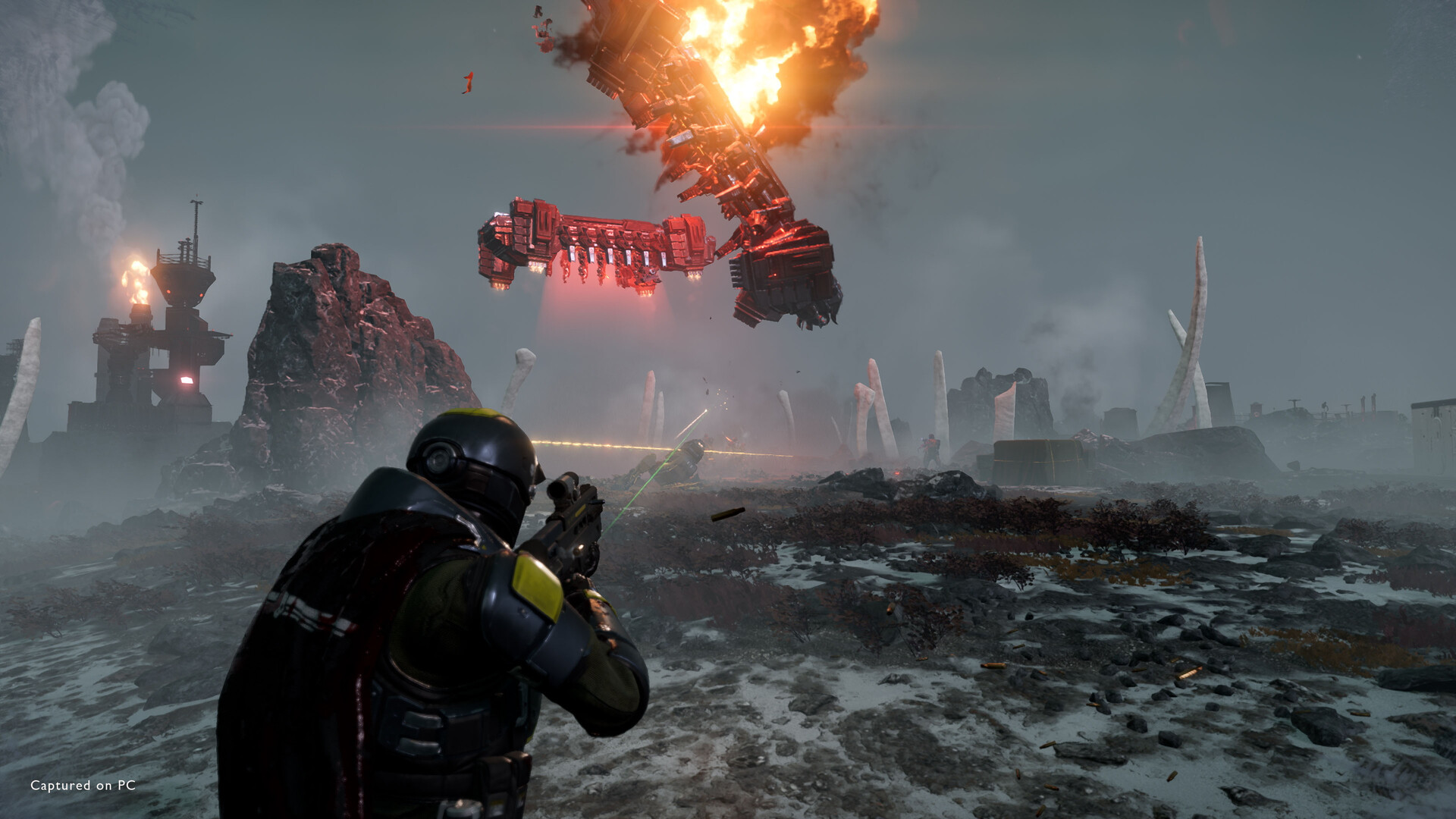
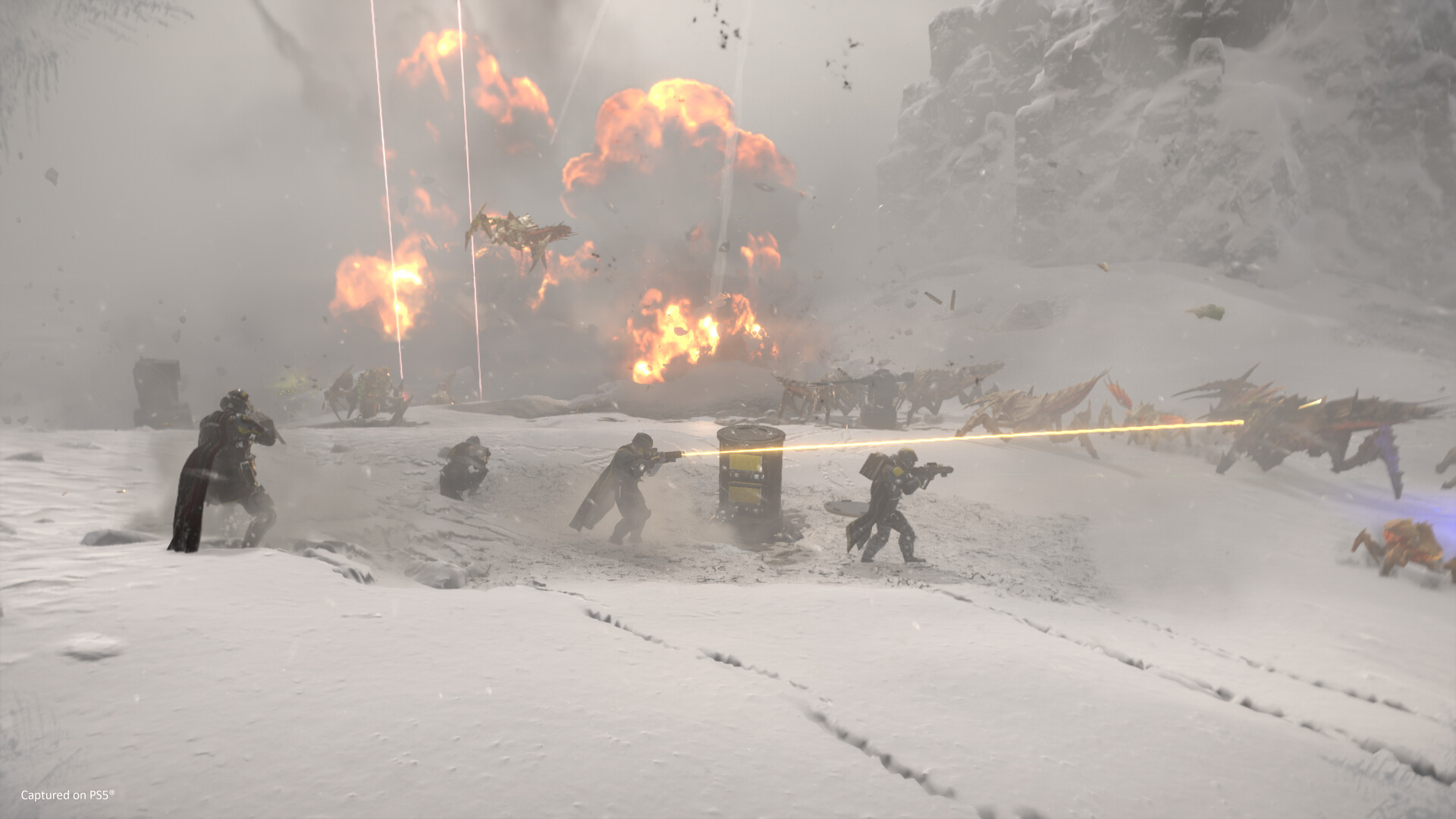
Screenshots

Reviewed by
HD2 Guides Editorial
Expertise: Editorial team behind HD2 Guides. Content is compiled from official patch notes, community wikis, and playthrough notes, then reviewed and updated on schedule.
Sources
Helldivers 2 Missions Guides →
Browse the complete missions collection and its focused guides.
Related Guides
🔥 Popular Guides
Helldivers 2 Armor Tier List — Best Passives Ranked
Helldivers 2 armor tier list ranked by passive value: scout, medium, heavy, and specialist sets. Best passives for solo, co-op, and high difficulties.
Helldivers 2 Warbond Tier List — Best Warbonds to Buy First
Ranked Helldivers 2 warbond tier list: which warbonds to buy first, best value for medals, and what to skip. Updated for current meta.
Helldivers 2 Tier List — Weapons, Warbonds, Armor & Stratagems
Master Helldivers 2 tier list hub: warbond rankings, armor passives, weapons, and stratagems. Jump to the warbond or armor list for your build.
Helldivers 2 helldivers 2 warhammer 40k collaboration update Patch Notes Explained
Helldivers 2’s Warhammer 40K crossover adds Castellan’s Creed, new weapons, armor, enemies, missions, SEAF allies, and more.
📋 Patch Notes & Updates
🛠️ Popular Tools
Was this guide helpful?
Rate this guide so we can improve it.
Share your own tip
Found something not in the guide? Submit it below — our editors review every tip before publishing. No account required.