 Helldivers 2
Helldivers 2 How to Defeat Scout Striders
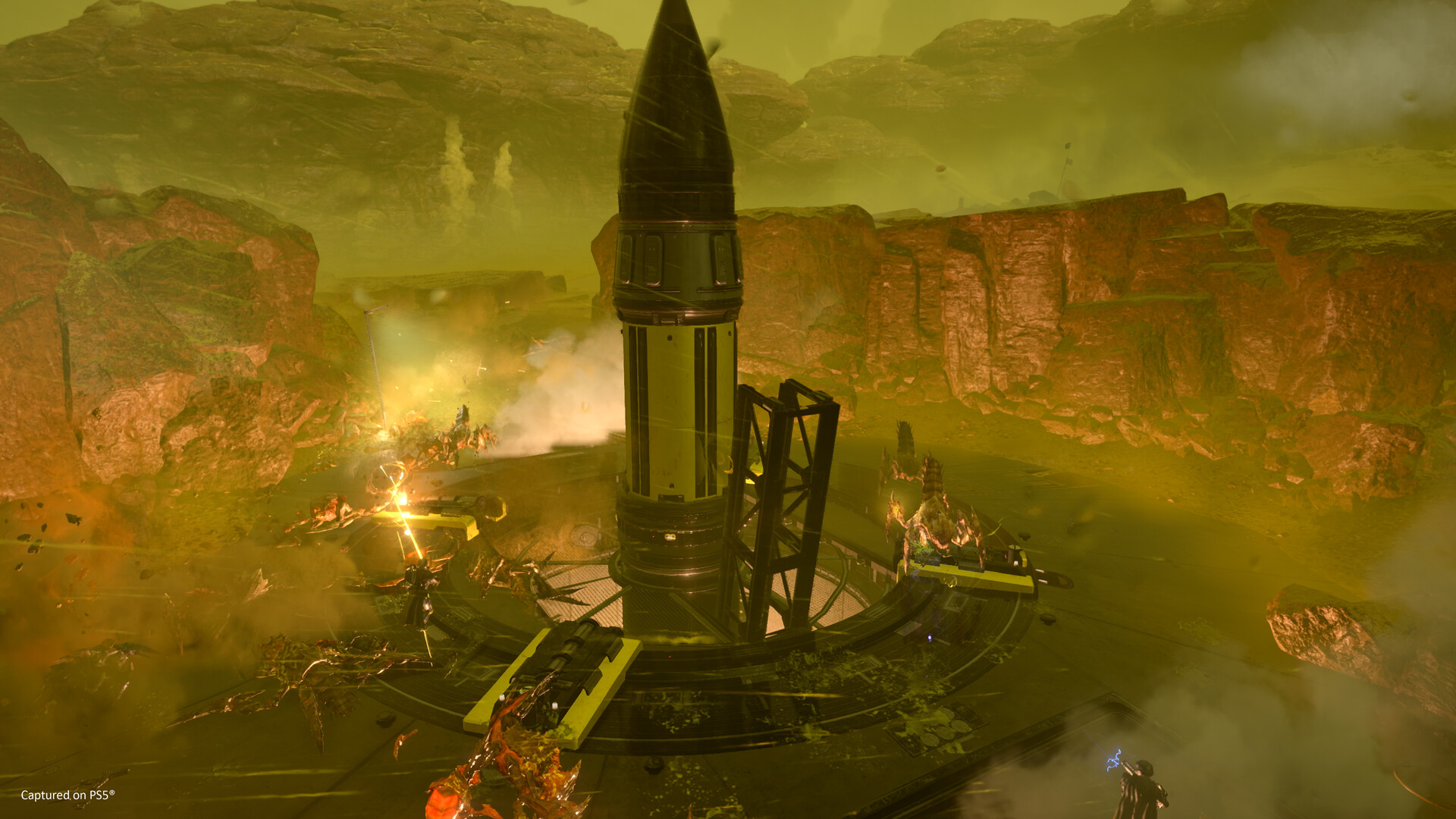
Quick Answer: Kill Scout Striders by hitting the exposed pilot after the front armor fails, using accurate medium-armor penetration, explosives, or flanking shots; don’t waste ammo on the shielded front if you can shoot the vulnerable gap or rider.
First-Hour Checklist
Your first hour in Helldivers 2 should be spent learning survivability, unlocking a few reliable tools, and getting comfortable with the rhythm of Helldiver chaos before you chase fancy loadouts. The game is a co-op third-person shooter where friendly fire, stratagem timing, and enemy weak spots matter more than raw twitch aim, so the fastest beginner progress comes from building habits, not just unlocking toys. Helldivers 2 launched on February 8, 2024, and it’s still the kind of game where a smart early routine pays off much more than random mission hopping. It also has a substantial solo-friendly knowledge curve: HowLongToBeat reports roughly 32.43 hours for the main story and 65.01 hours with extras, which is a good reminder that the “beginner phase” lasts longer than your first lunch break. Source
1) Run a few low-difficulty operations on purpose
Start with the easiest difficulty that lets you survive long enough to practice calling stratagems without panic. Your goal is not to farm glory; it’s to learn mission flow, extraction timing, and how enemies respond to your movement. On these early runs, deliberately test:
- A basic primary like the AR-23 Liberator so you get comfortable with recoil and reload timing.
- A straightforward support weapon like the MG-43 Machine Gun or Stalwart so you can feel the difference between crowd control and anti-armor tools.
- One offensive stratagem and one defensive stratagem, such as an Orbital Gatling Barrage plus Eagle Airstrike, so you learn cooldown rhythm.
If you die a lot, that is not a failure state in Helldivers 2. It is just the game gently reminding you that democracy is best delivered with positioning.
2) Practice stratagem input until it is muscle memory
Your first real power spike is not a gun; it’s being able to call the right stratagem under pressure. Spend part of the first hour practicing the input patterns in a safe area or during low-stakes missions. Focus on:
- Eagle Airstrike for quick damage and clearing groups.
- Resupply so you stop fighting the UI when you’re empty.
- Supply Pack or another sustain tool if your squad uses one.
A beginner who can call a resupply while sprinting and turning is already stronger than a beginner with a rare weapon they can’t deploy on time.
3) Learn enemy weak-point logic against real targets
The first hour should include at least one mission where you intentionally fight different enemy body types instead of just “shooting everything until it stops moving.” Use these early examples to train your brain:
- Terminid Chargers: learn that armor matters, so explosives and support weapons matter more than your starter rifle.
- Automaton Devastators: learn that headshots and exposed joints are often better than center-mass spraying.
- Scout Striders: learn that the vehicle-like front is not the whole story, because the pilot is the real problem.
This is exactly why “Helldivers 2 How to Defeat Scout Striders” is such a common beginner search: players see a scary little armored walker and waste time dumping ammo into the wrong part.
4) Buy a few practical unlocks, not every shiny thing
In the opening hour, spend currency on convenience and consistency. The best early unlocks are usually the ones that help you survive more missions, not the ones that look coolest in the loadout screen. Prioritize:
- A dependable armor set with a perk you actually notice.
- A weapon upgrade or new primary that improves control, handling, or weak-point damage.
- At least one stratagem that solves a problem you keep having, like crowd control or emergency healing.
5) Finish one operation and extract cleanly
A beginner’s best first-hour milestone is not a kill count; it’s successfully completing an operation and extracting with the squad alive. That teaches the full mission loop: drop in, complete objectives, manage reinforcements, and leave before things spiral into a patriotic disaster. If you can do that once while still remembering where your samples are, you are already on the right track.
Resource Priority Order
Your resource priority in the early game should favor survivability, reliable mission completion, and squad utility over cosmetics or niche weapon chasing. Helldivers 2 rewards players who invest in tools that reduce mistakes, because the game’s most common failure is not lack of damage but lack of control. If you hoard everything forever, you stall; if you spend on flashy but awkward gear, you end up underpowered when the mission gets ugly. The safest early progression path is to make every purchase solve a real problem you have already seen on the battlefield.
Spend first on practical combat flexibility
Your earliest spending should go toward items that make ordinary missions easier, especially ones that improve how you handle swarms and armored targets. Good examples include:
- A primary weapon you can aim comfortably while moving, such as the AR-23 Liberator style of all-rounder.
- A support weapon or stratagem that handles medium threats cleanly, like the Autocannon or Recoilless Rifle when you’re ready for more responsibility.
- Armor or perks that help with stamina, survivability, or situational utility rather than novelty.
The key is to avoid overcommitting to one niche. A beginner who only buys anti-boss tools can struggle when the mission is mostly patrols and trash mobs. A beginner who only buys crowd-clear tools can get walled by armored enemies and objectives.
Hoard these until you know your preferred role
Some resources are better saved until you understand whether you are a frontliner, support player, objective runner, or anti-armor specialist. For most new players, the safest hoard-first items are:
- Premium currency used for warbond-style unlocks if you are not sure which path you want.
- Hard-to-replace upgrade mats tied to ship progression.
- Samples needed for module upgrades until you know which module line benefits your loadout most.
That said, do not become a museum curator. If a resource is sitting unused while you keep losing missions to the same problem, spend it. Early game efficiency is about turning frustration into tools.
Craft or unlock these categories first
If the game prompts you to unlock or improve a category, these are usually the most beginner-friendly priorities:
| Priority | What it helps with | Early examples | Why it matters |
|---|---|---|---|
| Survival tools | Staying alive under pressure | Better armor perks, resupply options | Dead Helldivers do not complete objectives |
| Anti-armor options | Killing heavy targets | Recoilless Rifle, Autocannon, Eagle Airstrike | Many beginner roadblocks are armored enemies |
| Crowd control | Clearing swarms fast | MG-43, Gatling-type stratagems, Orbital barrages | Patrols become disasters quickly |
| Team utility | Helping the squad recover | Resupply, support packs, defensive stratagems | Co-op missions snowball from one good revive |
Spend samples with a mission plan
When you do start investing in ship upgrades, do it with a specific use case in mind. For example:
- If your squad keeps dying to swarm pressure, buy upgrades that strengthen area control.
- If you keep failing objective defense, prioritize tools that improve sustained fire and cooldown efficiency.
- If you are usually the anti-armor player, invest in support weapon reliability first.
The important beginner rule is simple: do not spend because something is available; spend because your current missions keep exposing the same weakness.
You might also like
- Helldivers 2 Reviewed by Game878Helldivers 2Read Full Review Story5Gameplay9Visuals9Audio8Value forMoney8 Beginner Guide
- Helldivers 2 How to Destroy Fuel Silos and Stockpiled Ammunition
- Helldivers 2 How to Fix Stuck in Drop Pod Bug
- Helldivers 2 Battle Pass Guide: How to Progress Warbonds
- Helldivers 2 How to Get the EX-03 Prototype 3 Armor Set
How to Defeat Scout Striders
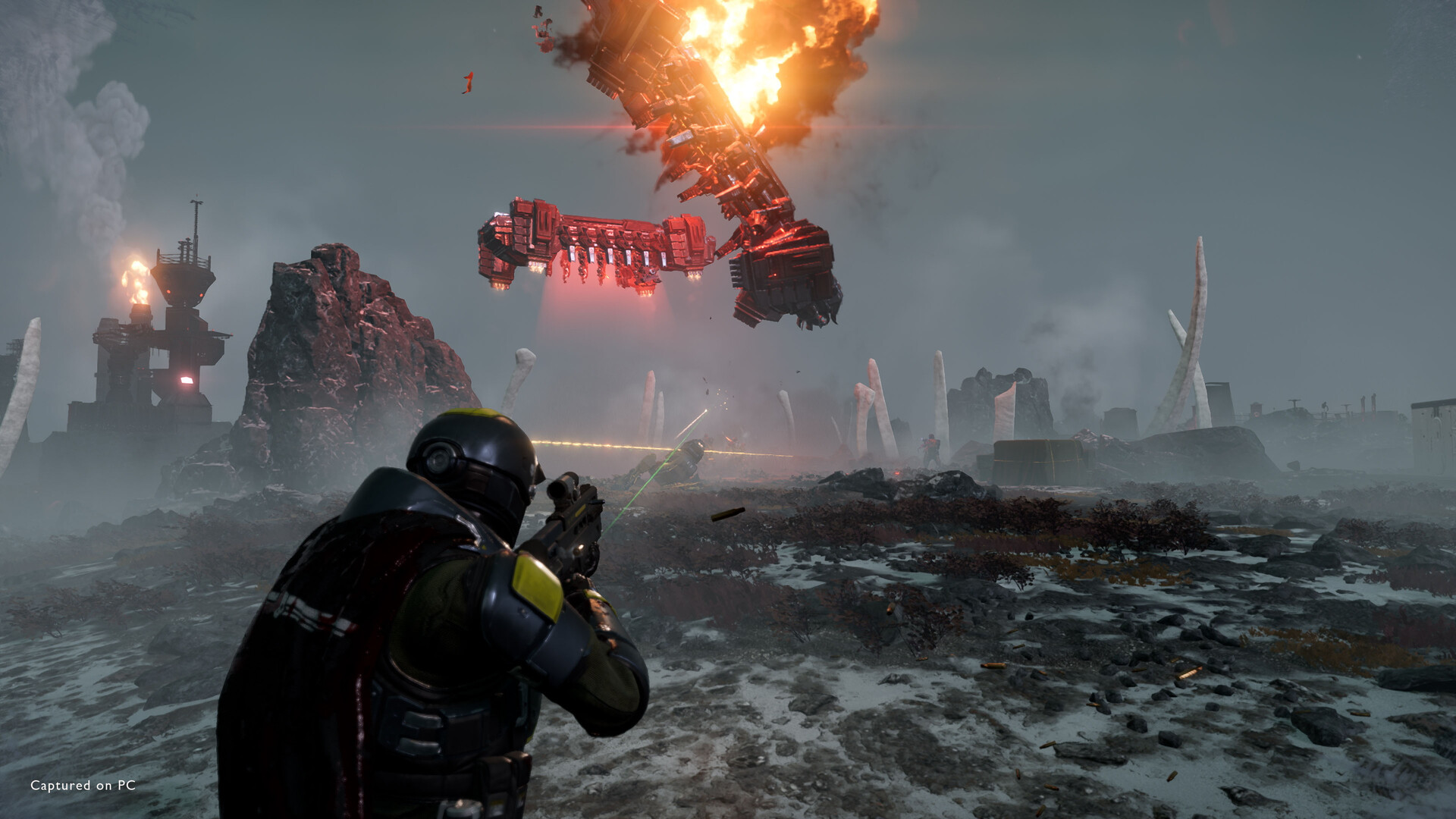
Scout Striders go down fastest when you stop treating them like armored tanks and start treating them like piloted walkers with a vulnerable operator. These Automaton units are intimidating because their frontal plating can soak a lot of casual fire, but the real beginner trick is target selection: either strip or bypass the front and put damage into the pilot, side opening, or exposed weak angle. If you keep shooting the plate with an unhelpful weapon, you can waste a ton of ammo while the Strider happily keeps advancing like it has a personal grudge against managed democracy.
Shoot the pilot, not the armor, when you can
The most reliable answer to a Scout Strider is to hit the exposed pilot once the angle opens. In practice, this means waiting for a side view, a partial stagger, or a moment when the walker turns and exposes the operator. Good real-match examples include:
- You flank a Strider during a base defense and place shots into the exposed cockpit area.
- A teammate stuns or distracts it, giving you a clean angle on the rider.
- You use terrain, a rock, or a container to force the walker to rotate and reveal its weak point.
This is why precision matters more than panic firing. A beginner with calm aim and a decent angle can beat a “better” player spraying at the shielded front.
Use weapons that actually solve the armor problem
Scout Striders are easiest with weapons that can punch through protection or punish exposed sections. Practical beginner-friendly examples include:
- Autocannon: great for cracking durable targets and giving you a clean answer when the Walker refuses to cooperate.
- Anti-Materiel Rifle: useful if you can hit the exposed pilot or a vulnerable area consistently.
- Explosives like Eagle Airstrike or grenades: excellent for deleting the unit if you place the blast where it matters.
If your current weapon feels weak, that is usually a clue that you’re using the wrong tool for the target, not that the enemy is invincible.
Flank instead of face-tanking
The easiest way to lose against Scout Striders is to stand in front of them and duel the armor plate like it owes you money. Move laterally, use cover, and create angles. A few useful habits:
- Strafe to the side before firing.
- Use rocks, supply crates, and mission geometry to block the forward arc.
- Save your sprint for repositioning after the Strider commits to a direction.
In normal missions, one good flank is often enough. In chaotic drops, even a half-second angle change can be the difference between a clean kill and a very undemocratic ragdoll.
Don’t ignore the rest of the Automaton pack
Scout Striders often appear alongside other threats, and that is where beginners get overwhelmed. A Strider that would be manageable in a clean arena becomes a problem when paired with:
- Automaton Troopers shooting your legs while you aim.
- Devastators forcing you off the angle you wanted.
- Hulks or heavier threats making you spend your anti-armor tools too early.
If the battlefield is busy, clear the immediate trash first, then focus the Strider. The best anti-Strider plan is the one that also keeps you alive long enough to execute it.
If you are new, use the “one weak spot, one burst” rule
A very beginner-friendly tactic is to commit to a single exposed opening and dump one controlled burst into it instead of overextending. Examples:
- Short burst from a rifle after a flank.
- A single well-placed grenade when the Strider is stationary.
- One support-weapon burst into the exposed rider area, then relocate.
That discipline prevents ammo waste and stops the common newbie habit of “panic spraying until the sky looks red.” Helldivers 2 is already noisy enough without turning every fight into a fireworks accident.
Common Mistakes
New players usually struggle with the same handful of problems, and most of them are easy to fix once you see the pattern. The game looks like pure chaos at first, but many beginner losses come from a small number of bad habits repeated under pressure. If Scout Striders are giving you trouble, odds are at least one of these mistakes is happening too.
1) Shooting the front armor forever
You keep firing into the Strider’s armored faceplate because it looks like the obvious weak point, but it is often the least efficient target.
- Why it happens: the enemy looks “important,” so players assume the biggest visible part is the right target.
- Fix: flank, wait for a turn, or aim at the pilot/exposed angle instead of the front plate.
2) Bringing only general-purpose weapons
You load in with gear that is okay at everything and excellent at nothing, then get stuck when armored enemies arrive.
- Why it happens: beginners want one loadout that solves the whole game.
- Fix: carry at least one real anti-armor answer, such as Autocannon, Recoilless Rifle, or a strong explosive stratagem.
3) Standing still while aiming
You stop moving to line up a shot, and the Automaton line politely turns you into a cautionary tale.
- Why it happens: many shooters reward static precision, but Helldivers 2 punishes it with crossfire and explosions.
- Fix: shoot from cover, take short peeks, and move between bursts.
4) Burning stratagems on the first visible enemy
You call in your strongest tool the moment you see danger, only to discover the real threat arrives ten seconds later.
- Why it happens: early panic and lack of confidence in basic weapons.
- Fix: save your biggest stratagems for clustered enemies, objectives, or elite targets that justify the cooldown.
5) Ignoring enemy escorts
You tunnel on the Scout Strider and get shredded by nearby Troopers or Devastators.
- Why it happens: the Strider is visually dominant, so the smaller units fade from attention.
- Fix: clear the immediate trash first, then reposition for the walker.
6) Running too far from the squad
You chase a target or objective solo, then lose support, revives, and crossfire control.
- Why it happens: the game rewards initiative, so it is easy to overdo it.
- Fix: stay close enough that your squad can reinforce and cover you when a fight turns ugly.
Graduation Threshold
You are out of the beginner phase when you can complete missions consistently without your loadout carrying you. The real sign of progress in Helldivers 2 is not your level, not your cosmetics, and not even your favorite weapon; it is whether you understand why you won or lost. If you can explain why a Scout Strider died to your team’s angle, why a patrol escalated, and why you saved a stratagem for later, you are moving beyond “new diver” territory.
Clear signs you’ve graduated from beginner status
You are probably past the beginner phase when you can do most of the following:
- Read enemy threats quickly and identify when a problem needs anti-armor instead of raw damage.
- Call stratagems without hesitating or misinputting them under pressure.
- Finish operations with fewer panic deaths and fewer wasted reinforcements.
- Choose a loadout based on the mission type instead of always grabbing the same few toys.
- Support teammates with revives, resupplies, and positioning instead of just chasing kills.
Mission behavior matters more than playtime
A lot of players assume they are still beginners until they unlock a certain weapon or difficulty, but that is not really how Helldivers 2 works. You can be a confident player at relatively low mission depth if you already know how to:
- Take cover before reloading.
- Split attention between objectives and patrols.
- Use stratagems with intention.
- Prioritize extract survival over unnecessary hero moments.
On the other hand, a high-level player can still behave like a beginner if they keep face-tanking, panicking, and wasting cooldowns on single targets.
A practical self-test
Try this self-check during a normal mission set:
- Can you kill a Scout Strider without dumping everything into its front armor?
- Can you tell when to retreat and reset a fight?
- Can you keep moving while handling terminals, objectives, and threats?
- Can you contribute to a squad even when your favorite support weapon is unavailable?
If the answer is mostly yes, you are no longer learning the absolute basics. You are now in the stage where loadout optimization and mission-specific planning start to matter more.
Pro Tips
These tips go beyond the obvious “shoot weak spots and don’t die” advice, because once you have the basics down, Helldivers 2 becomes a game of little efficiency gains and smart positioning. None of these tricks are flashy on their own, but together they make you look like you know exactly what you’re doing, which is always nice when the mission is going sideways and someone needs a responsible adult with a stratagem code.
Tip 1. Use terrain to force bad enemy angles
If a Scout Strider is approaching through a narrow lane, step behind a rock, wall, or supply container so it must rotate to keep pressure on you. That rotation often creates the opening you need to hit the pilot.
Tip 2. Keep one “panic button” stratagem ready
Whenever you load out, make sure at least one call-in can save you from a bad fight. For many beginners that means a quick airstrike, a crowd-clear barrages style tool, or a support weapon drop you can use after being overwhelmed.
Tip 3. Reload after every safe engagement
Helldivers 2 punishes the classic “I’ll reload after the next fight” mentality. If you just cleared two patrols and your path is safe for a moment, top off immediately so you do not get caught with a partial mag while a Strider rounds the corner.
Tip 4. Treat Scout Striders as angle puzzles
When one appears, do not ask “how do I shoot it faster?” Ask “where can I move so the pilot becomes visible?” That mindset change makes medium-armor fights much easier and stops you from wasting ammo.
Tip 5. Keep an eye on teammate line of fire
Friendly fire is not a joke in this game; it is a lifestyle. Before tossing an explosive or firing a piercing weapon at a Strider, check whether your teammate is about to step into the lane. Saving them from a “helpful” shot is a skill, not cowardice.
Tip 6. Practice objective-first discipline
If a mission objective can be finished now, finish it now. Many beginner squads lose missions because they keep wandering to chase one more enemy patrol after the objective is already safe. The game rewards extraction, not sightseeing.
Related Guides
If you want to keep improving after learning Scout Strider counters, these follow-up topics make the most sense next.
- helldivers 2 why tips Helldivers 2 Best Early Weapons for Beginners
- related guide Helldivers 2 Best Beginner Stratagems
- legendary warbond release date Helldivers 2 Automaton Enemy Weak Points Guide
- related guide Helldivers 2 Terminid Beginner Combat Guide
- related guide Helldivers 2 Best Solo Loadouts
- related guide Helldivers 2 Mission Types Explained
- helldivers 2 available tips Helldivers 2 Armor and Perk Guide
Sources
- https://store.steampowered.com/app/553850/
- https://howlongtobeat.com/?q=helldivers2
- https://www.metacritic.com/game/helldivers-2
- https://steamcommunity.com/stats/553850/achievements
- https://api.steambase.io/games/553850
- https://www.protondb.com/app/553850
- https://www.cheapshark.com/redirect?dealID=m%2FqQjo0uKy1J43MzqV%2B3wHWO4xOCNp9UMfo%2BfATGaNY%3D
See also
- Helldivers 2 All You Need To Know: Beginner Guide
- Helldivers 2 Beginner Guide: Smart First Steps, Resources, and Common Mistakes
- Helldivers 2 Former President of Super Earth Beginner Guide
- Helldivers 2 How to Use the Safe and Unsafe Railgun Modes
- Helldivers 2 Advanced Combat Tips and Tricks for Beginners
- Helldivers 2 How to Get and Use the Anti-Materiel Rifle
- Helldivers 2 Beginner Guide
- Helldivers 2 Beginner Guide: Start Strong on Super Earth
- Helldivers 2 Beginner Guide: Xbox Launch and ODST Warbond Release Time
- Helldivers 2 How to Get the CM-17 Butcher Armor Set
Screenshots


Reviewed by
HD2 Guides Editorial
Expertise: Editorial team behind HD2 Guides. Content is compiled from official patch notes, community wikis, and playthrough notes, then reviewed and updated on schedule.
Sources
Helldivers 2 Missions Guides →
Browse the complete missions collection and its focused guides.
Related Guides
🔥 Popular Guides
Helldivers 2 helldivers 2 warhammer 40k collaboration update Patch Notes Explained
Helldivers 2’s Warhammer 40K crossover adds Castellan’s Creed, new weapons, armor, enemies, missions, SEAF allies, and more.
Helldivers 2 super helldive achievement guide
Achievement guide for Helldivers 2 covering rare trophies, hidden requirements, missable timing, and a full Super Helldive completion route.
HELLDIVERS™ 2 all achievements: complete achievements guide
Full Helldivers 2 achievements guide with rarest trophies, hidden unlocks, missables, and a 100% completion route.
Helldivers 2 patch notes 7.0.2: What changed in the Void update era
What changed in Helldivers 2 patch notes 7.0.2, including new Illuminate threats, SEAF support, the level cap increase, and squad action items.
📋 Patch Notes & Updates
🛠️ Popular Tools
Was this guide helpful?
Rate this guide so we can improve it.
Share your own tip
Found something not in the guide? Submit it below — our editors review every tip before publishing. No account required.