 Helldivers 2
Helldivers 2 Galactic Campaign Records: Beginner Guide

Quick Answer: Helldivers 2 Galactic Campaign Records are your early-game record of progress, resources, and mission habits; focus first on basic weapons, key stratagem unlocks, and clean extraction rather than chasing high-difficulty clears.
What Helldivers 2 Galactic Campaign Records Mean for New Players
Helldivers 2 Galactic Campaign Records are best understood as your practical campaign record: what you unlock, what you keep, and what you can reliably repeat in live missions. The game is a cooperative third-person shooter set in the 22nd century, where Helldivers deploy for Super Earth across a hostile galaxy in fast missions built around stratagems, teamwork, and survival rather than pure aim alone.Source New players often treat the opening hours like a traditional shooter tutorial, but Helldivers 2 rewards a different mindset. Your early "record" is not about highest kill counts. It is about learning to finish missions, extract with samples, and avoid wasting requisition on unlocks you cannot support yet.
That distinction matters because the game’s early progression can feel dense. You will juggle stratagem codes, mission modifiers, sample collection, and loadout choices before you fully understand what each piece does. The clearest way to think about the first phase is this: every mission should teach you one repeatable habit. For example, one run might teach you how to place an ammo resupply near a defend point; another might teach you not to call a turret directly beside teammates; a third might teach you how to keep moving after a bug breach or bot patrol escalates. Those lessons become the core of your campaign record.
The wider community data also shows that Helldivers 2 has a large player base and a long tail of completion behavior. Steam reports Mostly Positive reviews at 75.1% positive across 1151055 reviews, and the game remains active enough that current player counts stay high.Source That matters because beginner advice is most useful when the game still has a live meta, active matchmaking, and a broad pool of mission types. In other words, the early habits you build now will still be relevant when you move from low-risk mission tiers into harder operations.
First-Hour Checklist
Your first hour should be spent learning mission flow, unlocking one solid stratagem set, and extracting cleanly at least a few times. The goal is not to maximize rewards immediately; it is to establish a reliable baseline for your Helldivers 2 Galactic Campaign Records so the rest of progression becomes faster and less wasteful.
1. Complete the opening tutorial and read the stratagem prompts
The opening tutorial should be treated as a controls exam, not a throwaway intro. Finish it, then immediately practice inputting stratagem codes until you can do them without staring at the screen. The game is built around calling in tools under pressure, so a new player who can enter an Eagle strike, resupply, or reinforcement quickly has a much stronger start than someone with better aim but slower hands.
Use the first few minutes to test:
- basic movement and diving
- aiming while moving between cover
- stratagem input under no pressure
- pickup and drop behavior around mission objectives
Two concrete examples make this clear. If you can call a resupply box during a lull, you can survive a longer objective. If you can reinforce a teammate without pausing to think about the input, you reduce the chance that one mistake snowballs into a failed extraction. The muscle memory pays off long before your weapon damage does.
2. Run low-difficulty missions with randoms or a steady group
Your first missions should be low difficulty and focused on success, not heroics. Queue into manageable operations, complete the objective, and extract. If you play with friends, keep comms simple: call out patrols, ask before dropping ordnance, and announce when you are resupplying. If you play with randoms, follow the group and copy the pace of the most competent player instead of splitting off immediately.
The key beginner pattern is repetition. Do a mission with clear terrain and readable enemies, then repeat with a different mission type so you see how objective flow changes. For example:
- a bug-heavy mission teaches you how to reposition after breaches
- an automaton mission teaches you how to respect ranged pressure and armor
- an objective-defense mission teaches you to place sentries and ammunition sensibly
Those three situations cover most early mistakes. If you can extract from each one at least once, your campaign record is moving in the right direction.
3. Spend early unlocks on flexible, not flashy, tools
Your first unlocks should solve multiple problems at once. In practice, that means prioritizing one reliable anti-infantry option, one anti-armor answer, and one support tool that helps the whole squad. Avoid the temptation to buy the first thing that looks dramatic on paper. Early on, consistency beats spectacle.
Good early-value purchases are typically:
- a straightforward assault rifle or primary you can use while moving
- a support weapon that helps against armored targets
- a defensive or utility stratagem that keeps missions stable
A beginner often wants the heaviest orbital strike possible. That is understandable, but it is usually the wrong first investment. If your team is still learning mission rhythm, an emergency resupply, offensive strike, or turret often produces more value than an expensive but situational tool. In the current meta, the best early unlock is usually the one that makes ordinary missions less chaotic.
4. Practice sample pickup and extraction discipline
Samples matter, and new players often ignore them because they are not as immediate as kills or objective completions. During the first hour, make it a habit to pick up samples whenever the route is safe and to protect the carrier if someone is already holding them. If you are unsure whether you can survive a detour, skip the sample and complete the mission; if you can grab it on the way, do so.
Extraction is where many early runs collapse. Before calling the shuttle, check three things:
- whether samples are secure
- whether reinforcements remain available
- whether the team is spread so far apart that one death will chain into several
You do not need perfect executions in the first hour. You need repeatable, calm runs that end with extraction more often than not. That is the real beginner milestone.

You might also like
- Helldivers 2 fan creates indoor dungeon mission concept: Beginner Guide
- Helldivers 2 Reviewed by Game878Helldivers 2Read Full Review Story5Gameplay9Visuals9Audio8Value forMoney8 Beginner Guide
- Helldivers 2 Pages using DynamicPageList3 parser function: Beginner Guide
- Helldivers 2 How to Destroy Fuel Silos and Stockpiled Ammunition
- Helldivers 2 Unnamed Super Earth Fighter Craft Beginner Guide
Resource Priority Order
Your resource priority order should favor permanent account growth first, then mission stability, then cosmetic or convenience purchases. Helldivers 2 Galactic Campaign Records improve fastest when you spend on systems that make every future mission easier rather than on narrow tools that only shine in one situation.
What to hoard first
The first thing to hoard is whatever currency or material unlocks permanent progression in your ship, stratagem lineup, or core equipment tree. In practice, that means saving for the upgrades that improve every mission you play, not only the current mission. If you are offered a choice between a fun sidegrade and a foundational upgrade, take the foundational one.
That matters because the early game is full of temporary uncertainty. You may not know yet whether you prefer bugs or automatons, offense or defense, solo queue or coordinated squads. Spending early on flexible systems keeps your options open. Three concrete examples:
- a ship module that improves a frequently used stratagem is more useful than a niche novelty
- a support weapon that answers armored enemies is more valuable than another close-range gimmick
- a squad survival tool is better than a cosmetic detour when your extraction rate is still inconsistent
Recommended spending order
| Priority | Spend on | Why it comes first | Example situations |
|---|---|---|---|
| 1 | Permanent ship or account upgrades | Improves every future mission | More stable stratagem uptime, better squad support, smoother progression |
| 2 | Flexible support weapons and stratagems | Solves common mission problems | Armored targets, patrol pressure, extraction defense |
| 3 | Reliable primary and armor choices | Makes you more consistent without relying on perfect teamwork | New players, public matchmaking, mixed mission types |
| 4 | Niche or flashy tools | Useful later, but situational early | Specialized builds, specific objective types, harder difficulties |
This order is not absolute, but it is a strong beginner default. If a purchase only helps one mission type, push it down the list. If a purchase helps you survive bad situations, move it up.
What to hoard instead of spending immediately
You should also hoard anything that is difficult to replace quickly. In live-service progression, many beginners spend too early and then feel stuck when they reach a better unlock shortly after. The safer path is to delay purchases until you can compare at least two options side by side. If one support weapon is good against light enemies but another is strong against armor and still usable in ordinary fights, wait until you know which enemy type gives you the most trouble.
For Super Credits specifically, the safest beginner use is usually to reserve them for Warbond access or a purchase path that gives long-term value. A special weapon or armor set can be tempting, but early comfort comes from consistency, not novelty. Save until you can clearly explain why the item solves a problem you already have.
What to avoid buying early
Avoid buying on impulse when the item has one of these traits:
- it only works in a narrow mission condition
- it requires advanced positioning you do not yet have
- it duplicates a role your current gear already covers
- it looks powerful but is hard to use under pressure
A simple example is a high-damage stratagem that is excellent in theory but difficult to land safely while your squad is moving. Another is a weapon that is fun for solo testing but awkward in public missions because it needs too much setup. The beginner rule is blunt: if you cannot explain when you would use the item in three different mission scenarios, do not prioritize it yet.
Common Newbie Mistakes
Common newbie mistakes in Helldivers 2 usually come from treating the game like a standard shooter instead of a stratagem-driven squad game. The good news is that each mistake has a clear fix, and most of them can be corrected within a few sessions.
1. Splitting off too early
New players often sprint away from the squad because the map looks large and objectives appear spread out. They do this because map markers and side objectives can feel urgent, but solo wandering usually creates avoidable deaths.
Fix it by staying within support range until you understand the mission type. Follow the most stable player, help clear one objective at a time, and only split when the squad has a clear reason. If you must move alone, tell the team what you are doing and why.
2. Calling stratagems on top of teammates
This happens because beginners focus on the target and forget the blast radius, deployment impact, or turret angle. It is one of the fastest ways to turn a good run into a failed extraction.
Fix it by creating a personal rule: never call offensive ordnance where a teammate is standing unless the team has explicitly set up for it. Use pinging, movement, and voice or text callouts. Good examples include waiting for a squadmate to clear a lane before dropping an Eagle strike or placing a sentry behind the line rather than in it.
3. Ignoring samples and then losing them at extraction
Many beginners do not realize that samples are part of long-term progression, so they pick them up randomly or forget who is carrying them. The mistake persists because the reward is not instant.
Fix it by assigning one player, if possible, as the sample carrier for the mission and protecting that player during extraction. If you are the carrier, stop chasing unnecessary fights and stay alive. If the carrier falls, prioritize recovering the samples before pushing the next objective.
4. Fighting every patrol instead of controlling space
New players often engage every enemy they see because the game is a shooter and shooting feels productive. In practice, unnecessary fights drain ammunition, trigger reinforcements, and make objectives harder.
Fix it by learning when to disengage. If a patrol is off to the side and not blocking your route, keep moving. If a fight has already escalated, clear the immediate threat and leave before a second wave arrives. The game rewards controlled aggression more than constant firing.
5. Using heavy tools without knowing the escape plan
Beginners love dramatic support weapons and orbital strikes, but they often use them without a clear exit path. That leads to self-damage, friendly fire, or being pinned in the open.
Fix it by asking one question before every big call-in: where will I move after I press this? If you cannot answer that, wait. Good usage examples include dropping a heavy strike during a retreat lane you have already opened, or using a turret after you have cleared space around the deployment point.
6. Chasing kills instead of completing objectives
Helldivers 2 tracks mission success, not style points. A new player can have a huge kill count and still lose the mission because the objective was ignored.
Fix it by reading the objective first and treating enemy pressure as a problem to solve on the way to completion. If the mission asks you to activate terminals, launch payloads, or defend a point, keep your eyes on the objective even while fighting. Kills matter mainly when they create breathing room.
Common Mistakes
Common mistakes repeat because the game gives the player enough freedom to make them look reasonable at first. That freedom is part of the appeal, but it also means early discipline matters more than in many shooters.
Running the highest difficulty too soon
Players do this because harder missions promise more rewards and feel like the “real” game. The fix is to stay on lower tiers until you can extract reliably and understand enemy behavior on two mission families, such as bug operations and automaton operations.Ignoring armor and survivability
Players often pick gear by damage first because damage is easy to understand. The fix is to choose armor and perks that help you survive mistakes, especially while learning how often you are actually getting hit.Dropping supplies in bad places
Players call resupplies wherever they happen to be standing. The fix is to place resupplies where the squad can actually reach them during the next fight, such as near an objective edge or behind usable cover.Overusing explosives in close quarters
Players do this because explosives feel like the cleanest answer to crowded enemies. The fix is to swap to safer tools indoors, on tight terrain, or when teammates are fighting in the same lane.Letting one bad fight turn into a full retreat loss
Players stay in a losing fight too long because they want to “finish” the encounter. The fix is to break contact early, regroup, and protect reinforcements before the mission spirals.Treating side objectives as mandatory every time
Players feel they need to clear everything on the map to progress well. The fix is to judge side objectives by distance, risk, and team condition. A side objective is good when it fits the route; it is a trap when it delays extraction for no real gain.
Pro Tips
The best beginner-to-intermediate gains in Helldivers 2 come from small habits that reduce chaos before it starts. These tips matter most once you already understand the basic mission loop and want to convert that understanding into better success rates.
Tip 1. Keep one “panic” stratagem ready
Always have one stratagem you can use when the mission collapses, such as a resupply, defensive strike, or immediate crowd-control option. The trigger is a sudden breach, surprise flank, or teammate down state. Do not spend every slot on offense if none of them can stabilize the situation.
Tip 2. Move after every major engagement
After clearing a patrol, objective room, or defensive stand, move immediately to the next safe position. The trigger is the moment the wave ends. This prevents a second patrol from landing on top of you while you reload, call supplies, or pick up samples.
Tip 3. Learn one answer to armor and one to swarms
Your loadout should solve two problems cleanly: armored threats and massed small enemies. For example, one setup may lean on a support weapon for armor and a primary or stratagem for swarms; another may do the reverse. The trigger is seeing both enemy types in the same mission, which happens constantly as difficulty rises.
Tip 4. Use terrain to cut lines of approach
Rocks, ridges, building corners, and choke points are more valuable than they look. The trigger is a patrol approaching from more than one side. Position so enemies can reach you from one direction first, then force them into your strongest lane rather than fighting in open ground.
Tip 5. Treat failed extractions as data, not disaster
If extraction fails, review why it failed: bad positioning, late reinforcements, poor ammo management, or overcommitted stratagems. The trigger is any loss at the shuttle stage. That is often the most useful moment in the run because it shows whether the problem was execution, loadout, or team coordination.
Tip 6. Save risky experiments for stable missions
Try new weapons, armor, or stratagem combinations only when the mission is already under control. The trigger is when your squad has a comfortable difficulty and a familiar map type. That way, you can judge the item on its merits instead of confusing its weaknesses with a bad run.
Graduation Threshold
You are out of the beginner phase when you can finish ordinary missions without needing constant rescue, and when your choices start being about optimization rather than survival. In practice, that means your Helldivers 2 Galactic Campaign Records should show consistent extraction, sensible stratagem use, and a loadout that reflects your actual role on the squad.
A useful graduation test is whether you can answer these three questions without hesitation:
- Can you explain why your current primary, support weapon, and stratagems work together?
- Can you complete a mission without relying on one specific teammate to carry the run?
- Can you recover from a bad engagement without losing the objective?
If the answer is yes to all three, you are no longer in the fragile early-learning window. Another sign is when you begin adjusting by enemy faction and mission type instead of using one universal loadout for everything. For example, a player who switches behavior between bug swarms, automaton pressure, and defense-style objectives has moved beyond the pure beginner stage.
You also graduate when progression decisions become more nuanced. Early on, you simply want “better.” Later, you want “better for this squad, this faction, and this mission category.” That change is important because it means your time is no longer spent learning what the systems do. It is spent deciding which system deserves priority. At that point, your record is no longer just a beginner log; it is the foundation of a real build path.
A final indicator is confidence under failure. Beginners panic when a reinforcement chain breaks or a support weapon is lost. Intermediate players adapt: they use secondary tools, reposition, protect objectives, and finish the mission anyway. Once that happens regularly, you have crossed the threshold.
Related Guides
- helldivers 2 available tips Helldivers 2 best early-game stratagems
- related guide Helldivers 2 beginner loadouts for bugs and automatons
- a new enemy faction Helldivers 2 sample farming and upgrade priority guide
- related guide Helldivers 2 Warbond tier guide
- legendary warbond release date Helldivers 2 mission types and objective walkthrough
- related guide Helldivers 2 armor and survival basics
Sources
- https://store.steampowered.com/app/553850/
- https://howlongtobeat.com/?q=helldivers2
- https://www.metacritic.com/game/helldivers-2
- https://www.cheapshark.com/redirect?dealID=m%2FqQjo0uKy1J43MzqV%2B3wHWO4xOCNp9UMfo%2BfATGaNY%3D
- https://steamcommunity.com/stats/553850/achievements
- https://api.steambase.io/games/553850
- https://www.protondb.com/app/553850
- https://steamspy.com/app/553850
See also
- Helldivers 2 Pages using Tabber parser tag Beginner Guide
- Helldivers 2 How to Fix Stuck in Drop Pod Bug
- Helldivers 2 Helldivers 1:Chief Communications Officer Beginner Guide
- Helldivers 2 Failed to Establish Network Connection Error Beginner Guide
- Helldivers 2 Does Support Crossplay and Cross Save: Beginner Guide
- Helldivers 2 How to Get the EX-03 Prototype 3 Armor Set
- Helldivers 2 System Requirements and Recommended Specs: Beginner Guide
- Helldivers 2 Xbox Release Time and Details Beginner Guide
- Helldivers 2 Can You Change Ship Name: Beginner Guide
- Helldivers 2 Beginner Guide: Smart First Steps, Resources, and Common Mistakes
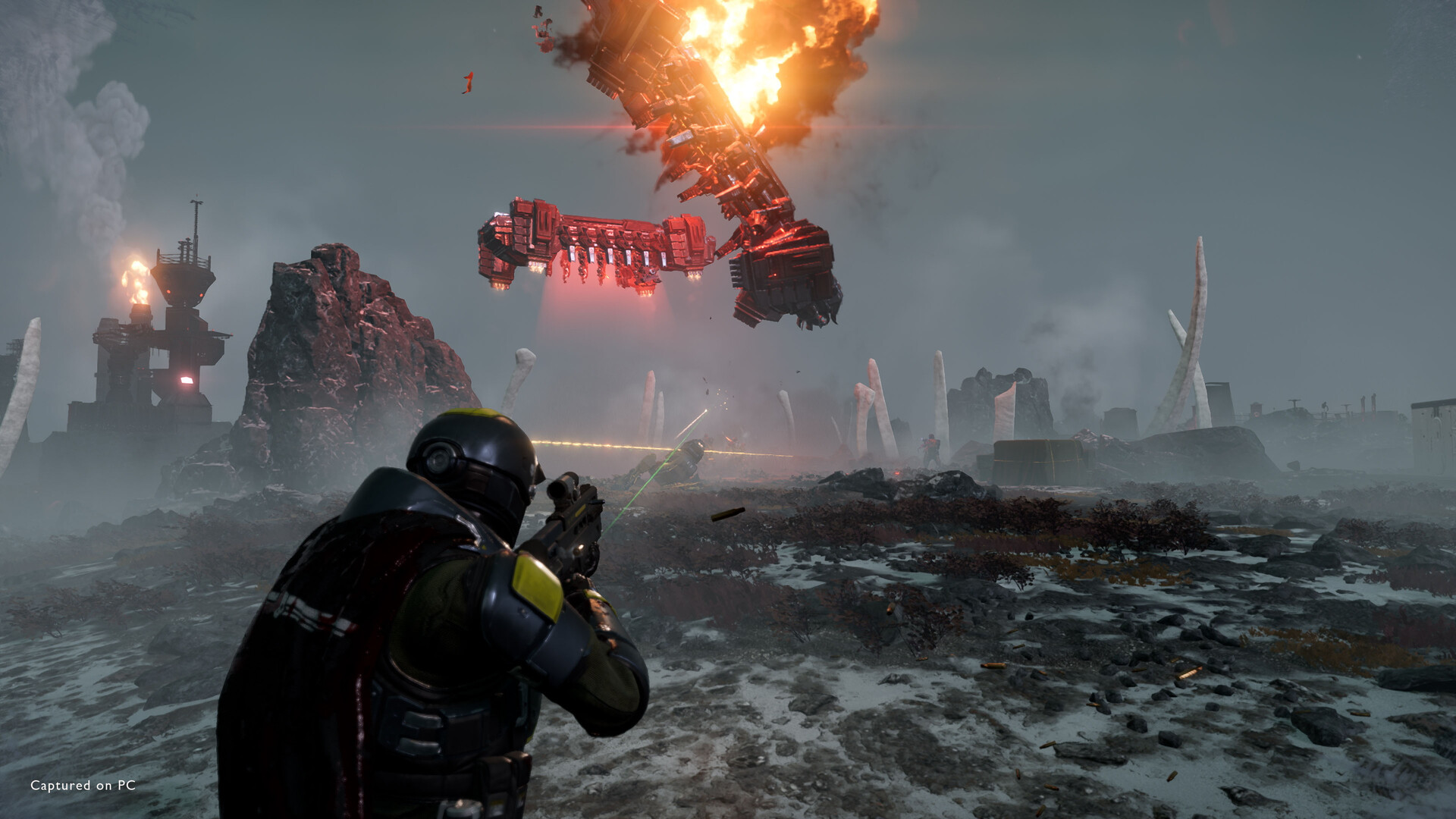
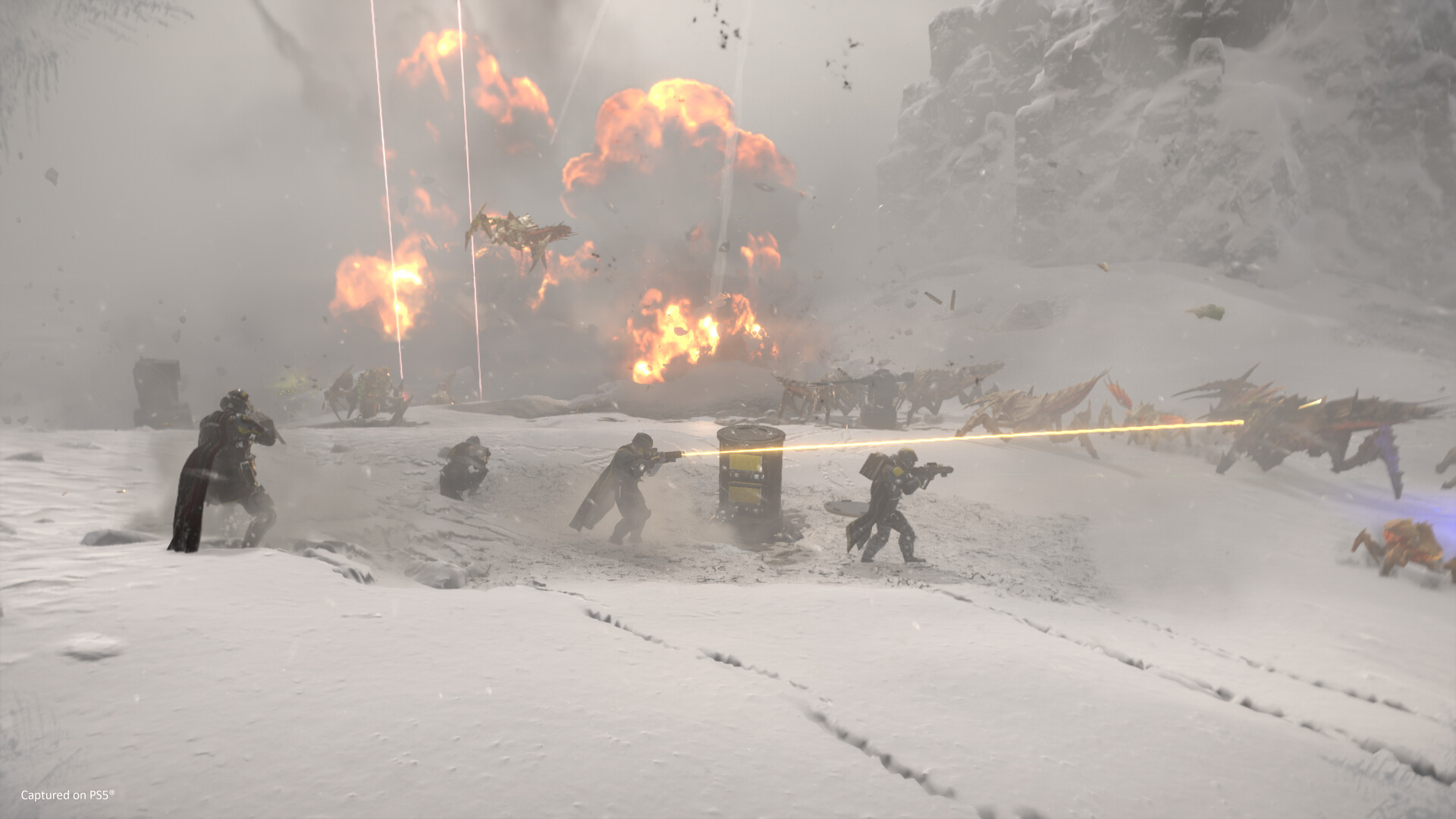
Screenshots

Reviewed by
HD2 Guides Editorial
Expertise: Editorial team behind HD2 Guides. Content is compiled from official patch notes, community wikis, and playthrough notes, then reviewed and updated on schedule.
Sources
Helldivers 2 Missions Guides →
Browse the complete missions collection and its focused guides.
Related Guides
🔥 Popular Guides
Helldivers 2 helldivers 2 warhammer 40k collaboration update Patch Notes Explained
Helldivers 2’s Warhammer 40K crossover adds Castellan’s Creed, new weapons, armor, enemies, missions, SEAF allies, and more.
Helldivers 2 super helldive achievement guide
Achievement guide for Helldivers 2 covering rare trophies, hidden requirements, missable timing, and a full Super Helldive completion route.
HELLDIVERS™ 2 all achievements: complete achievements guide
Full Helldivers 2 achievements guide with rarest trophies, hidden unlocks, missables, and a 100% completion route.
Helldivers 2 patch notes 7.0.2: What changed in the Void update era
What changed in Helldivers 2 patch notes 7.0.2, including new Illuminate threats, SEAF support, the level cap increase, and squad action items.
📋 Patch Notes & Updates
🛠️ Popular Tools
Was this guide helpful?
Rate this guide so we can improve it.
Share your own tip
Found something not in the guide? Submit it below — our editors review every tip before publishing. No account required.