 Helldivers 2
Helldivers 2 System Requirements and Recommended Specs: Beginner Guide
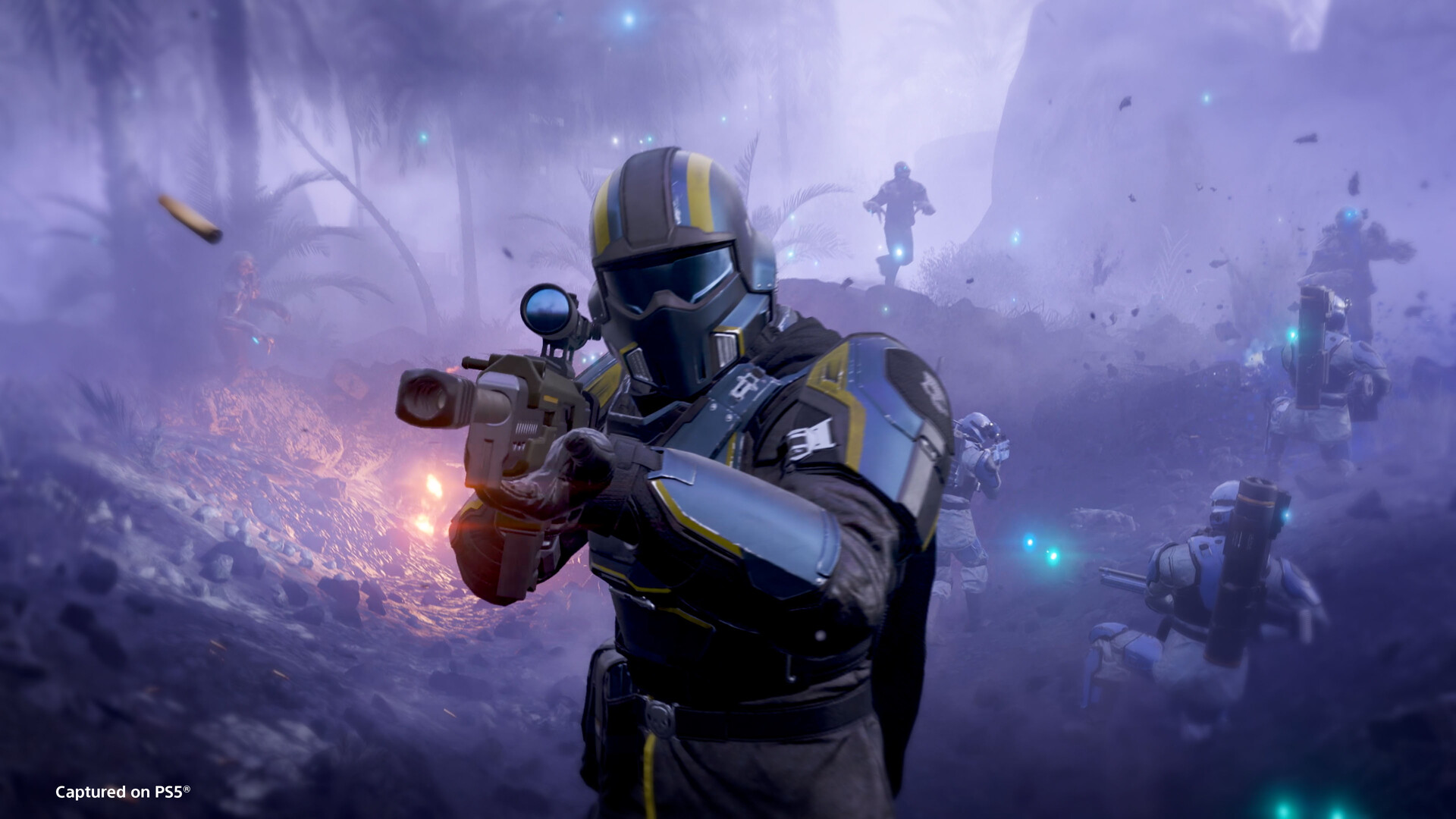
Quick Answer: Helldivers 2 System Requirements and Recommended Specs help you figure out whether your PC can run the game smoothly, but new players should also learn early mission habits, resource priorities, and squad basics so the first few hours don’t turn into a very expensive democracy delivery.
What Helldivers 2 Is and Why Specs Matter
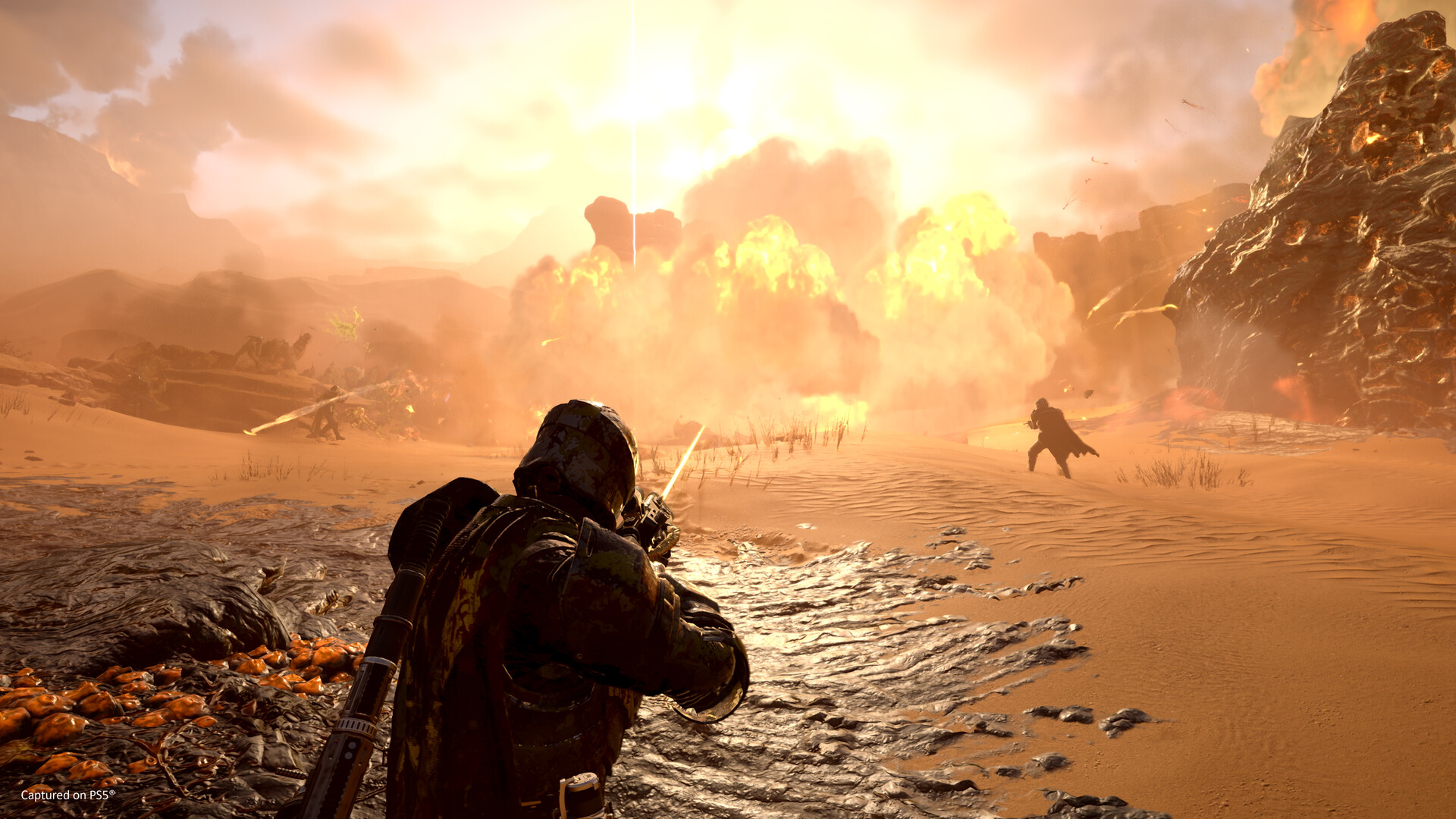
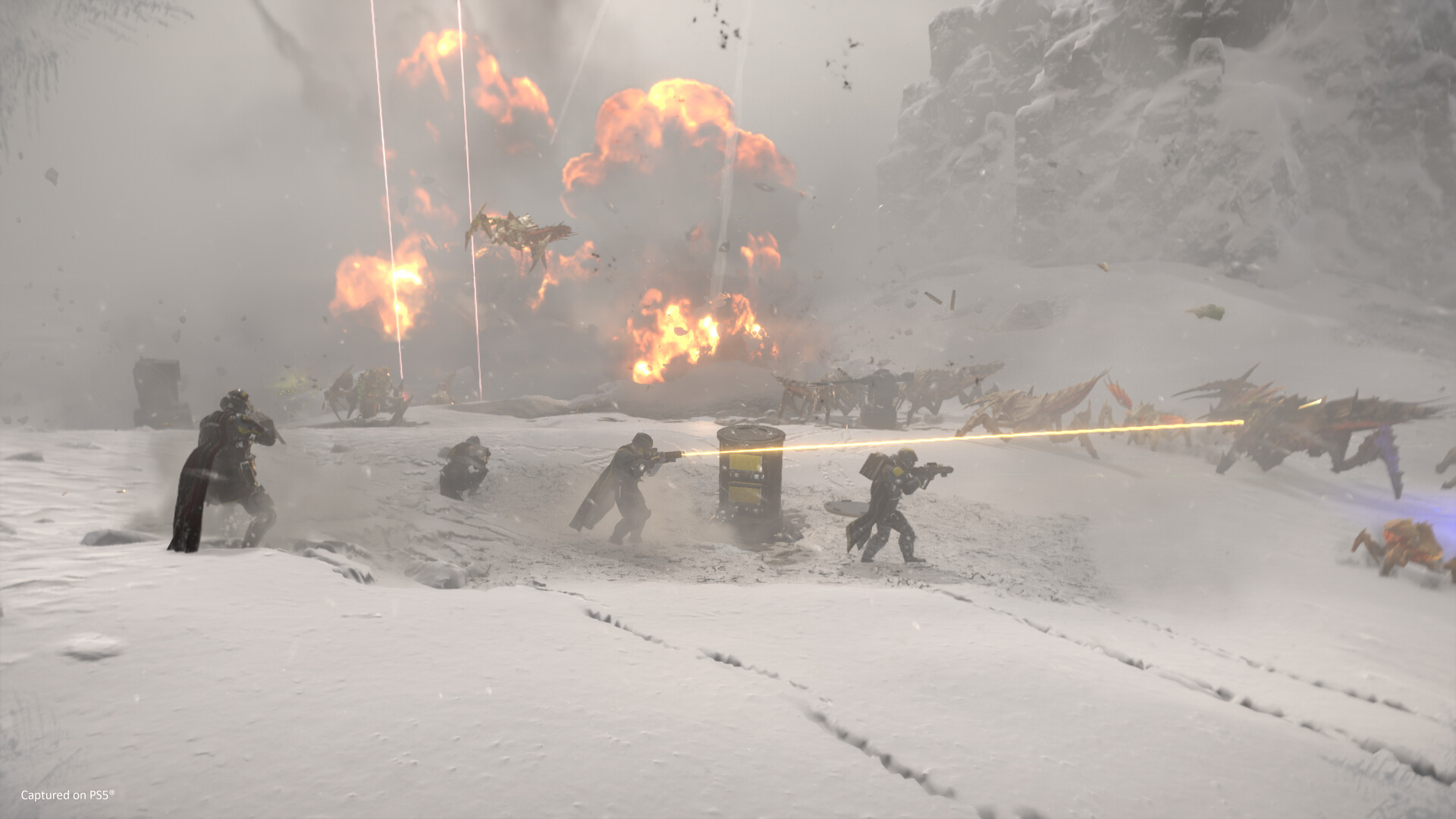
Helldivers 2 is a co-op third-person shooter where performance matters because the game is busiest when explosions, enemies, and squadmates all pile on at once. The official store describes it as “The Galaxy’s Last Line of Offence” and positions it as a fast, frantic, ferocious shooter about spreading managed democracy across a hostile galaxy Source. That style is exactly why Helldivers 2 System Requirements and Recommended Specs matter more than in a slow, story-driven game: if your machine stutters when a Charger is barreling at you or when your team drops multiple stratagems in the same spot, you feel it immediately.
For beginners, the main goal is not just “Can it launch?” but “Can it stay readable during chaos?” In Helldivers 2, readable means enemies are visible, your crosshair stays stable enough to aim, and the game doesn’t hitch right when someone calls in an Eagle Airstrike or Orbital Precision Strike. The good news is that the game has wide appeal and a large active audience, so you’re not learning alone. Steam currently shows 29,205 players in game and a 75.1% positive review summary across 1,151,055 reviews Source. In other words: lots of people are in the trenches, and many of them have already discovered where the pain points are.
If you’re deciding whether to buy it or what to upgrade first, use the specs question as a starting line, not the whole race. A stable machine lets you focus on the stuff that actually wins missions: target priority, stratagem timing, and not panic-pinging the ground while a Bile Titan is auditioning for your funeral.
Helldivers 2 System Requirements and Recommended Specs: What Beginners Should Look For
Helldivers 2 System Requirements and Recommended Specs should be judged by stability, not just launchability, because the game rewards smooth frame pacing more than raw paper specs. Even if you don’t memorize every line in the store page, you should think in three practical buckets: minimum performance, comfortable performance, and “I want this to feel good while everything is on fire.”
Here’s the beginner-friendly way to think about it:
| Goal | What it means in Helldivers 2 | What to prioritize |
|---|---|---|
| Minimum playable | You can complete missions, but heavy fights may feel rough | Basic CPU/GPU fit, enough RAM, SSD if possible |
| Comfortable recommended | You can read the battlefield and react during swarms | Stable frame pacing, decent GPU headroom, SSD, enough system memory |
| Best practical experience | You want fewer stutters during large fights and drops | Stronger GPU/CPU combo, driver hygiene, fast storage |
The biggest beginner mistake is over-focusing on one part of the PC. A decent graphics card won’t save you if the rest of the system is choking on asset streaming, and a strong CPU won’t help if the GPU is struggling in a massive Automaton push. Helldivers 2 tends to feel best when the whole machine is balanced. That matters because the game is designed around constant motion, lots of enemy bodies, and the kind of screen clutter that can go from cinematic to unmanageable in about two seconds flat.
It also helps to know that the game has a strong long-tail audience, which usually means plenty of community testing across a wide variety of hardware. SteamSpy estimates ownership at 20,000,000 .. 50,000,000 Steam accounts Source. That huge spread doesn’t tell you your exact FPS, obviously, but it does tell you that hardware advice from other players is plentiful, and you can usually find someone running a setup close to yours.
A final note on the “recommended” mindset: don’t chase a perfect benchmark fantasy. If your actual playtime is spent in co-op squads, the smoothest setup is often the one that keeps the game consistently responsive rather than maxing every visual slider. Helldivers 2 rewards clarity. Visual excess is nice; seeing the Hulk before it sees you is nicer.
You might also like
- Helldivers 2 Available Platforms Updated 3/7/2024 See all the available platforms and consoles for Beginner Guide
- Helldivers 2 Why Now May Be the Perfect Time for a New Enemy Faction
- Helldivers 2 Reviewed by Game878Helldivers 2Read Full Review Story5Gameplay9Visuals9Audio8Value forMoney8 Beginner Guide
- Helldivers 2 Pages using DynamicPageList3 parser function: Beginner Guide
- Helldivers 2 How to Destroy Fuel Silos and Stockpiled Ammunition
First-Hour Checklist: What to Do in Your Opening 60 Minutes
Your first hour in Helldivers 2 should be spent learning the game’s rhythm, unlocking useful tools, and avoiding the trap of wandering into high-difficulty chaos with a starter loadout and heroic confidence. The opening hour is less about grinding and more about setting up your account, your ship, and your habits so later progression feels natural instead of messy.
1) Finish the tutorial with attention, not speed
The tutorial teaches the game’s weird little joys: stratagem input, squad basics, and how deadly friendly fire can be when you and your friends all think you’re the main character. Pay attention to the stratagem rhythm rather than just spamming through it. Practice entering codes cleanly while moving your camera, because that skill comes up constantly in real missions when you need reinforcement, ammunition, or an airstrike while under pressure.
2) Run lower difficulty missions to learn enemy behavior
Start with missions where you can study patrols, objective flow, and extraction under low pressure. You want a few examples in your muscle memory:
- A bug mission where you learn how Chargers line up their charges and how to reposition without sprinting in panic circles.
- An Automaton mission where you notice rocket units, turret lines, and why cover matters more than you think.
- A mixed objective run where you practice calling stratagems while one teammate kites enemies and another handles the terminal.
3) Unlock early stratagems that solve real problems
Your first useful unlocks are the ones that help in nearly every mission type, not the flashy ones with the biggest boom. Think in terms of tools:
- A reliable support weapon for armored targets.
- A defensive stratagem that clears space when the team gets surrounded.
- A reinforcement or supply option that keeps the squad moving.
The early game is where you build habits around “answering a problem” instead of “showing off a cool attack.” That mindset pays off later when missions become more chaotic and your team needs practical solutions fast.
4) Start paying attention to sample collection
Samples are easy to ignore when every enemy is trying to turn you into a cautionary tale, but they matter because early ship upgrades are extremely helpful. Make a habit of grabbing samples on the way out of combat zones, especially when the path is already safe. If the team is rushing and the area is hot, don’t throw the mission to scoop one shiny thing, but do learn what sample containers look like and where they often appear around side areas.
5) Learn extraction discipline
Extraction is where beginner squads lose mission rewards by getting greedy or panicky. Your first hour should include at least one extraction where you deliberately do the boring things right:
- Hold a defensible position.
- Don’t split too far from the beacon.
- Use stratagems to control space, not to chase kills.
- Reinforce teammates quickly if someone drops at the worst possible moment.
That habit is worth more than a pile of early kills. Helldivers 2 rewards surviving the mission, not just making the screen look dramatic.
Resource Priority Order: What to Spend, Hoard, and Upgrade First
Your resource priority order in Helldivers 2 should favor permanent progression, squad survival, and tools that stay useful across multiple mission types. The game gives you several progression currencies and unlock paths, so beginners often waste progress by spending on whatever looks exciting first. Don’t be that cadet with a shiny new toy and no practical support tools.
| Priority | Spend / Hoard On | Why it matters early | Good beginner examples |
|---|---|---|---|
| 1 | Ship modules and core upgrades | Permanent power that improves many runs | Orbitals, Eagle-related upgrades, support utility |
| 2 | Warbond unlocks that improve flexibility | Expands your toolkit for more mission types | Early armor, utility weapons, dependable grenades |
| 3 | Samples | Needed for long-term ship progression | Common and rare samples from safe detours |
| 4 | Super Credits | Best saved for meaningful unlocks | Premium Warbond access or meaningful cosmetic/value choices |
| 5 | Medals and other unlock spend | Use to reach useful loadout options, not random picks | Weapons or equipment that solve current problems |
A practical way to manage resources is to spend first on anything that makes the next ten missions easier, not the next one look cooler. For example, a support weapon that helps against armored targets is worth more than a niche novelty if your squad keeps getting wiped by heavies. Likewise, ship module upgrades that improve repeatable stratagem performance tend to deliver more value than chasing a one-off flashy unlock.
Hoarding also matters. Many beginners burn their resources as soon as they can because progression menus feel like a toy store after mission one. But Helldivers 2 is less about owning everything and more about assembling a reliable kit. If you don’t know whether a weapon will fit your playstyle, wait until you have a few mission types under your belt. Fight bugs, then fight Automatons, then decide whether your current favorite still works in both environments. That simple comparison prevents a lot of regret spending.
Super Credits deserve special caution because they sit at the crossroads of convenience and temptation. Save them for content that genuinely expands your options. The game’s live service loop can make every new thing feel urgent, but beginner progress usually benefits more from stable, versatile upgrades than from impulse purchases.
And yes, samples matter enough that they deserve a separate reminder: if the map has a quiet pocket, check it. A short detour for samples can be worth more than an extra pile of dead enemies, especially if your team is already on track to finish the objective.
Common Mistakes Beginners Make and How to Fix Them
Beginners in Helldivers 2 usually make the same mistakes because the game is generous enough to let them, and brutal enough to teach them. The good news is that each mistake has a clean fix once you know what to watch for.
Mistake 1: Treating every mission like a deathmatch
Players often tunnel on kills because the action is satisfying and the screen is full of targets. That feels productive, but it can drag the team off objective and burn ammo for no reason.
Why it happens: The game is loud, chaotic, and extremely good at making firefights feel important.
Fix: Use a “objective first” habit. If you’re not actively defending, reinforcing, or clearing a path, move toward the mission objective. Two examples: ignore a stray patrol while you’re already holding the terminal; stop farming bugs if the extraction timer is already under control.
Mistake 2: Calling stratagems without checking teammates
A well-timed Eagle strike can become a team wipe if you drop it on top of allies who are still pushing forward.
Why it happens: New players focus on the enemy cluster and forget where the squad is standing.
Fix: Say the stratagem out loud or ping the zone before you call it. Common examples: Orbital Precision Strike on a bunker approach, Eagle Airstrike on a patrol, or a supply drop behind cover rather than in the center of a firefight.
Mistake 3: Ignoring armor and heavy enemies until they become a disaster
Chargers, Hulks, and other heavies are often allowed to live far too long because beginners don’t know how to prioritize them.
Why it happens: Small enemies are everywhere, so it’s easy to get distracted by the nearest threat.
Fix: Assign the team roles naturally. If someone has anti-armor tools, let them focus heavies while others clear support enemies. Examples include using support weapons, calling stratagems on large targets, or baiting a Charger into terrain so the team can finish it.
Mistake 4: Bringing an “all offense” loadout with no recovery tools
Players often equip only damage and then wonder why the squad collapses after one bad engagement.
Why it happens: Damage is easier to understand than utility.
Fix: Always carry at least one tool that solves a survival problem. That could mean supplies, reinforcement support, crowd control, or a defensive stratagem. A good beginner setup should help after mistakes, not only during perfect play.
Mistake 5: Splitting from the squad too early
Running off alone feels efficient until you hit a surprise patrol, a patrol call-in, or a heavy enemy that forces a bad fight by yourself.
Why it happens: Players want to “help everywhere” or grab extra loot.
Fix: Stay within supporting distance unless the squad has explicitly split for a reason. Good examples: one player scouts a side objective while the other three hold center; everyone stays together during extraction; nobody chases a lone red dot into the fog.
Mistake 6: Forgetting extraction is part of the mission
Some beginners act like the objective is “completed” the moment the main task is done, then lose samples and mission rewards at the end.
Why it happens: The final fight feels optional because the big objective is already checked off.
Fix: Treat extraction like the last boss room. Hold ground, reinforce quickly, and use stratagems to control access. If the team is scattered at the end, regroup before the shuttle lands.
Common Mistakes
Here’s a cleaner checklist version of the most common rookie errors, with quick fixes you can actually use mid-match:
Overkilling patrols that were never a threat
Players see enemies and instantly commit.
Fix: Only engage when it helps the objective, protects extraction, or prevents an alarm.Dropping supplies too late
Teams wait until everyone is dry on ammo and panic starts.
Fix: Call resupply when the mission is entering a long objective phase, not after the last mag is gone.Using big explosives in tiny spaces
It feels powerful, then your squad ragdolls into a wall.
Fix: Throw orbitals and airstrikes from a safe angle and step back before impact.Holding onto reinforcements like they are scarce treasure
New players hesitate to respawn teammates even when it’s safe.
Fix: Reinforce quickly unless the landing zone is actively lethal; momentum matters.Not learning enemy silhouettes
If every enemy looks like “the angry one,” reactions are slower.
Fix: Spend a few missions identifying Chargers, Hulks, rocket troops, and basic fodder at a glance.
How to Tell You’re Out of the Beginner Phase
You’re out of the beginner phase when you can complete normal missions with a plan, adapt your loadout to the enemy faction, and survive extraction without relying on panic button spam. The transition is less about a level number and more about consistency, because Helldivers 2 is a game of repeatable judgment calls rather than one giant skill check.
A good graduation threshold looks like this in practice:
- You know when to fight and when to move.
- You can read whether a mission should be treated as bug control, bot suppression, or pure objective racing.
- You understand how to protect squadmates during reinforcement and extraction.
- You can identify which tools in your kit are for armored targets, crowd control, and emergency survival.
You’re also probably out of the beginner phase once you stop “testing” every mission like a lab experiment and start making intentional choices. For example, if you take a mission against Automatons, you should already know that cover and anti-armor matter more than on a bug hunt. If the map is dense with side objectives, you should know whether your squad is geared for detours or built for speed. If your team wipes, you should be able to explain why in plain language instead of shrugging and blaming the galaxy.
Another strong sign is that you begin caring about mission execution quality instead of just mission completion. That means you notice when someone brought the wrong tool for the job, when samples were left behind, or when the squad could have extracted cleaner. Once you start making those calls instinctively, you’re not a beginner anymore—you’re just a diver with more tactical opinions, which is basically the endgame of every co-op shooter community.
For players who want a benchmark outside the mission screen, the game’s achievement data gives a nice reality check. The rarest tracked achievement sits at 10.7% of players Source, which tells you that even many active players never push into the more demanding challenge layer. That’s useful context: if you’re clearing missions consistently and understanding the game’s systems, you are already ahead of a huge chunk of the overall player base.
Pro Tips for Faster Progress
These tips go beyond “shoot bad guys” and help you play cleaner once the basics start clicking.
Tip 1: Use terrain as a weapon
If a Charger or Hulk is chasing you, don’t just backpedal in a straight line. Lead it into rocks, cliffs, doorways, or narrow lanes so the team can line up safer shots. This is especially useful when your stratagem is still on cooldown and you need breathing room without wasting resources.
Tip 2: Save your strongest tools for bad terrain, not easy fights
A perfectly placed Orbital or Eagle strike matters most when the battlefield is cramped, enemies are converging, or the squad is pinned near the objective. If the fight is already under control, let your primary weapons handle it and keep the big cooldown for the next disaster.
Tip 3: Build one loadout around comfort, not hype
If you’re unsure, choose weapons and stratagems that give you consistent answers to common problems. A beginner-friendly kit usually includes one reliable anti-armor option, one crowd-control option, and one utility slot that keeps the team alive. That way you’re useful in both bug nests and Automaton gunlines.
Tip 4: Watch your teammates’ cooldowns
A strong squad is often just a group of players who don’t all spend their emergency tools at once. If someone already dropped a defensive stratagem or resupply, you can fill the gap instead of doubling up on the same answer. This matters a lot during extraction and heavy objective defense.
Tip 5: Learn when to disengage
Not every fight deserves a finish. If reinforcements are running low, the objective is complete, and the map is hot with enemies, it’s usually smarter to move than to stand and farm kills. New players often confuse “retreat” with “failure,” but in Helldivers 2, a clean reposition is often the most democratic choice available.
Tip 6: Make sample runs part of your route
Once you know the map flow, route through side pockets that are safe enough to check without derailing the mission. Samples are one of those resources that quietly become valuable later, so building the habit early saves a lot of grind.
Tip 7: If your squad is new, assign simple jobs
One player calls targets, one handles support drops, one focuses objectives, and one watches rear threats. You don’t need a tournament-level strategy for this game to work better; you just need fewer people doing the same thing at the same time.
Graduation Threshold: When You’re Ready for Harder Content
You’re ready for harder content when your success no longer depends on luck, and you can maintain mission control after the first mistake. That’s the real threshold in Helldivers 2: not “Did we win once?” but “Can we keep winning when the mission gets ugly?”
A practical checklist for moving up:
- You can complete multiple missions in a row without needing constant rescue.
- You understand how each enemy faction pressures the squad differently.
- You have at least one dependable setup for armored enemies and one for crowd control.
- You can keep calm during extraction instead of burning every cooldown too early.
The jump to harder content is where teamwork starts to matter in a more visible way. At that point, good squads are not just more accurate; they are better at timing, spacing, and resource discipline. That includes things like knowing when to break line of sight, when to reinforce, and when to leave a nest or base instead of trying to “win” the entire map. Helldivers 2 is happiest when everyone on the team is making those same smart little decisions at the same time.
If you want a rough sign that you’ve moved beyond the newbie stage, compare your first few runs to your current ones. Early on, you probably survived by reacting. Later, you’ll start planning. You’ll pick equipment based on faction, keep an eye on stratagem economy, and recognize which missions are better for farming, which are better for practice, and which are just chaos with a mission marker attached. That’s when the game really opens up.
Related Guides
- Helldivers 2 Best Early Loadouts
- Helldivers 2 Stratagem Tier List
- Helldivers 2 Beginner Mission Walkthrough
- Helldivers 2 Warbond Guide
- Helldivers 2 Best Solo and Duo Builds
- Helldivers 2 Sample Farming Guide
- Helldivers 2 Armor Explained
Sources
- https://store.steampowered.com/app/553850/
- https://howlongtobeat.com/?q=helldivers2
- https://api.steambase.io/games/553850
- https://www.protondb.com/app/553850
- https://steamhunters.com/apps/553850
- https://steamspy.com/app/553850
- https://steamcommunity.com/stats/553850/achievements
- https://www.metacritic.com/game/helldivers-2
See also
- Helldivers 2 Pages using Tabber parser tag Beginner Guide
- Helldivers 2 Beginner Guide: Start Strong, Spend Smart, and Survive the Early War
- Helldivers 2 Helldivers 1:Chief Communications Officer Beginner Guide
- Helldivers 2 How to Fix Stuck in Drop Pod Bug
- Helldivers 2 Failed to Establish Network Connection Error Beginner Guide
- Helldivers 2 Can You Change Ship Name: Beginner Guide
- Helldivers 2 Does Support Crossplay and Cross Save: Beginner Guide
- Helldivers 2 How to Get the EX-03 Prototype 3 Armor Set
- Helldivers 2 How to Get Major Order Reward
- Helldivers 2 Beginner Guide: Smart First Steps, Resources, and Common Mistakes
Screenshots

Reviewed by
HD2 Guides Editorial
Expertise: Editorial team behind HD2 Guides. Content is compiled from official patch notes, community wikis, and playthrough notes, then reviewed and updated on schedule.
Sources
Helldivers 2 Missions Guides →
Browse the complete missions collection and its focused guides.
Related Guides
🔥 Popular Guides
Helldivers 2 helldivers 2 warhammer 40k collaboration update Patch Notes Explained
Helldivers 2’s Warhammer 40K crossover adds Castellan’s Creed, new weapons, armor, enemies, missions, SEAF allies, and more.
Helldivers 2 super helldive achievement guide
Achievement guide for Helldivers 2 covering rare trophies, hidden requirements, missable timing, and a full Super Helldive completion route.
HELLDIVERS™ 2 all achievements: complete achievements guide
Full Helldivers 2 achievements guide with rarest trophies, hidden unlocks, missables, and a 100% completion route.
Helldivers 2 patch notes 7.0.2: What changed in the Void update era
What changed in Helldivers 2 patch notes 7.0.2, including new Illuminate threats, SEAF support, the level cap increase, and squad action items.
📋 Patch Notes & Updates
🛠️ Popular Tools
Was this guide helpful?
Rate this guide so we can improve it.
Share your own tip
Found something not in the guide? Submit it below — our editors review every tip before publishing. No account required.