 Helldivers 2
Helldivers 2 Helldiver Contract of Employment: Beginner Guide
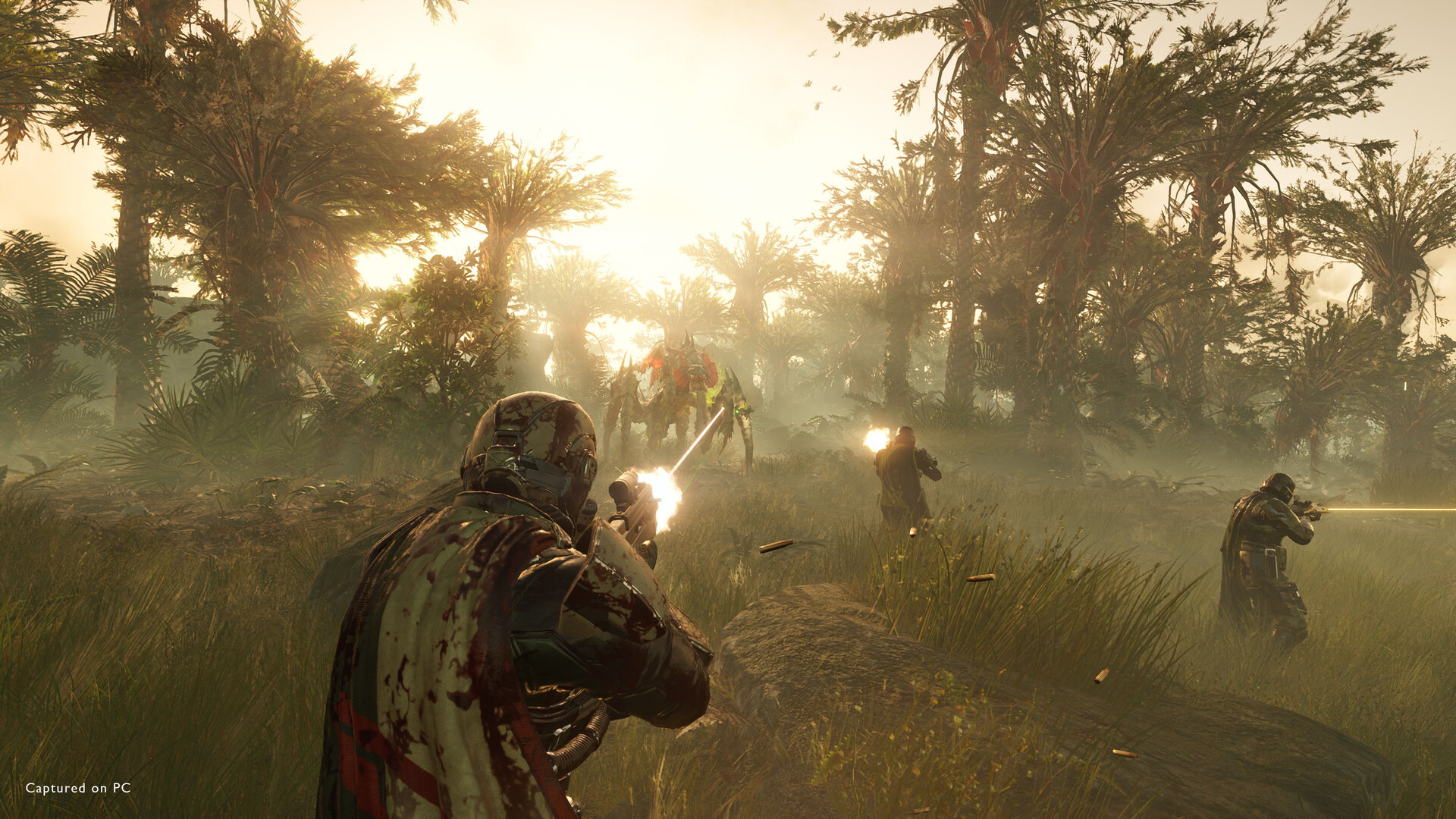
Quick Answer: The Helldivers 2 Helldiver Contract of Employment is your starter roadmap for surviving the opening hours: learn extraction, prioritize Super Credits and Samples, unlock useful stratagems, and avoid rushing high difficulties too early.
Helldivers 2 is a co-op third-person shooter where good fundamentals matter more than raw aim, and its official Steam store pitch calls it “The Galaxy’s Last Line of Offence” Source. It launched on Feb 8, 2024 as a 2024 cooperative multiplayer third-person shooter from Arrowhead Game Studios and Sony Interactive Entertainment Source. Player interest is still large, with Steam review data showing “Mostly Positive” (75.1% positive) across 1151055 reviews Source and Metacritic listing an 82/100 critic score across 69 reviews Source. That combination tells new players something important: the game is approachable, but only if you respect the co-op systems and the mission economy.
What the Helldivers 2 Helldiver Contract of Employment Actually Means
The Helldivers 2 Helldiver Contract of Employment is a practical beginner mindset: you are not a lone hero, you are a disposable specialist whose job is to support a squad, complete objectives, and extract with resources. In gameplay terms, that means learning when to fight, when to leave, and what to spend your early progression on. New players often treat the game like a standard shooter and end up overextending into patrols, calling stratagems in bad positions, or wasting medals on cosmetic-style progress before they have a stable loadout.
The contract metaphor fits because the game constantly asks you to make tradeoffs. Do you grab a nest of Samples and risk a longer route to extraction? Do you spend Requisition Slips on a fancy stratagem, or save for something universally useful like a dependable support weapon? Do you chase enemies to “finish the fight,” or let patrols pass so the mission stays controlled? The correct answer changes by mission, but the beginner rule is simple: economy first, ego second.
A useful way to think about your first phase is that you are buying competence in layers:
- Layer 1: survival — avoid friendly fire, stay alive, and learn extraction timing.
- Layer 2: mission economy — gather Medals, Samples, Requisition Slips, and Super Credits efficiently.
- Layer 3: squad value — bring stratagems and gear that help the team handle armor, swarms, and objectives.
- Layer 4: difficulty scaling — only then do you push into harder operations and more specialized builds.
The game’s mission flow supports this structure. Early missions are forgiving enough to teach you how objectives, reinforcements, and extraction interact, but the systems punish chaos very quickly. Even achievements reflect that curve: Valve’s global achievement stats show the rarest of 38 tracked achievements is unlocked by only 10.7% of players Source, which is a strong signal that many players never fully internalize the basics of elite execution. If your goal is to graduate from “new recruit” to reliable Helldiver, your contract is really about building habits.
First-Hour Checklist
Your first hour should focus on unlocking a usable starter loop: complete a few missions on comfortable difficulty, collect the right currencies, and learn how your ship menu translates into battlefield power. The biggest beginner trap is trying to “figure everything out at once”; instead, you want a tight checklist that gives immediate returns.
1) Run basic missions at a low difficulty
Start with missions you can finish consistently rather than trying to prove yourself on a harder map. In the opening hour, you want to learn:
- how to drop in and orient yourself,
- how primary weapons feel against light enemies,
- how reinforcements work after a death,
- and how extraction starts once objectives are complete.
Good early examples include evacuate-style objectives, basic destroy missions, and simple map-clearing runs on low threat settings. A mission where you fight mostly Scavengers, Warriors, and a few medium targets teaches you pacing much better than immediately facing heavy armor and layered patrol chains.
2) Unlock one reliable support tool early
Your goal is not to buy every shiny option; it is to secure one dependable answer to armored enemies or big swarms. Early support choices should cover at least one of these roles:
- anti-armor,
- anti-swarm,
- area denial,
- or safe objective clearing.
Examples of the kind of “first useful unlock” mindset that pays off:
- a support weapon that gives you a clean answer to Chargers,
- an orbital or eagle stratagem that deletes clustered enemies,
- a backpack or utility option that improves survivability,
- or a turret-style tool that buys breathing room during extraction.
You do not need perfect optimization in hour one. You do need a button you trust when the mission turns messy.
3) Learn the map icons and resource pickups
The game’s hidden beginner tax is ignorance of map value. If you ignore side points of interest, you will progress much more slowly than players who actively sweep the route between objective and extraction.
Prioritize learning these pickup types:
- Samples for ship module progression,
- Super Credits for premium progression,
- Medals for Warbond unlocks,
- and Requisition Slips for stratagem purchases.
A good habit is to sweep every small side path that does not create a huge detour. For example, if your main objective is near a small outpost and your squad is already moving that direction, clear it and check for containers or supply caches. If the detour becomes a fight through endless patrols, skip it. Beginners often mistake “loot everything” for good play; in Helldivers 2, efficient looting is usually about route discipline.
4) Test friendly fire boundaries in a safe way
Helldivers 2 is notorious for friendly fire, and the game expects you to respect blast radii. Spend your first session intentionally learning how dangerous your own kit is. Call a stratagem slightly away from the squad, watch where the explosion lands, and pay attention to how fast teammates can walk into danger without realizing it.
This matters with examples like:
- orbital strikes that wipe a bug breach but also erase allies,
- eagle runs that sweep a line your squad may cross,
- turrets that turn a safe lane into a death zone,
- and grenades that are excellent in one hand and catastrophic in another.
5) Return to the ship and spend only on immediate power
Before your first hour ends, open your ship progression menus and make at least one purchase that improves your current combat reliability. Do not hoard every currency indefinitely “for later.” At the same time, do not impulse-buy something that looks cool but fills a niche you cannot use yet.
The best first-hour spending philosophy is:
- buy one dependable stratagem,
- check whether any ship module upgrade meaningfully helps your current setup,
- and hold the rest until you understand your preferred mission role.

You might also like
- Helldivers 2 Reviewed by Game878Helldivers 2Read Full Review Story5Gameplay9Visuals9Audio8Value forMoney8 Beginner Guide
- Helldivers 2 How to Destroy Fuel Silos and Stockpiled Ammunition
- Helldivers 2 Failed to Establish Network Connection Error Beginner Guide
- Helldivers 2 How to Fix Stuck in Drop Pod Bug
- Helldivers 2 Does Support Crossplay and Cross Save: Beginner Guide
Resource Priority Order
Your early resource priority should favor universal power first, then long-term progression, then convenience and cosmetics. Helldivers 2 rewards players who spend like they are building a war machine, not decorating a hangar. Since the game has several currencies and unlock tracks, beginners often dilute progress by spreading resources too thin.
| Resource | Best early use | Why it matters | Beginner rule |
|---|---|---|---|
| Samples | Ship modules | Permanent account power for your ship and stratagem support | Hoard these carefully and extract with them whenever possible |
| Medals | Warbond unlocks | Opens armor, weapons, grenades, and progression milestones | Spend on broadly useful unlocks before niche toys |
| Requisition Slips | Stratagem purchases | Gives you battlefield tools immediately usable in missions | Buy reliable combat tools before luxury options |
| Super Credits | Warbond access / premium unlocks | Long-term progression currency with high value | Save or spend only when you understand the track you want |
| Credits/real-money store value | Optional convenience | No beginner should treat this as core combat power | Ignore unless you have a specific plan |
What to spend first
Your first spending target should be anything that upgrades your mission success rate, not your style points. In practical terms, that usually means one of the following:
- a support weapon that solves armor problems,
- a stratagem that clears breaches or bot drops efficiently,
- or a ship module that increases the reliability of the tools you already use.
Examples of sensible early spending behavior:
- using Requisition Slips on a support weapon you can bring to multiple mission types,
- saving Medals until you can unlock a Warbond page with multiple useful items rather than one isolated pick,
- and using Samples to open ship module tiers that strengthen your favorite stratagem categories.
What to hoard
You should hoard anything that is hard to replace or easy to waste.
- Samples are the biggest trap because new players can lose them on a bad extraction.
- Super Credits are also easy to waste on impulse purchases.
- Medals are less punishing to spend, but random spending still slows meaningful progress.
If you are new, assume your resources have a “power-per-minute” value. Ask whether a purchase makes your next 10 missions easier. If the answer is no, save it.
What not to overvalue
Do not overvalue cosmetics, novelty weapons, or situational tools that you cannot support with good fundamentals. A beginner may love the idea of a flashy explosive build, but if you cannot survive the recoil, reload timing, or splash safety window, the investment is mostly wasted. Likewise, some support tools are excellent in the right squad composition but awkward in solo or uncoordinated play. Early on, you want flexibility more than specialization.
A good rule is to avoid spending on:
- a second niche option before you have one dependable all-rounder,
- cosmetic goals before core progression,
- and highly situational gear before you know which enemy faction you are fighting most often.
Common Mistakes
The most common beginner mistakes in Helldivers 2 come from overconfidence, poor resource management, and ignoring mission flow. These errors are predictable, which is good news: they are also fixable with simple habits.
Chasing every patrol
- Why it happens: New players assume killing enemies faster always reduces danger.
- Fix: Break line of sight, move past patrols when objectives are elsewhere, and only fight when the mission route benefits from it.
Spending resources on the wrong unlocks
- Why it happens: Early menus make many items look equally valuable.
- Fix: Buy one dependable support option first, then unlock ship modules and Warbond items that improve your core role.
Calling stratagems too close to the squad
- Why it happens: Players panic under pressure and drop support where they are standing.
- Fix: Take one step back before inputting the code, and mentally mark a safe landing zone before the beacon leaves your hand.
Ignoring Samples on the way to extraction
- Why it happens: Extraction feels urgent, so players sprint straight to the ship.
- Fix: Scan the final route for easy pickups and only detour if the squad can clear it without losing the timer.
Reloading or re-arming in the open
- Why it happens: Many shooters reward aggressive movement, so beginners expect the same here.
- Fix: Use rocks, hills, objectives, and teammate cover as hard pauses before reloading, calling supplies, or using a backpack.
Treating death as a hard reset instead of a team tool
- Why it happens: Players assume they failed if they get reinforced.
- Fix: Use reinforcements to re-enter with purpose, rejoin the objective, and do not waste the squad’s respawn pool on reckless solo pushes.
A lot of early frustration comes from thinking Helldivers 2 wants perfect K/D behavior. It does not. It wants disciplined completion. If you extract with the objective done, the mission was a success even if your scoreboard looks messy.
Pro Tips
The best beginner-to-intermediate gains come from learning how the game actually rewards positioning, timing, and squad coordination rather than pure accuracy. These tips go beyond the obvious “stick with your team” advice and help you play like someone who understands the mission economy.
Tip 1. Use terrain as a reload shield
Whenever you reload a weapon like the Liberator, SG-225 Breaker, or a support gun, do it behind hard cover instead of in open sightlines. A small ridge, wall, or objective structure can save you from being interrupted by light enemies while you recover.
Tip 2. Pre-plan your stratagem role before the mission starts
If you bring an orbital strike, an anti-armor support weapon, and a supply tool, you already have a role profile. Fill gaps instead of duplicating the same function three times. For example, if one teammate is covering crowd clear with a turret-style setup, you can bring anti-armor and mobility utility instead of another swarm tool.
Tip 3. Use extraction as a fight, not a ritual
Extraction is one of the most dangerous parts of a mission because the game often piles pressure onto the landing zone. The correct trigger is the moment the extraction ship arrives and your squad is ready to hold a defensible angle. Before that, avoid standing in the open or chasing enemies away from the zone too far.
Tip 4. Learn to skip weak-value fights
If a patrol is not blocking your route, does not guard a side objective, and does not threaten your extraction lane, you can often bypass it. This is especially important on larger maps where unnecessary fights drain ammo, time, and reinforcement budget. The best squads know when not to shoot.
Tip 5. Bring at least one answer to armor
Even in beginner content, armored enemies appear quickly enough to punish pure starter loadouts. Make sure your squad has a practical answer to enemies like Chargers, Hulks, or heavier Automaton units. If your personal kit cannot handle armor, coordinate with the team so someone else can.
Tip 6. Turn map routes into resource routes
Do not think in straight lines from objective to extraction. Instead, trace a path that picks up Samples, checks side points of interest, and returns to the objective with minimal backtracking. This simple planning habit multiplies your progression over time.
Graduation Threshold
You are out of the beginner phase when you can complete standard missions consistently, contribute a role-specific loadout without panic, and spend resources with purpose instead of guesswork. The Helldivers 2 Helldiver Contract of Employment is effectively fulfilled once you stop relying on luck and start relying on repeatable habits.
A strong graduation threshold looks like this:
- you can read mission flow before the squad collapses,
- you know which enemies you should fight and which you should avoid,
- you have at least one support weapon or stratagem you trust,
- you can extract with Samples often enough that Ship Module progression becomes steady,
- and you understand how your role fits into the squad rather than trying to do everything yourself.
You will also notice a change in how you approach difficulty. Beginners often view higher difficulty as the “real game” and want to jump there early. Graduated players understand that difficulty is a tool for scaling rewards once the fundamentals are stable. When you can survive messy fights, preserve reinforcements, and keep the objective moving on a regular basis, then harder missions become a progression choice rather than a desperate test.
A practical milestone is when you stop making progress decisions reactively. Instead of asking “What looks strongest right now?” you start asking:
- “What does my team need on this mission?”
- “Which unlock moves me toward a stable build?”
- “Do I have enough mission control to handle armor and breaches?”
- “Can I complete this route without wasting Samples?”
That shift in decision-making is the real sign you are no longer a beginner. You are now playing the systems, not just the gunplay.
Related Guides
These sibling guides should be your next reads once the basics click:
- helldivers 2 available tips — Helldivers 2 early best stratagems guide
- related guide — Helldivers 2 beginner weapon tier guide
- a new enemy faction — Helldivers 2 mission walkthrough basics
- related guide — Helldivers 2 ship module upgrade guide
- helldivers 2 halo tips — Helldivers 2 sample farming guide
- related guide — Helldivers 2 Warbond unlock guide
- related guide — Helldivers 2 solo play beginner guide
Sources
- https://store.steampowered.com/app/553850/
- https://en.wikipedia.org/wiki/Helldivers_2
- https://www.metacritic.com/game/helldivers-2
- https://steamcommunity.com/stats/553850/achievements
See also
- Helldivers 2 How to Get the EX-03 Prototype 3 Armor Set
- Helldivers 2 How to Get Major Order Reward
- Helldivers 2 Super Earth issued Tool Rack Beginner Guide
- Helldivers 2 Beginner Guide: Smart First Steps, Resources, and Common Mistakes
- Helldivers 2 Battle Pass Guide: How to Progress Warbonds
- Helldivers 2 How to Use the Safe and Unsafe Railgun Modes
- Helldivers 2 How to Go First Person Mode
- Helldivers 2 Beginner Guide
- Helldivers 2 Beginner Guide: Start Strong on Super Earth
- Helldivers 2 How to Get and Use the Anti-Materiel Rifle
Screenshots

Reviewed by
HD2 Guides Editorial
Expertise: Editorial team behind HD2 Guides. Content is compiled from official patch notes, community wikis, and playthrough notes, then reviewed and updated on schedule.
Sources
Helldivers 2 Missions Guides →
Browse the complete missions collection and its focused guides.
Related Guides


🔥 Popular Guides
Helldivers 2 helldivers 2 warhammer 40k collaboration update Patch Notes Explained
Helldivers 2’s Warhammer 40K crossover adds Castellan’s Creed, new weapons, armor, enemies, missions, SEAF allies, and more.
Helldivers 2 super helldive achievement guide
Achievement guide for Helldivers 2 covering rare trophies, hidden requirements, missable timing, and a full Super Helldive completion route.
HELLDIVERS™ 2 all achievements: complete achievements guide
Full Helldivers 2 achievements guide with rarest trophies, hidden unlocks, missables, and a 100% completion route.
Helldivers 2 patch notes 7.0.2: What changed in the Void update era
What changed in Helldivers 2 patch notes 7.0.2, including new Illuminate threats, SEAF support, the level cap increase, and squad action items.
📋 Patch Notes & Updates
🛠️ Popular Tools
Was this guide helpful?
Rate this guide so we can improve it.
Share your own tip
Found something not in the guide? Submit it below — our editors review every tip before publishing. No account required.